

Georg Baselitz
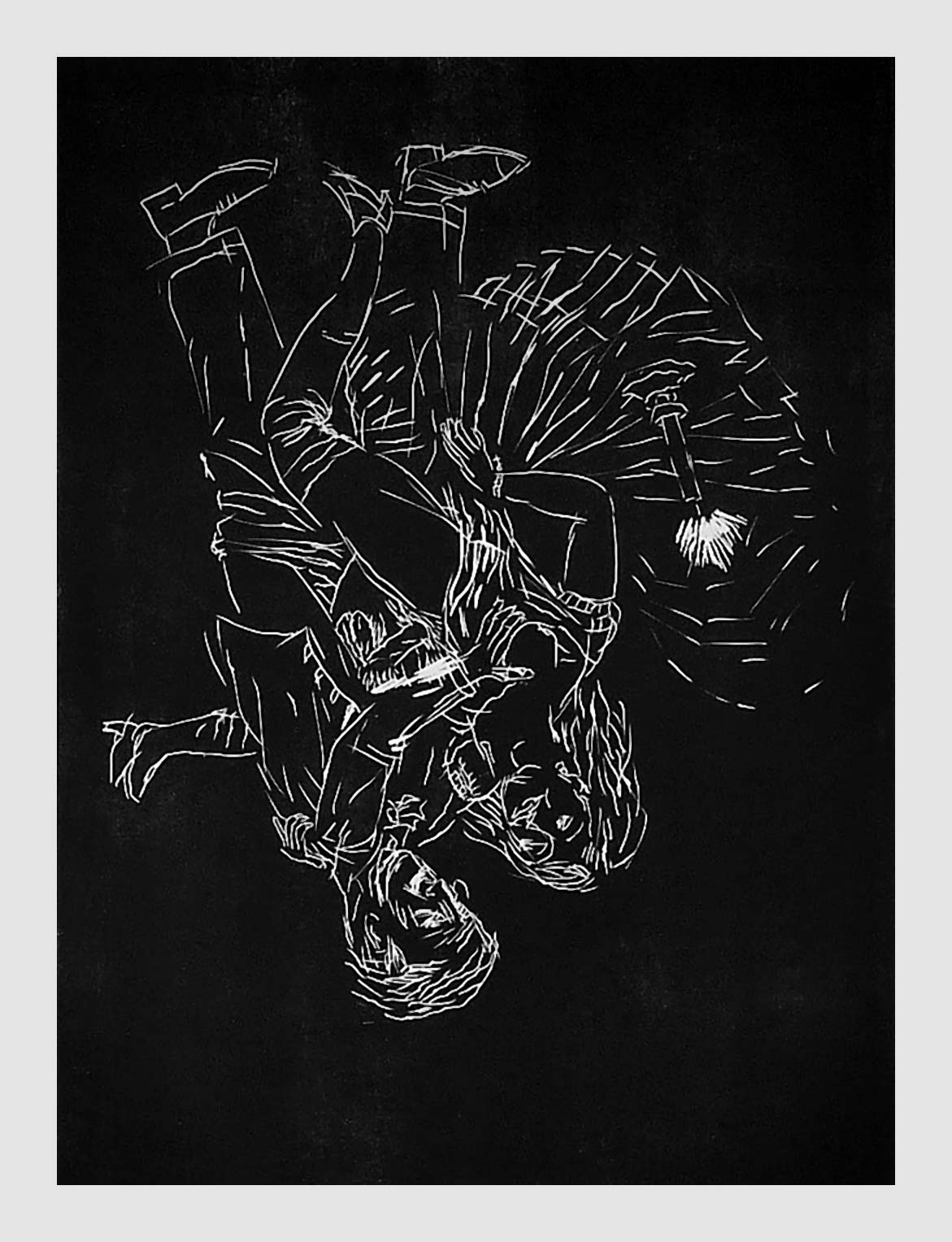
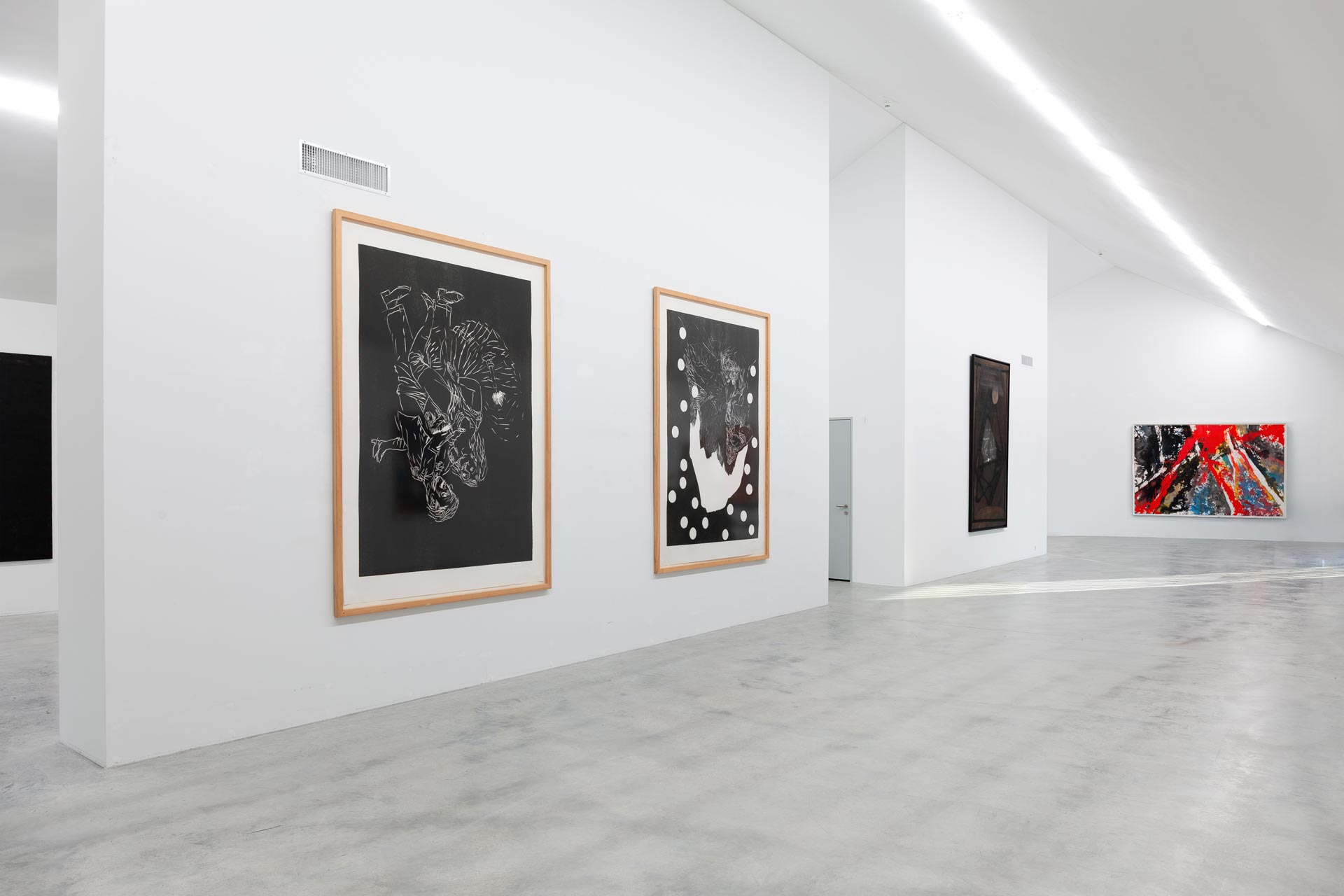
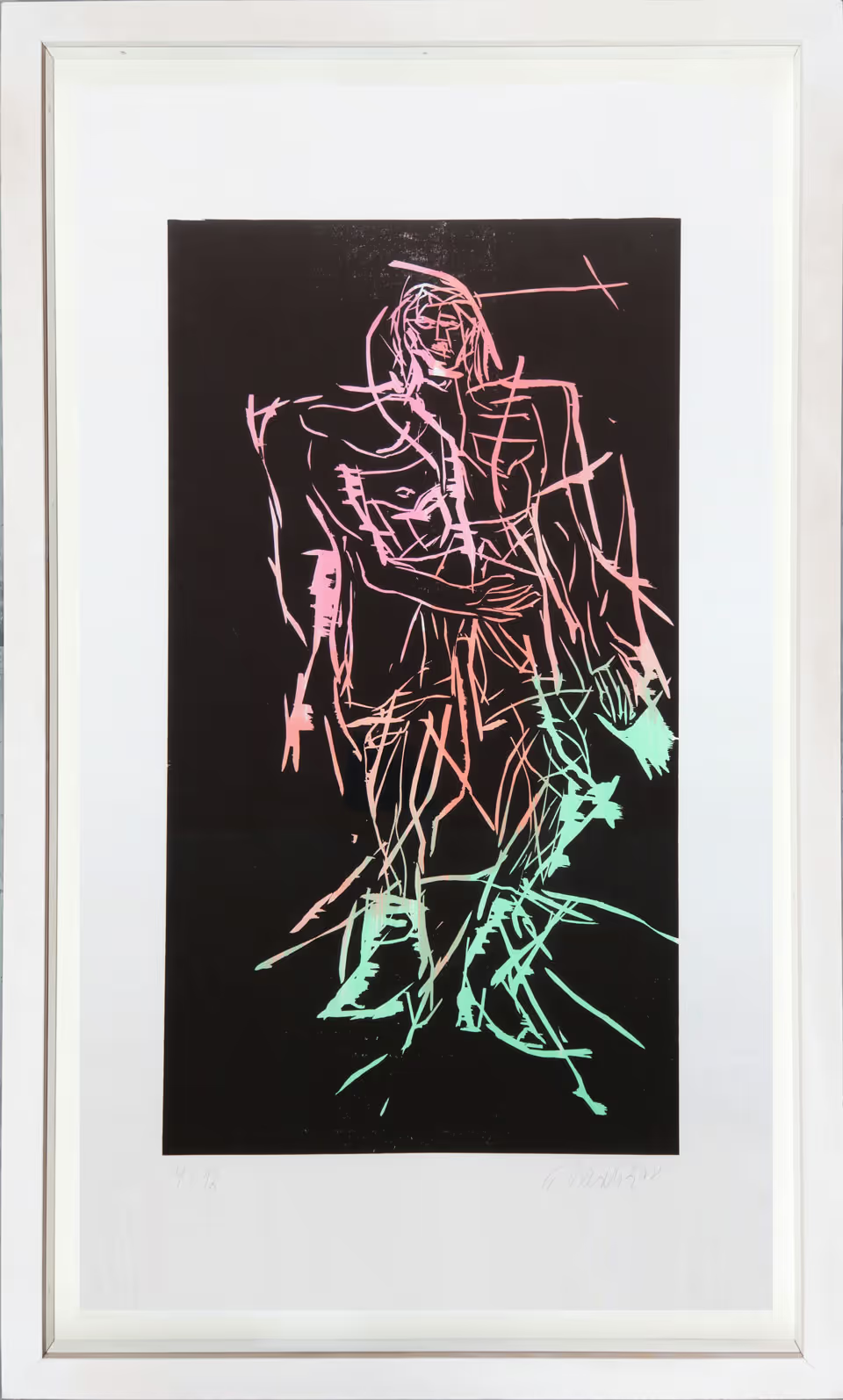
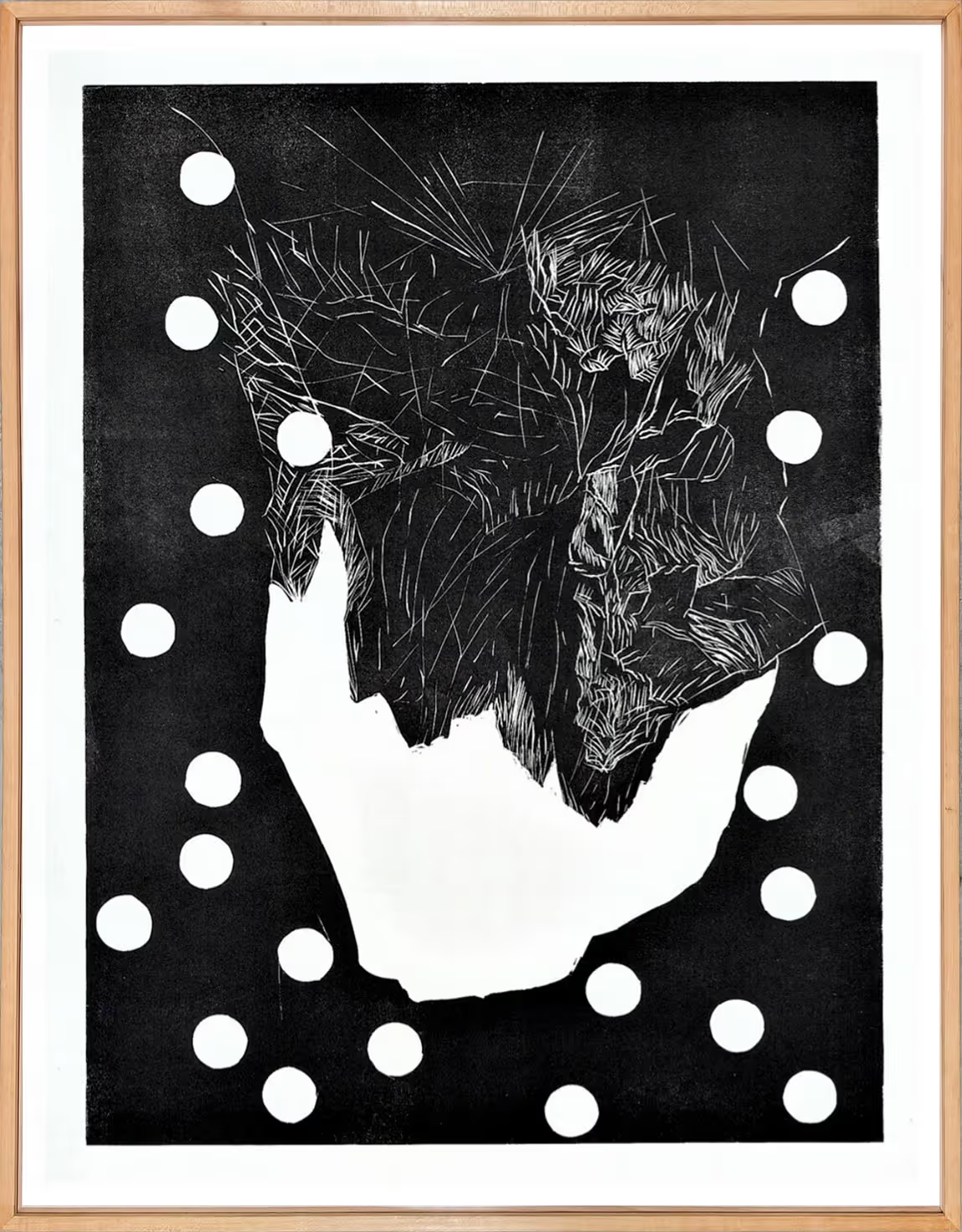
La Nuit mit Marie
Linocut on paper
202 x 150 cm to 228 x 170 cm
Copy 2/6.
Numbered in pencil lower left. Signed and dated in pencil lower right
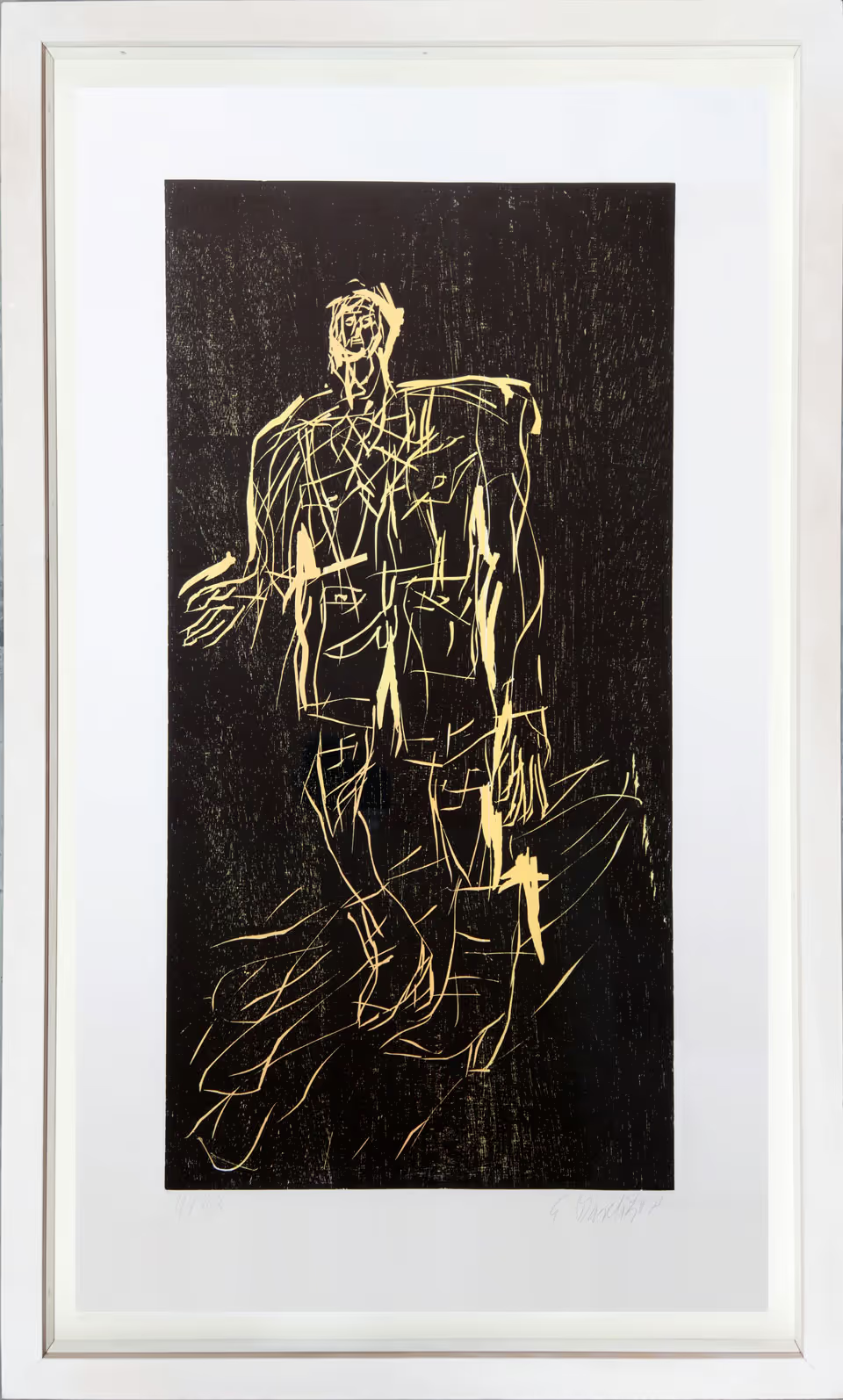
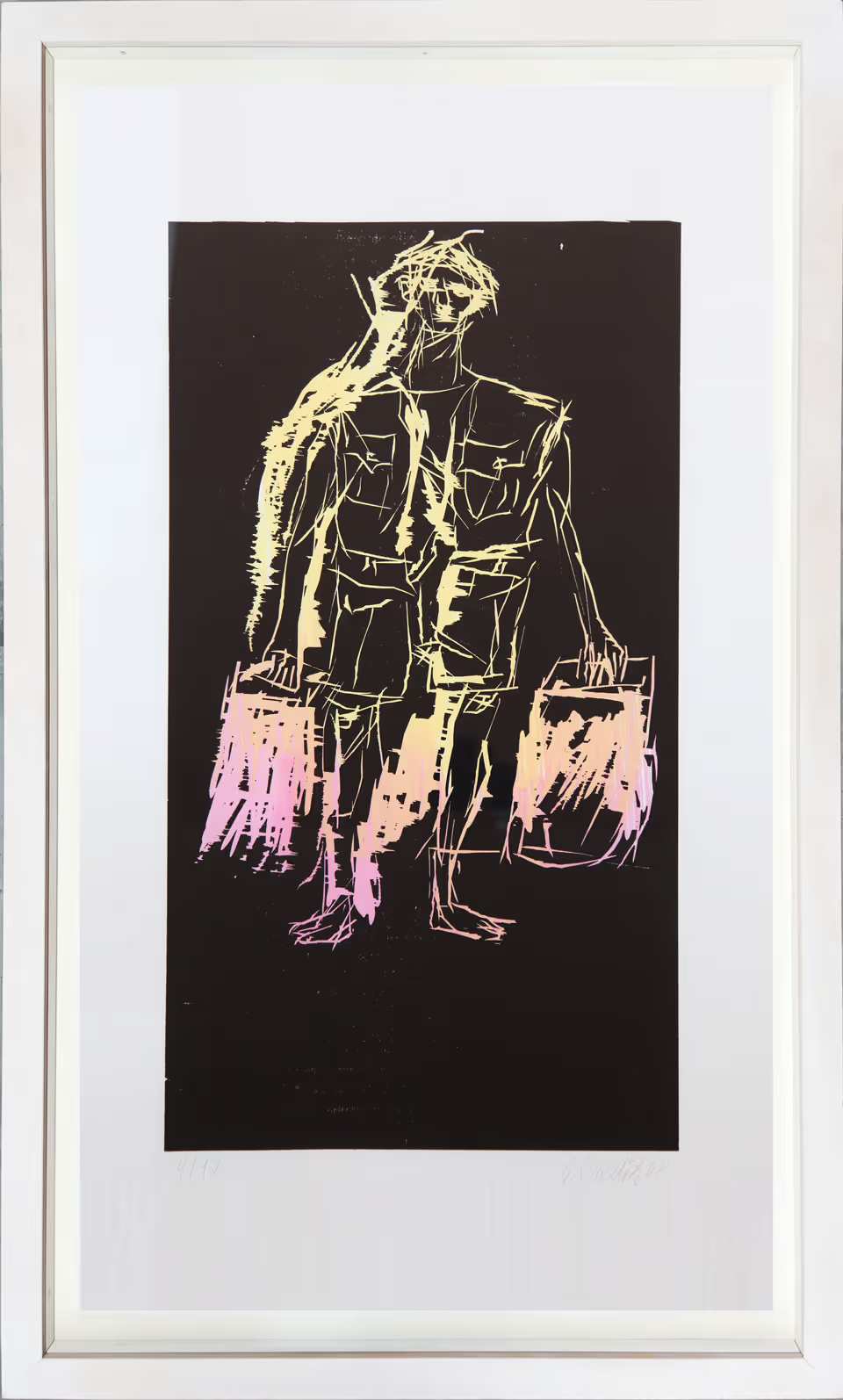
*La Nuit* with Marie is part of Georg Baselitz’s large-format print series *Belle Haleine *. The title of the series refers to Marcel Duchamp’s and Man Ray’s readymade artwork *Belle Haleine, Eau de Voilette * (1920). The title is a play on words with “Eros, c’est la vie,” which roughly translates to “Love [or sex], that is life”—an interpretation that Baselitz incorporates into the ten prints. The prints, in turn, are inspired by 19th-century erotic depictions and have been translated by Baselitz into his own characteristic, expressive visual language.
As in many of his works since 1969, Baselitz turns the figures upside down to avoid a literal interpretation of his subject.
Within the Belle Haleine series, the title *La Nuit mit Marie* refers to a muse and model of the painter Balthus, work yet another art-historical reference work our work . Like several other pieces in the series, the work thus draws on various connections to 20th-century art history and brings them together within Baselitz’s own visual language.
For this series, Baselitz worked directly on large-format linoleum plates, which he carved without any preliminary sketches. This spontaneous and direct approach is evident in the striking lines and lively texture of the print.
Born in 1938 and raised in the Saxon village of Deutschbaselitz in the district of Bautzen, the German-Austrian painter, sculptor and graphic artist Georg Baselitz (real name Hans-Georg Kern) is one of the most internationally renowned contemporary artists.
The central theme of his figurative-expressive works is destruction and order, often mixed with autobiographical traits. As a young adult, he became acquainted with the repressive state doctrine of the GDR. After just two semesters at the Academy of Fine and Applied Arts in East Berlin, he was expelled from the country for "socio-political immaturity". After studying art in West Berlin, Baselitz left behind the socialist realism of the GDR with its typecast heroes and its heroization of work. He enthusiastically turned to new trends from the USA such as Tachism, Abstraction and Action Painting. Baselitz found lasting inspiration above all in the free, radical and impetuous working methods of abstract expressionism, which emphasized the process of creation and the effect of color and "painting as action". Baselitz saw this as an outlet for renouncing social constraints. From 1969, Baselitz turned the pictorial motif around 180 degrees. Baselitz thus not only broke with traditional painting in Germany, but also developed a new direction in figurative art at a time when abstraction was regarded as a global language.
Despite being widely regarded as the quintessential German “prince of painters,” printmaking plays an equal role alongside painting in Baselitz’s body of work and is considered a medium of expression in its own right. Beginning in 1964, he created etchings, as well as linocuts and woodcuts, though to a much lesser extent. His explorations in printmaking build on existing themes from his painting, yet with their own distinct artistic merit. Baselitz’s work also work stage designs and sculptures.
From 1977 to 1983, Baselitz held a professorship at the State Academy of Fine Arts in Karlsruhe; from 1983 to 1988 and from 1992 to 2003, he was a professor at the Berlin University of the Arts.