


Emil Nolde
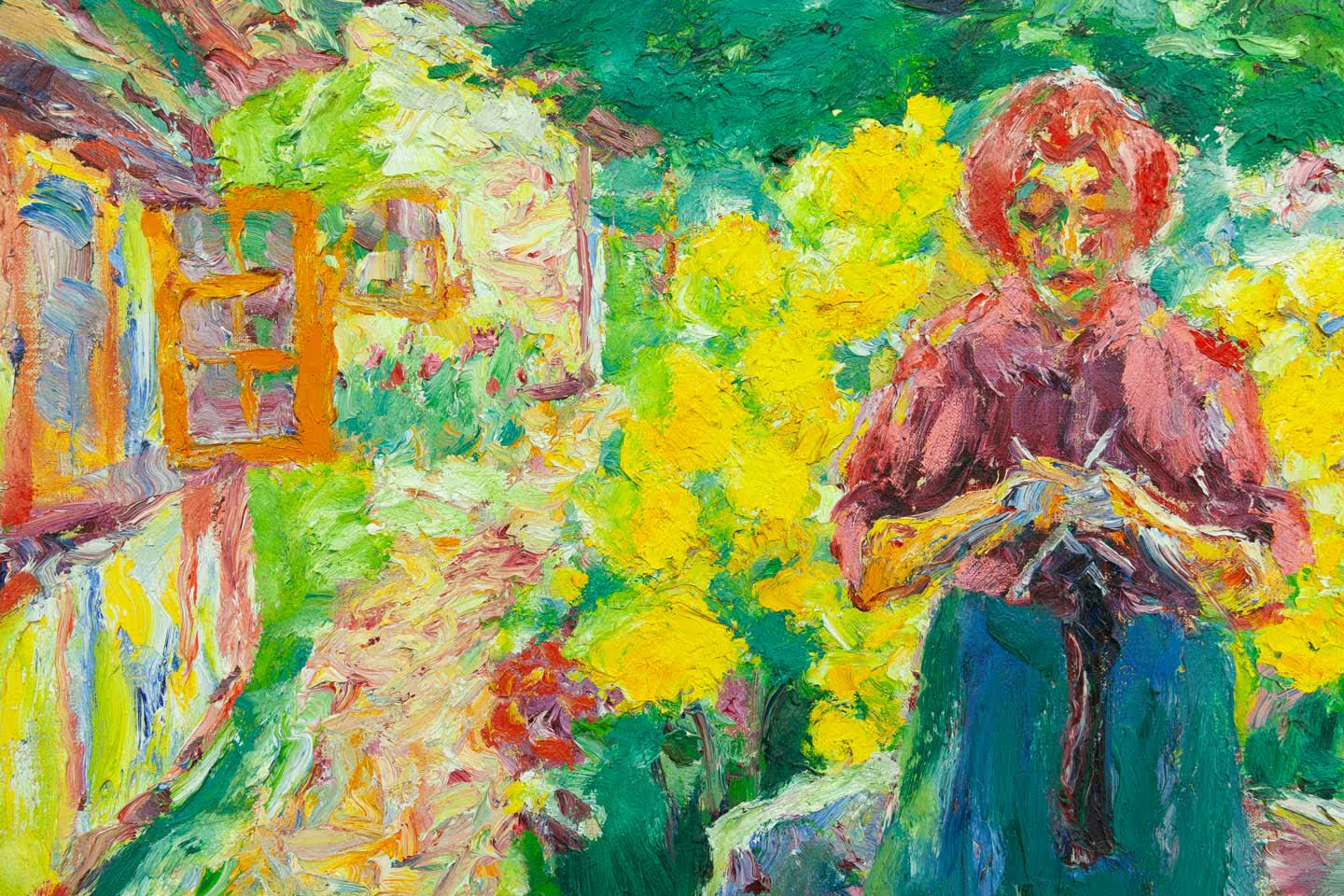
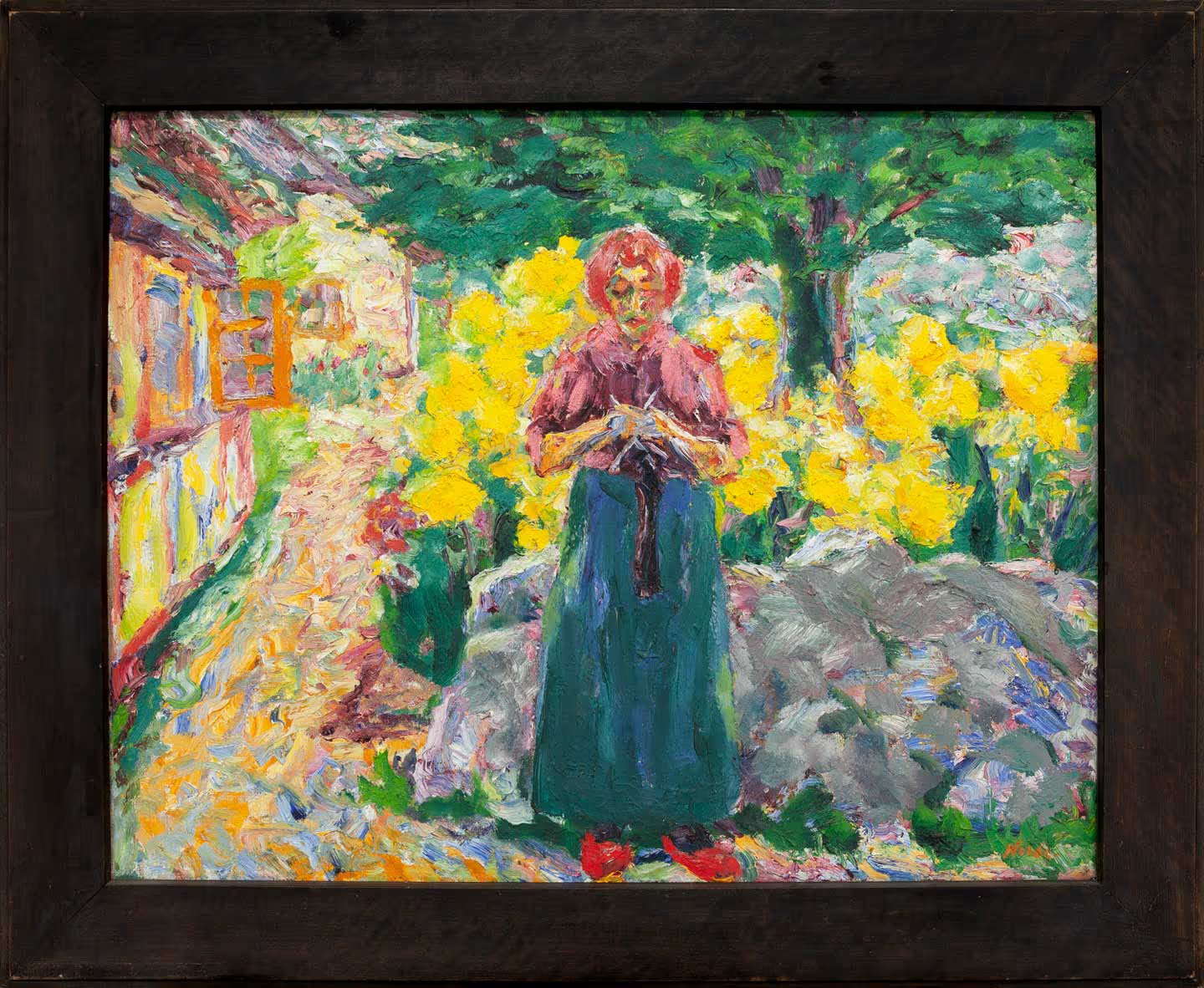
Blumengarten, Strickende Bäuerin
Oil on canvas
Signed lower right.
65 x 83.5 cm.
Signed on the reverse of the stretcher frame and titled "Strickende Bäuerin" (Knit-ing Peasant Woman).
The painting depicts a female figure who is completely absorbed in her handiwork and appears to be nestled within a lush, overgrown garden landscape. The figure is not conceived as an individualized portrait, but rather as part of a color-saturated, vegetal organism. The pictorial space is structured by layered planes; the sense of depth arises less from perspective than from zones of color. Dominant are luminous shades of red, yellow, and green, applied in a thick, impasto style and set in striking contrast to one another. The contours appear partially dissolved, while the vegetation seems to shimmer. Human and nature do not exist in a hierarchical relationship—the peasant woman is integrated into the field of flowers both in terms of color and form. The motif combines intimacy, rural simplicity, and an almost ecstatic use of color.
The painting belongs to the early phase of German Expressionism and can be placed chronologically within the context of the "Brücke" artists’ group, with which Nolde was closely associated in 1906–07. Characteristic features include a departure from naturalism, the expressive autonomy of color, and a tendency toward formal simplification. The garden functions not as a topographical location but as an emotionally charged space of color. The painterly language shows affinities with Vincent van Gogh in the intensification of the palette and the gestural application of paint, yet at the same time reveals a specifically Nordic sensibility: less urban-modern than rather shaped by a mystical understanding of nature. The motif of the working peasant woman combines rural genre depiction with expressionist subjectivity—not a socially realist account, but a vision of primal authenticity. The painting thus stands at the threshold between Late Impressionism and an autonomous expressionist visual language.
Within Nolde’s body of work , this work marks work early manifestation of the themes that would later become central: gardens, flowers, vibrant colors, and the fusion of figure and nature. Nolde’s own garden work became an iconic visual space in his work ; its provenance through the Nolde Foundation in Seebüll further underscores the painting’s significance within the artist’s biography. The scene still retains a certain tranquility and representational clarity; in later flower paintings, representational elements increasingly dissolve in favor of chromatic ecstasy. “Knitting Peasant Woman” thus depicts a transitional state: between a narrative motif and pure painterly intensity. The work the moment when Nolde definitively established color as the primary vehicle of meaning—a decisive step toward his later, almost visionary flower paintings.
As one of the leading painters, watercolorists and graphic artists of German Expressionism in the 20th century, Emil Nolde is particularly known for his expressive and intense colors. At the same time, tendencies towards abstraction are visible in his two-dimensional compositions with hard contours in bright colors.
Born in 1867 in Nolde, Schleswig-Holstein, Nolde completed an apprenticeship as a carver and draughtsman at the School of Arts and Crafts in Flensburg in 1884 and worked as a freelance artist from 1898, initially with small colorful drawings of the Swiss mountains. After studying at Adolf Hölzel's painting school in Dachau and at the Académie Julian in Paris, Nolde increasingly abandoned lyrical landscape paintings and devoted himself to more colorful flower and garden paintings. Nolde accepted an invitation from the Expressionist artists' association "Brücke" in 1906 and established another graphic technique in the group, etching, established contacts with collectors and initiated the group's "passive memberships" and "annual gifts", which were subject to a fee. After leaving the group in 1907, Nolde joined the "Berliner Secession" in 1909 and shortly afterwards became a co-founder of the "Neue Secession". He produced his first religious works with Christian themes and pictures of Berlin's nightlife. Nolde travels to Europe and takes part in a German New Guinea expedition of the Imperial Colonial Office lasting just under a year. In 1926, Nolde and his wife Ada finally moved to Seebüll, where he devoted himself intensively to painting.
The role of Emil Nolde under National Socialism is the subject of lively debate among researchers. What is new is that Emil Nolde, although ostracized as a "degenerate" artist from 1937 and banned from his profession in 1941, remained a supporter of the Nazi regime until the collapse of the Third Reich. This is confirmed by the initial results of a historical study supported by the Nolde Foundation on Emil Nolde's links to National Socialism. The Foundation sees it as its duty to clarify past misconceptions about Emil Nolde as a phenomenon of German post-war repression. Furthermore, new findings and conclusions are to be introduced into the scholarly reappraisal of the extensive work of one of the most famous German expressionists.
Nolde died in Seebüll in 1956.