
Emil Nolde
: Portraits of Women
An online viewing room exploring the female presence in selected works by Emil Nolde
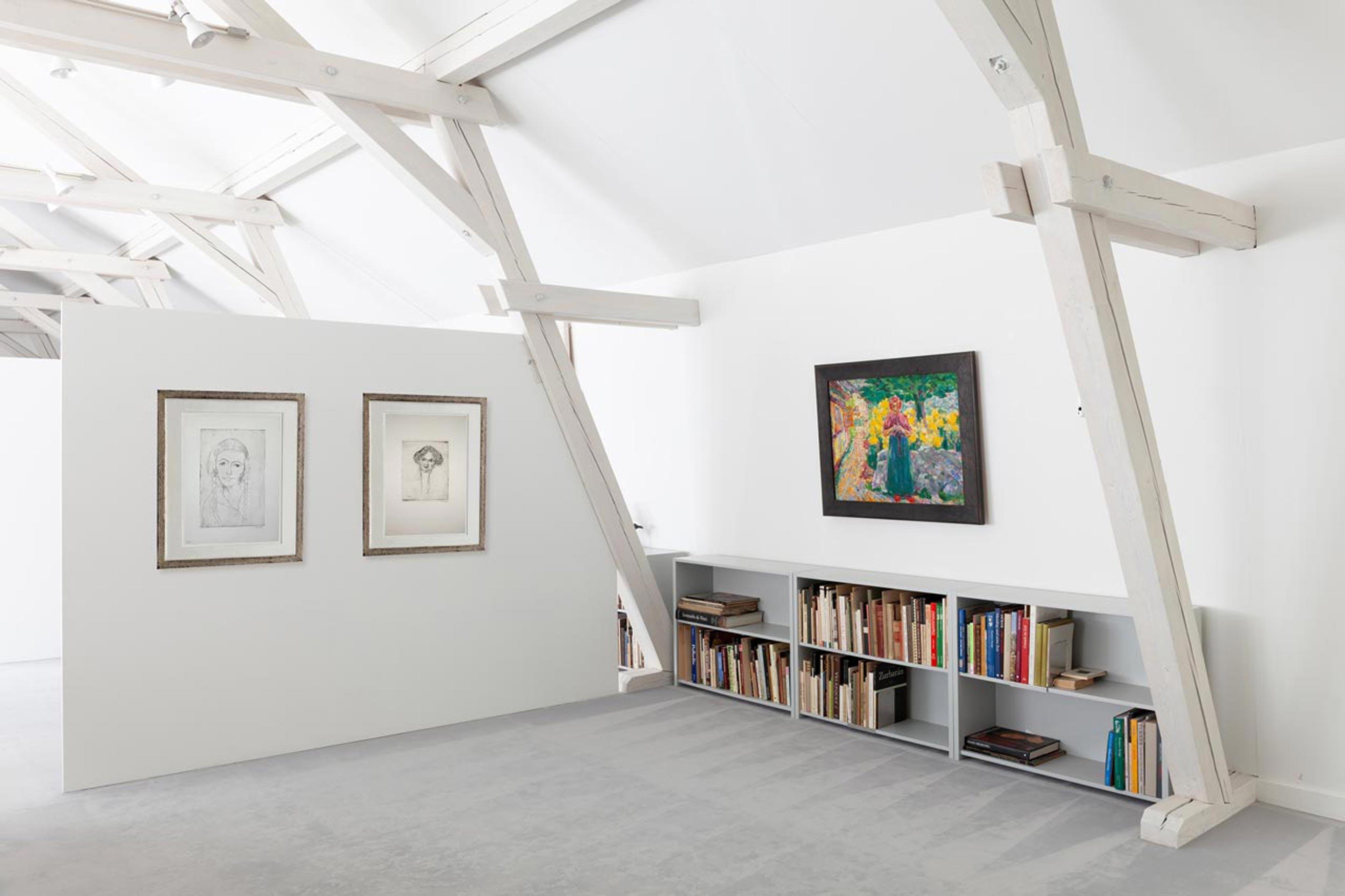
This Viewing Room brings together a focused selection of works by Emil Nolde, spanning from his Brücke period Brücke to his works of the 1920s. The theme of women takes center stage: The selection highlights the diverse roles and manifestations of female figures in Nolde’s works—from the peasant woman of the countryside to the intellectual Rosa Schapire, through to his years in the big city of Berlin, the dance-like stage figure, and the intimate family portrait.
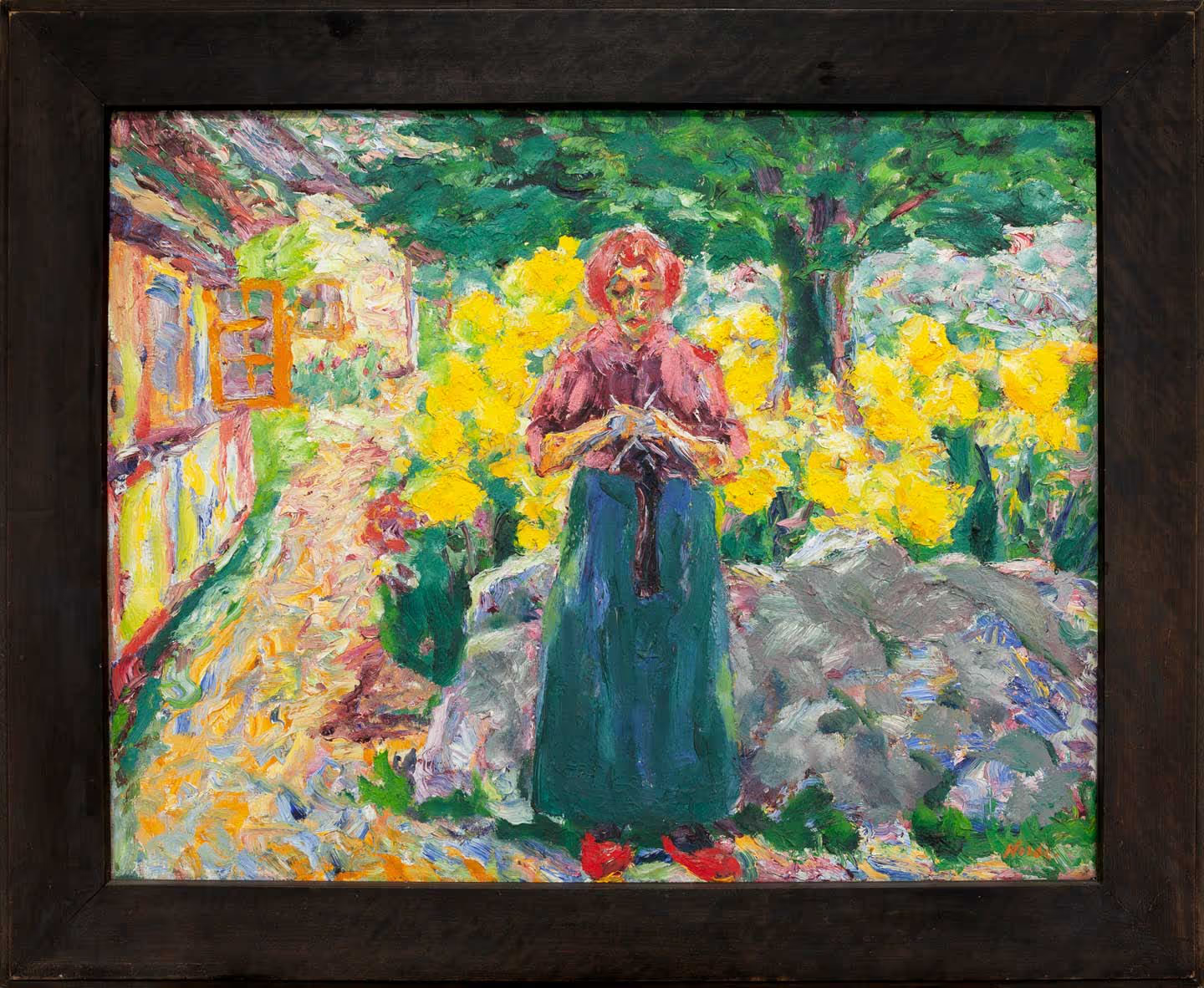
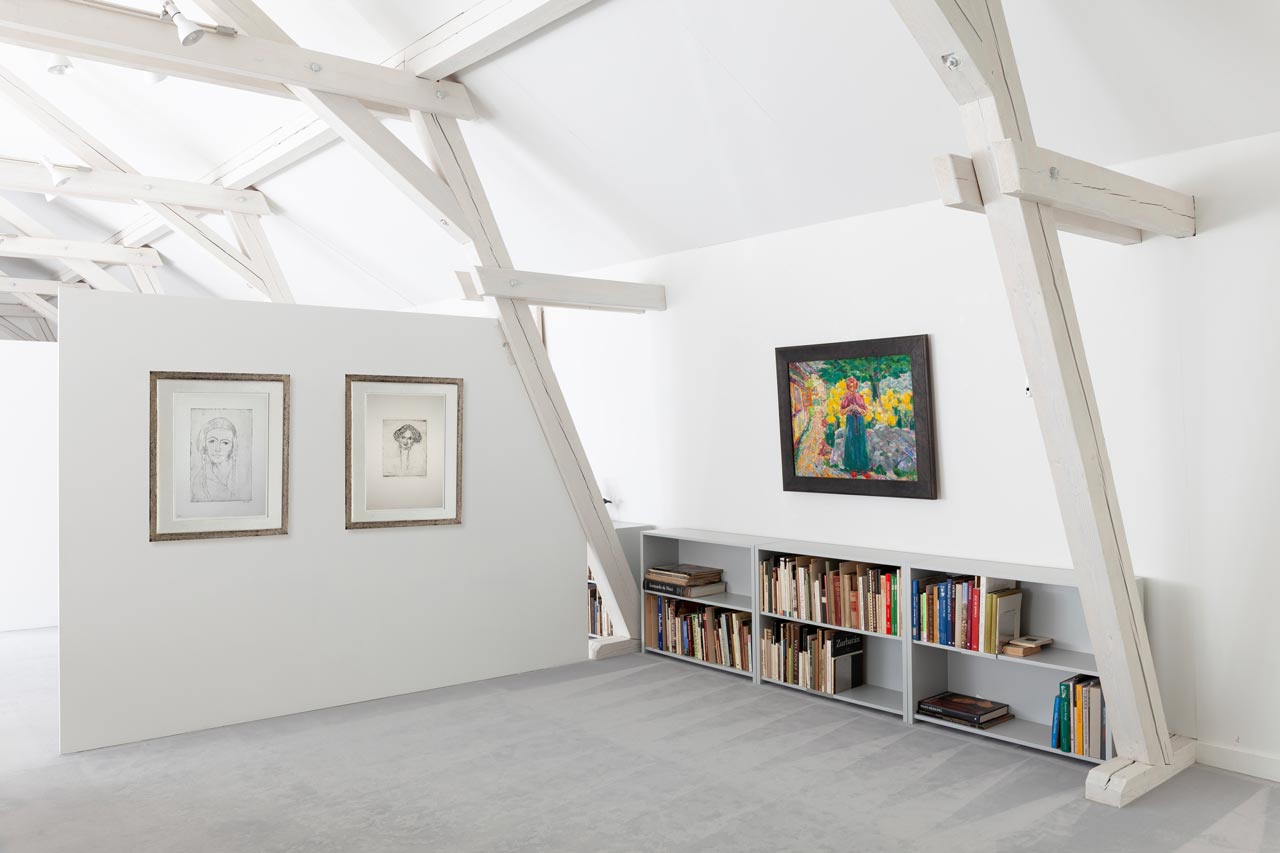
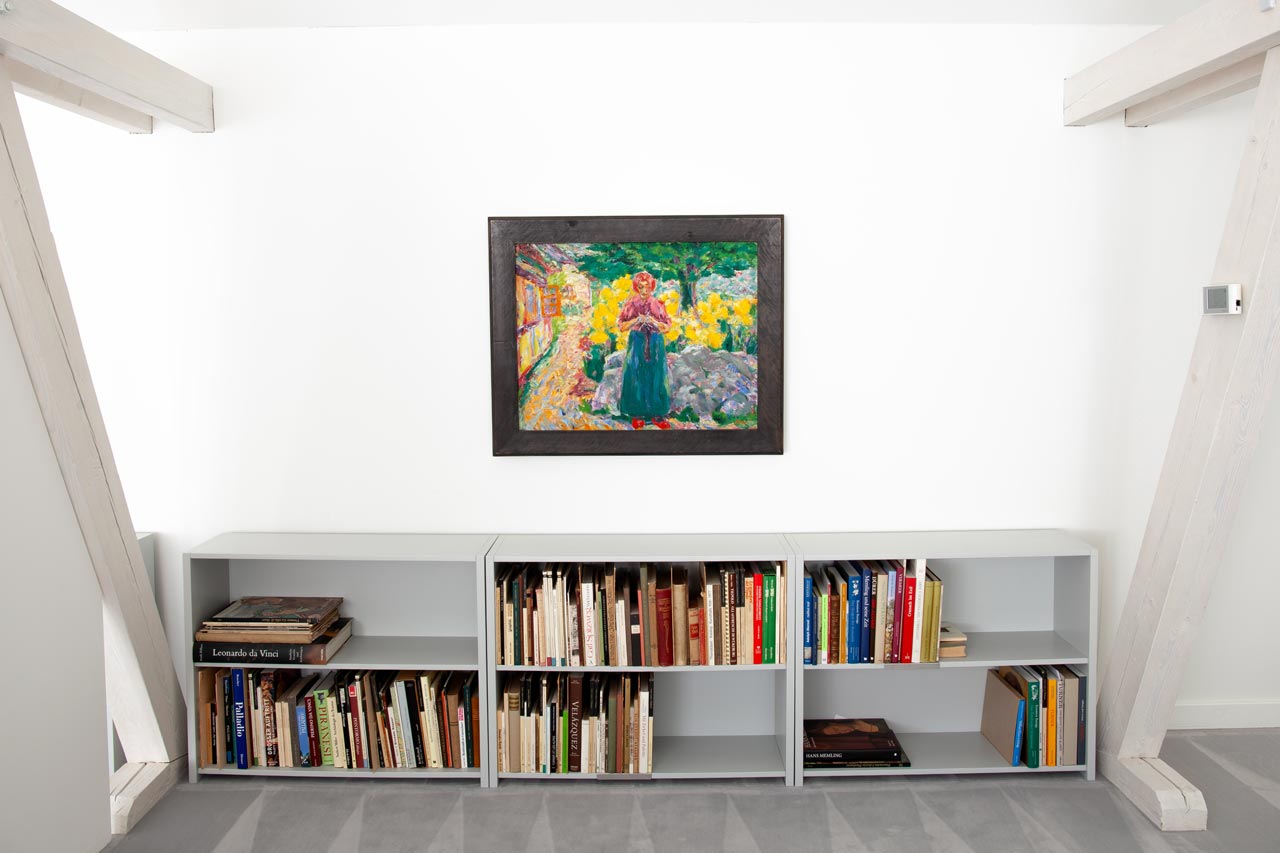
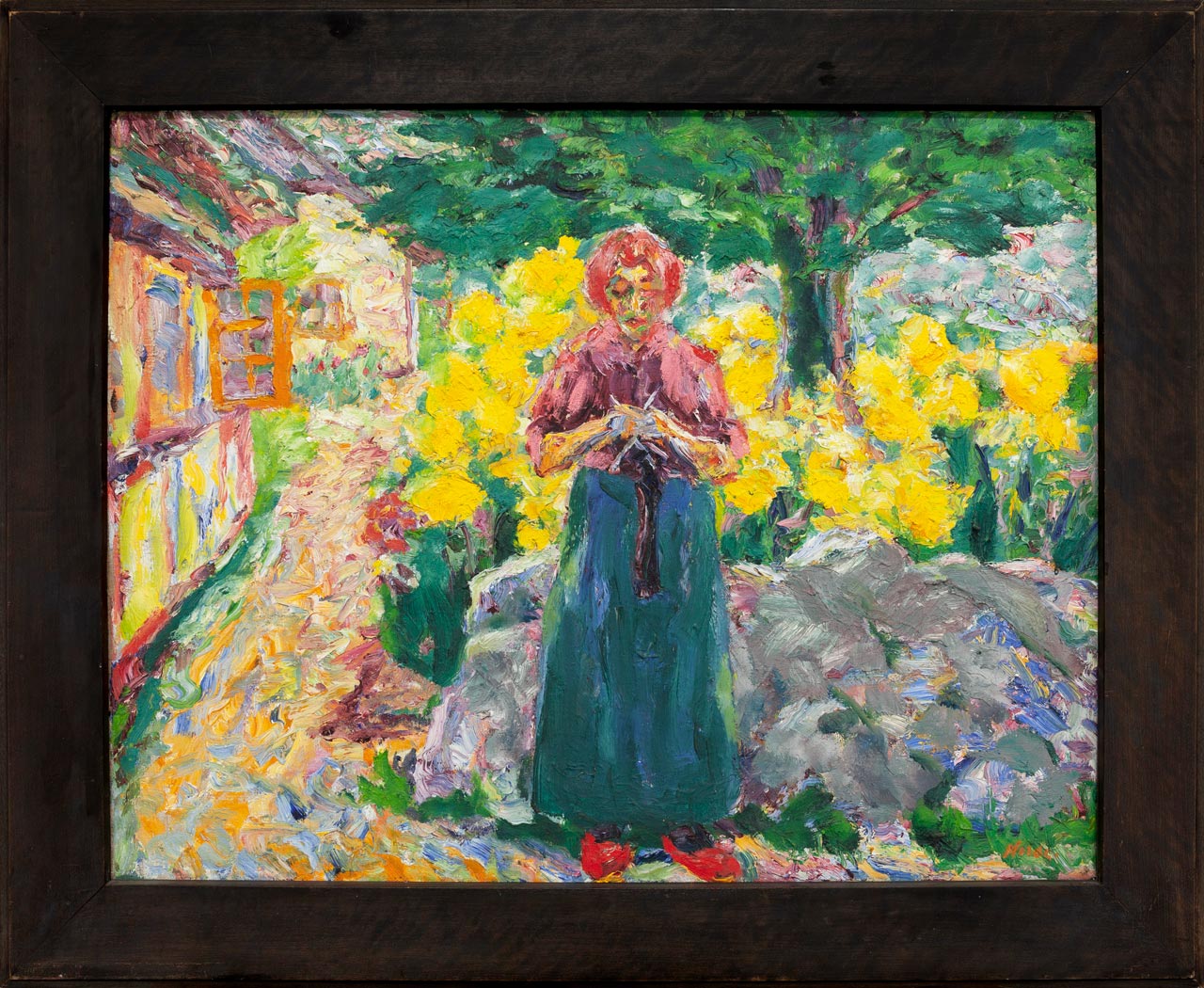
The centerpiece of the exhibition is the early painting *Flower Garden. Knitting Peasant Woman* (1908), created during a pivotal phase of Nolde’s artistic development, as he increasingly turned toward the expressive freedom of German Expressionism. At the same time, the work artist’s origins as the son of a farming family.
The 1907 etching *Miss Dr. Sch. (Rosa Schapire) * was created during Nolde’s brief membership in Brücke, which he joined in 1906 and left as early as November 1907. The portrait depicts the influential art historian, collector, and women’s rights activist Rosa Schapire, one of the key patrons of German Expressionism.
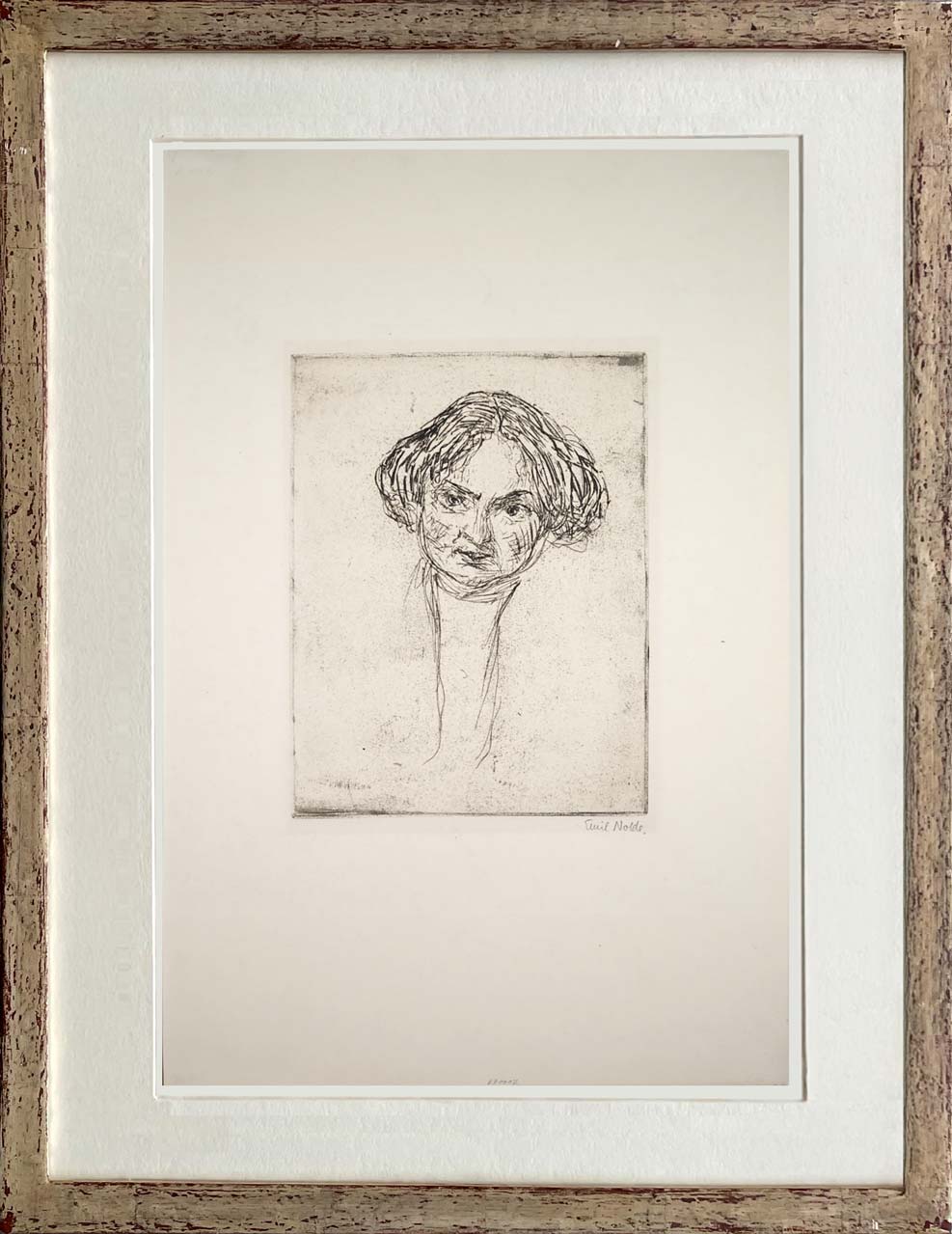
*Girl’s Profile* (*Girl with a Hat*) is an etching created in Berlin, where Nolde closely observed urban life and its inhabitants. Around 1911, he created a series of works depicting people in the big city—fleeting impressions of street scenes and encounters.
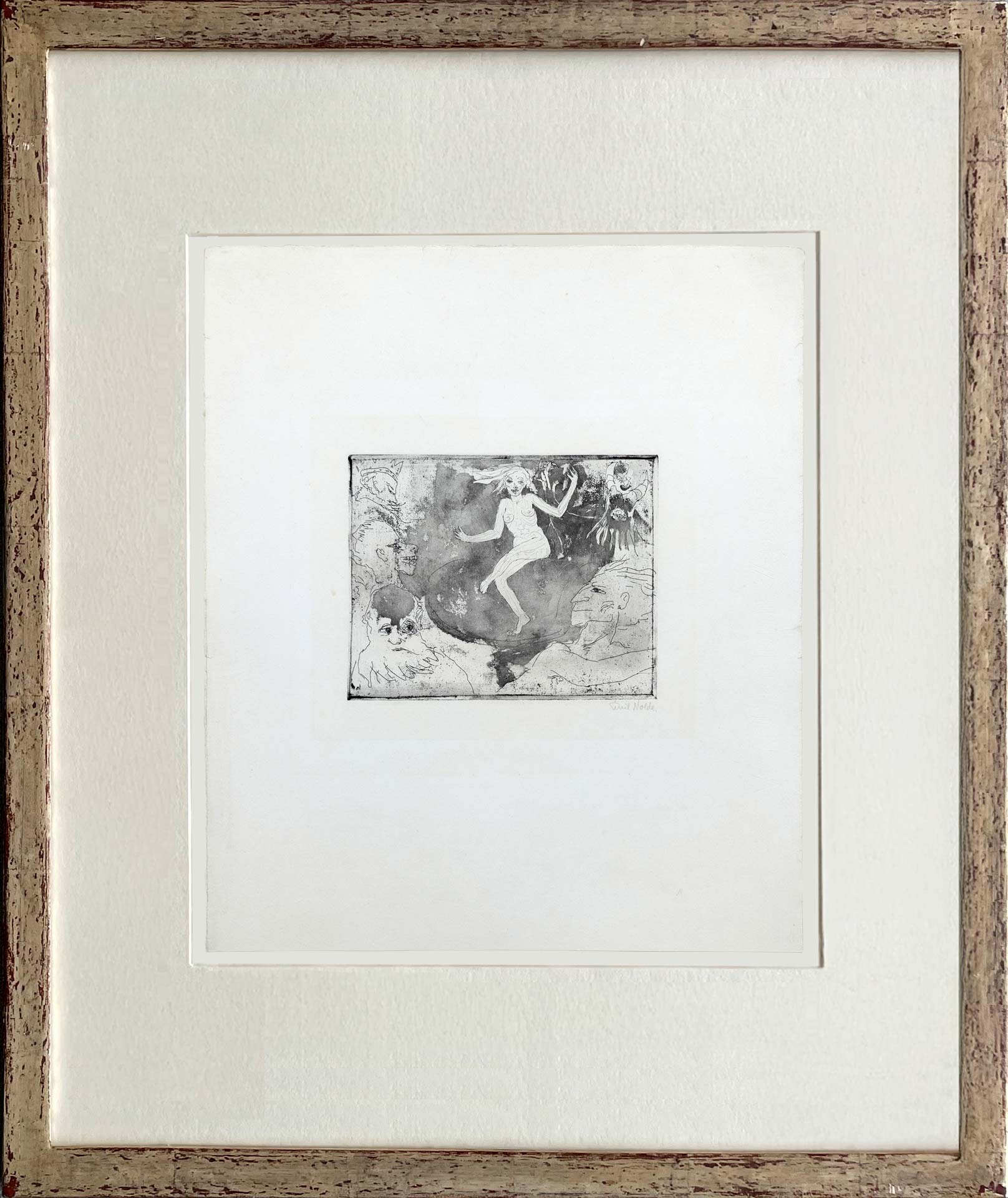
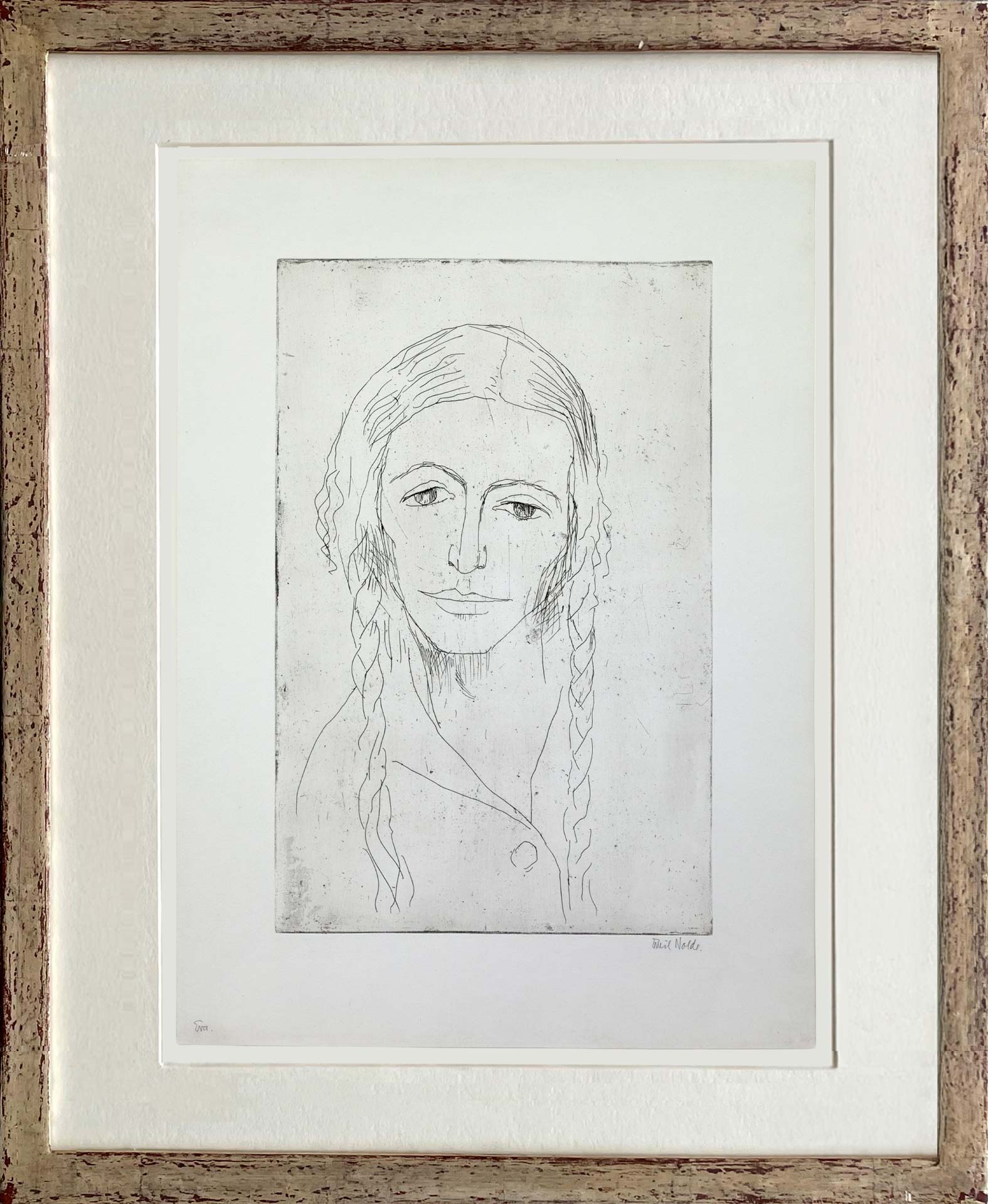
The print *Death as a Dancer* takes up the late-medieval motif of the Dance of Death and depicts grotesque figures surrounding a dancing girl through whose body her bones are already visible. The later etching *Eva* from 1923, on the other hand, reveals a calmer and psychologically more intense form of portraiture.
Header: Flower Garden. A Peasant Woman Knitting, 1908
1908 *
* – Flower Garden. A Peasant Woman Knitting
At the center of the Viewing Room stands the painting “Flower Garden: Knitting Peasant Woman” (1908) by Emil Nolde. It depicts a female figure completely absorbed in her handiwork, seemingly nestled within a lush, overgrown garden landscape. The figure is not conceived as an individualized portrait, but rather as part of a color-saturated, vegetal organism. The pictorial space is structured by layered planes; the sense of depth arises less from perspective than from zones of color. Dominant are luminous shades of red, yellow, and green, applied in a thick, impasto style and set in striking contrast to one another. The contours appear partially dissolved, while the vegetation seems to shimmer. Human and nature do not exist in a hierarchical relationship—the peasant woman is integrated into the field of flowers both in color and form. The motif combines intimacy, rural simplicity, and an almost ecstatic use of color.
The painting belongs to the early phase of German Expressionism and can be chronologically situated within the context ofBrücke artists’ group, with which Nolde was closely associated in 1906–07. Characteristic features include a departure from naturalism, the expressive autonomy of color, and a tendency toward formal simplification. The garden functions not as a topographical location but as an emotionally charged space of color. The painterly language shows affinities with Vincent van Gogh in the intensification of the palette and the gestural application of paint, yet at the same time reveals a specifically Nordic sensibility: less urban-modern than rather shaped by a mystical understanding of nature. The motif of the working peasant woman combines rural genre depiction with Expressionist subjectivity—not a socially realist account, but a vision of primal authenticity. The painting thus stands at the threshold between Late Impressionism and an autonomous Expressionist visual language.
Within Nolde’s oeuvre, this work marks work early manifestation of the themes that would later become central: gardens, flowers, vibrant colors, and the fusion of figure and nature. Nolde’s own garden work became an iconic pictorial space in his work ; its provenance through the Nolde Foundation in Seebüll further underscores the painting’s significance within the artist’s biography. The scene still retains a certain tranquility and representational clarity; in later flower paintings, representational elements increasingly dissolve in favor of chromatic ecstasy. “Knitting Peasant Woman” thus represents a transitional state: between narrative motif and pure painterly intensity. The work the moment when Nolde definitively established color as the primary vehicle of meaning—a decisive step toward his later, almost visionary flower paintings.
Emil Nolde
Flower Garden. Knitting Peasant Woman
1908
Oil on canvas
65 x 83.5 cm
Signed on the back of the stretcher and titled "Knitting Peasant Woman."
Urban 247

1907 *
* – Miss Dr. Sch. (Rosa Schapire)
The etching *Fräulein Dr. Sch. (Rosa Schapire) *, created in 1907, is an early and expressive work on paper work Emil Nolde and depicts one of the most important intellectual patrons of German Expressionism. Rosa Schapire (1874–1954) was a pioneering German art historian, writer, collector, and advocate for modern art. As a dedicated women’s rights activist, she was among the first women in Germany to earn a doctorate in 1904 and became an important patron of theBrücke artists, particularly Karl Schmidt-Rottluff.
The year 1907 also marks Nolde’s association with Brücke group of artists, making this portrait a particularly striking work the artist’s celebrated Brücke. In this striking etching, Nolde captures both Schapire’s individuality and intellectual intensity through a direct graphic language characteristic of his early prints. The expressive treatment of line and shadow reflects the experimental spirit that accompanied the emergence of German Expressionism.
Rosa Schapire (1874–1954) was a pioneering German art historian, writer, collector, and advocate of modern art.
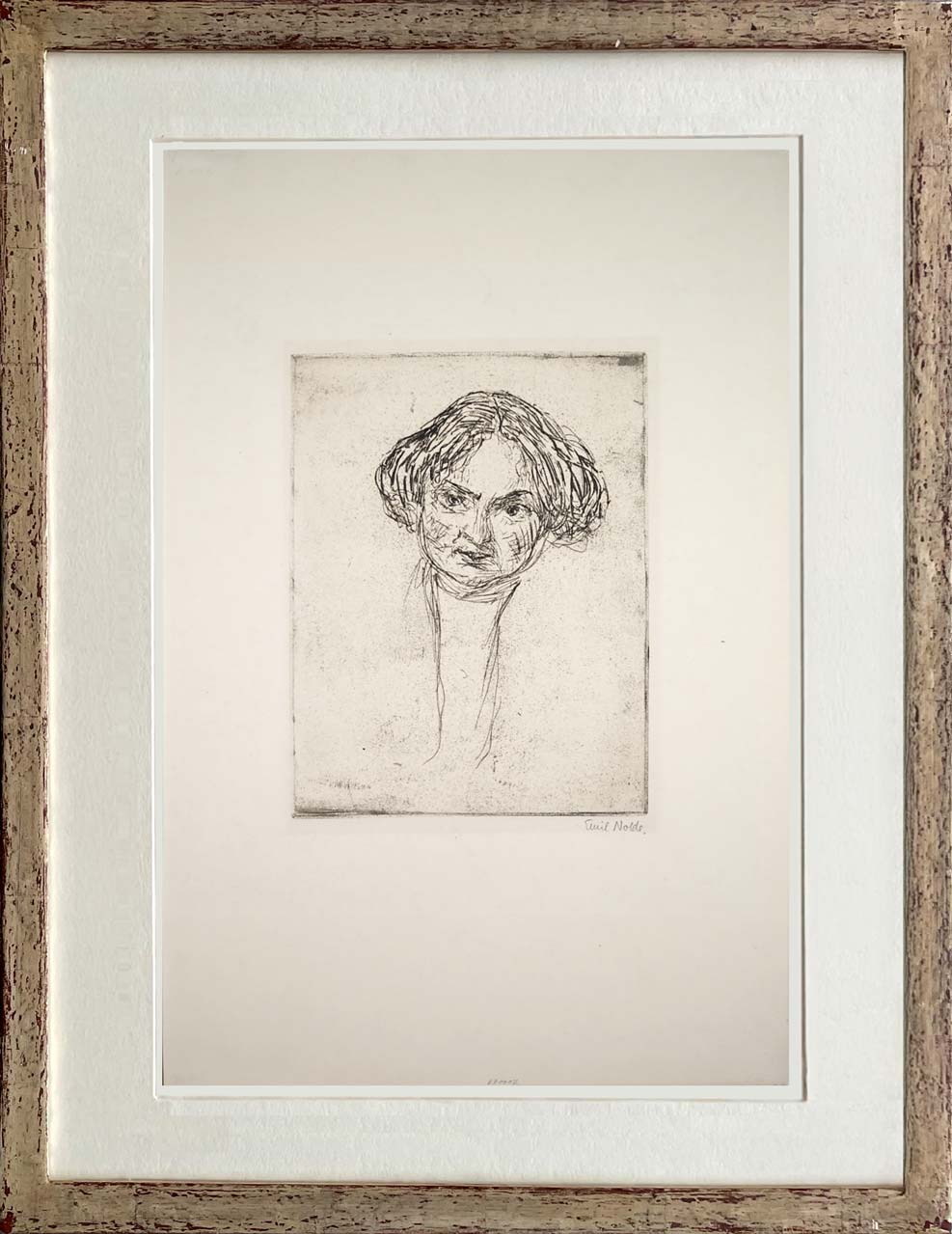
Dr. Sch. (Rosa Schapire)
1907
Etching
30.8 x 23.8 cm on 62 x 41.4 cm
One of at least six copies. Signed lower right. Inscribed "I.15" on the lower left margin of the paper.
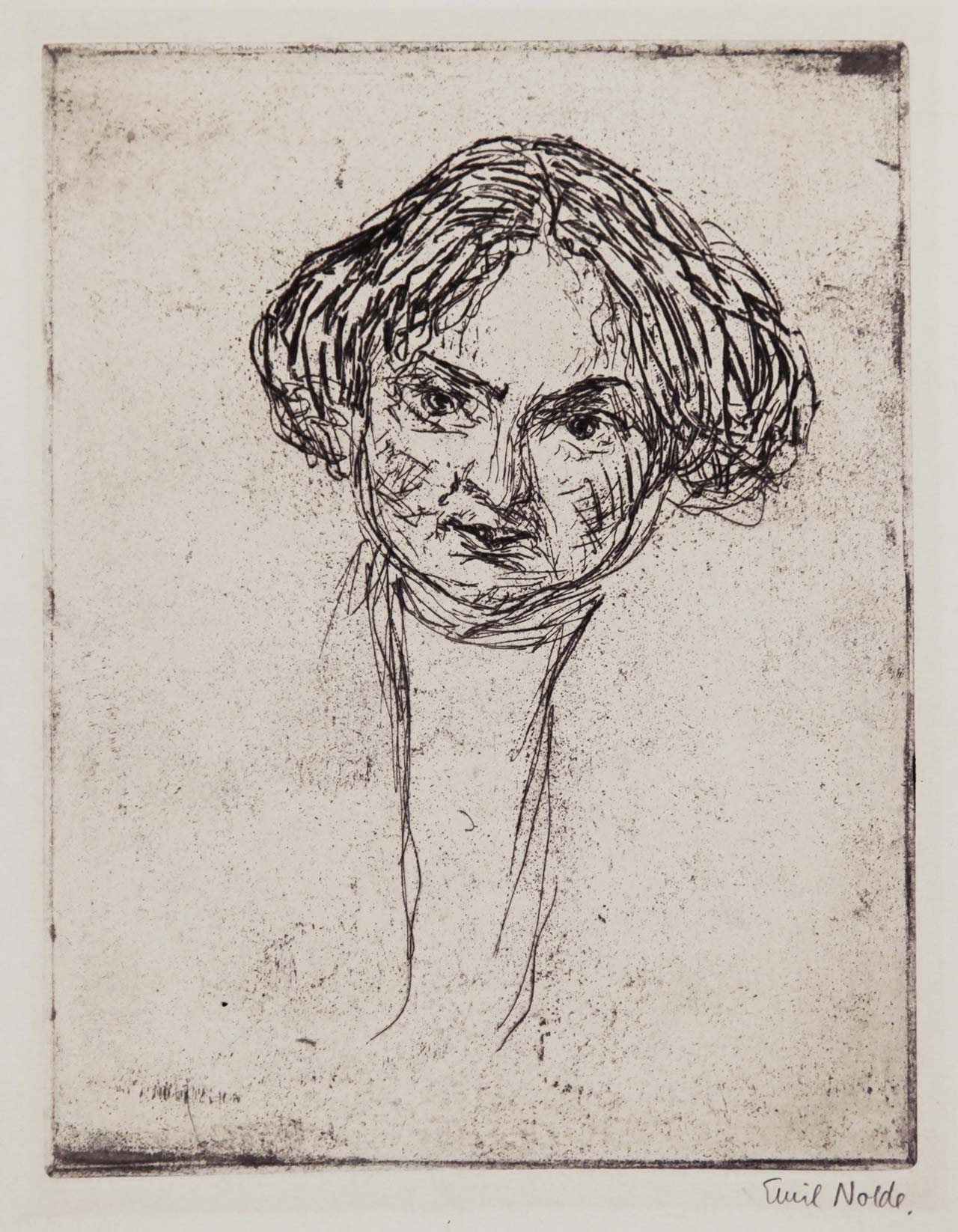
Dr. Sch. (Rosa Schapire), 1907 – Print, 30.8 x 23.8 cm
1911
– Portrait of a Girl (Girl with a Hat)
"Girl's Profile (Girl with a Hat) " is an etching by Emil Nolde, presumably created in Berlin, where the artist closely observed urban life and its inhabitants. Around 1911, Nolde created a series of works depicting people in the big city—fleeting impressions of street scenes and encounters—in this case, a girl wearing a hat.
Back in his studio, Nolde transformed these observations into concise, highly condensed graphic forms. With just a few decisive lines, he transforms the immediacy of urban perception into a refined and expressive etching that work characteristic of his graphic work .
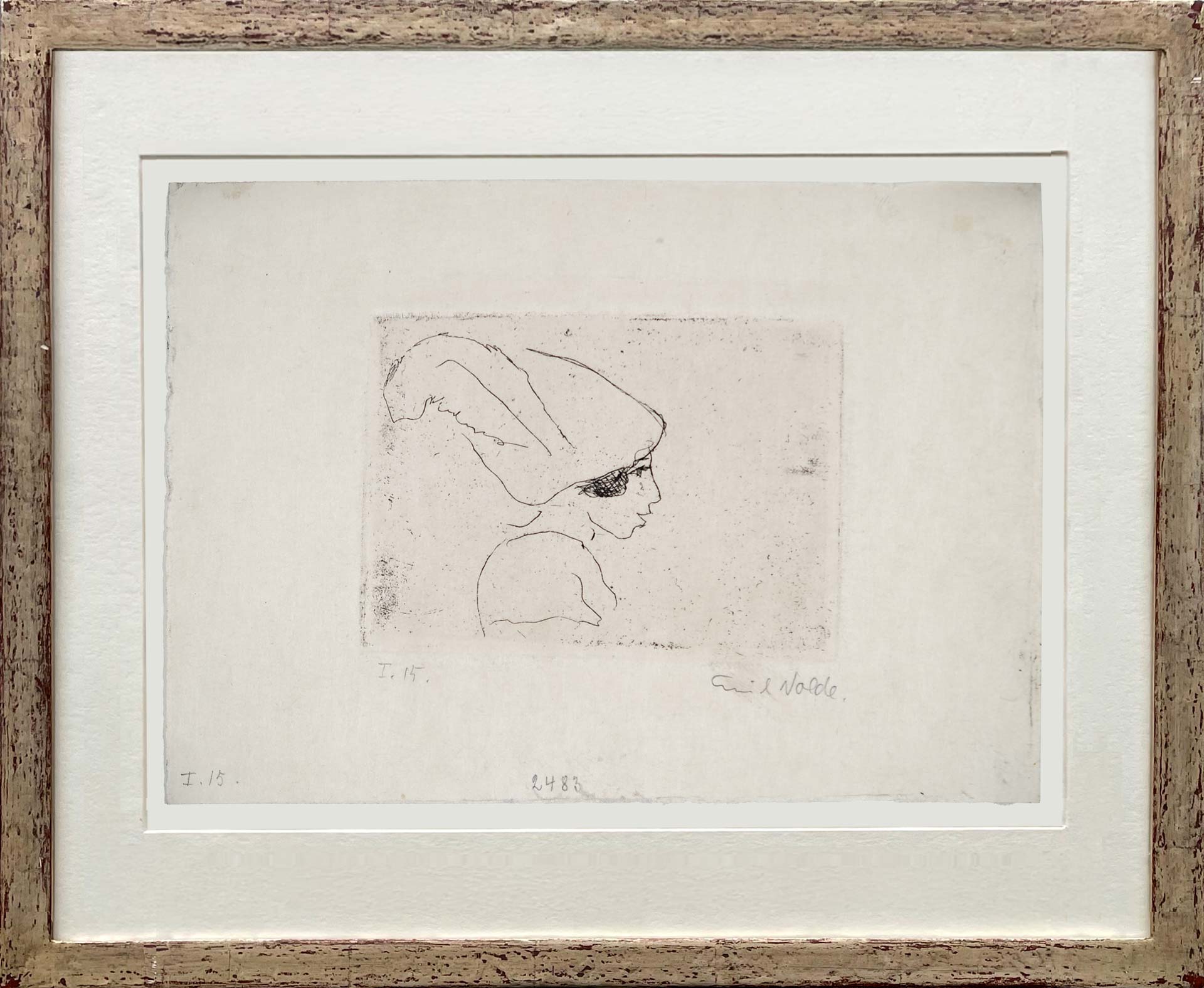
Profile of a Girl (Girl with a Hat)
1908
Etching
8 x 11 cm on 14.3 x 20 cm
On vélin. One of at least six copies. Signed lower right. Inscribed "I.15" on the lower left margin of the paper.
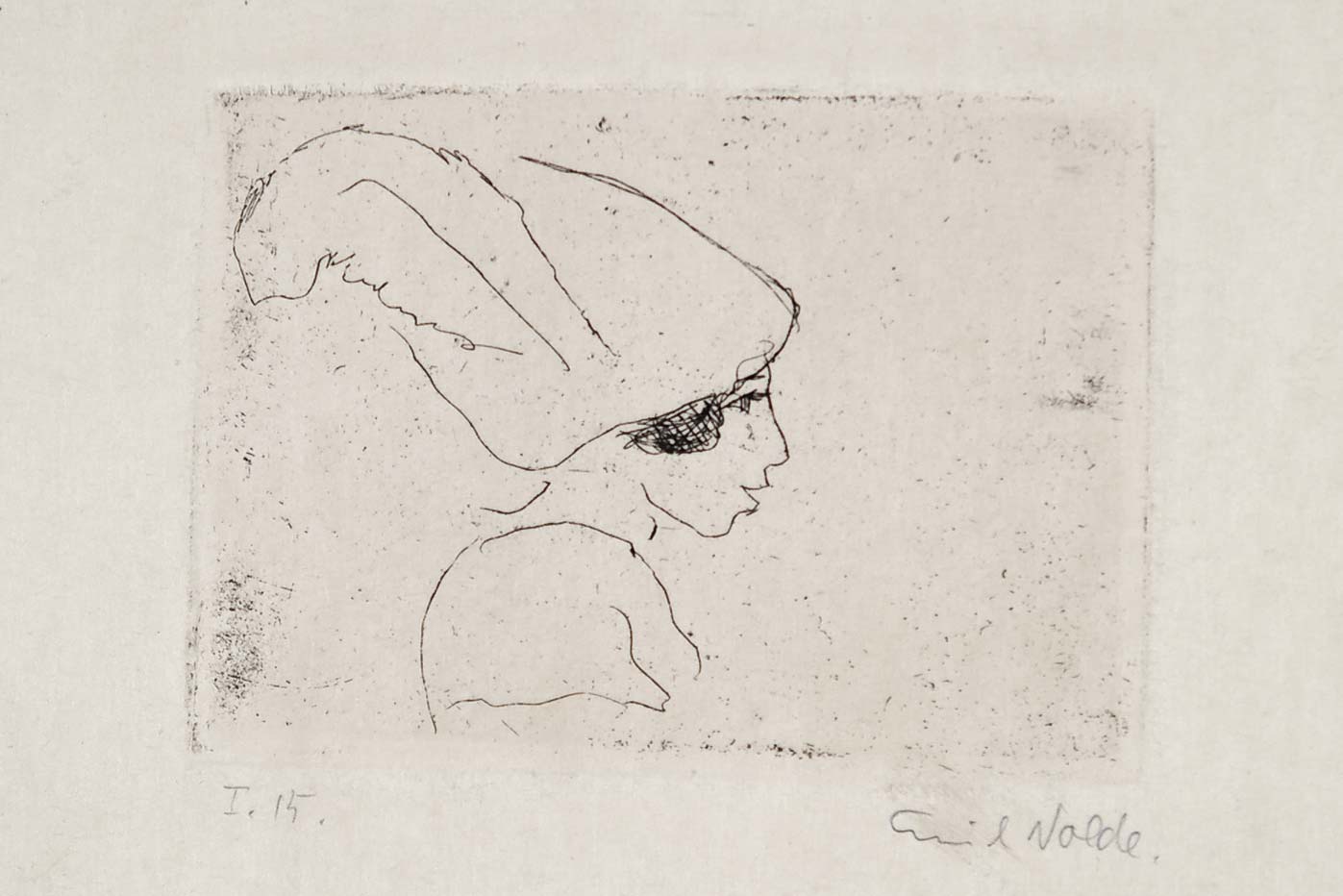
Girl's Profile (Girl with a Hat), 1908 - Print, 8 x 11 cm
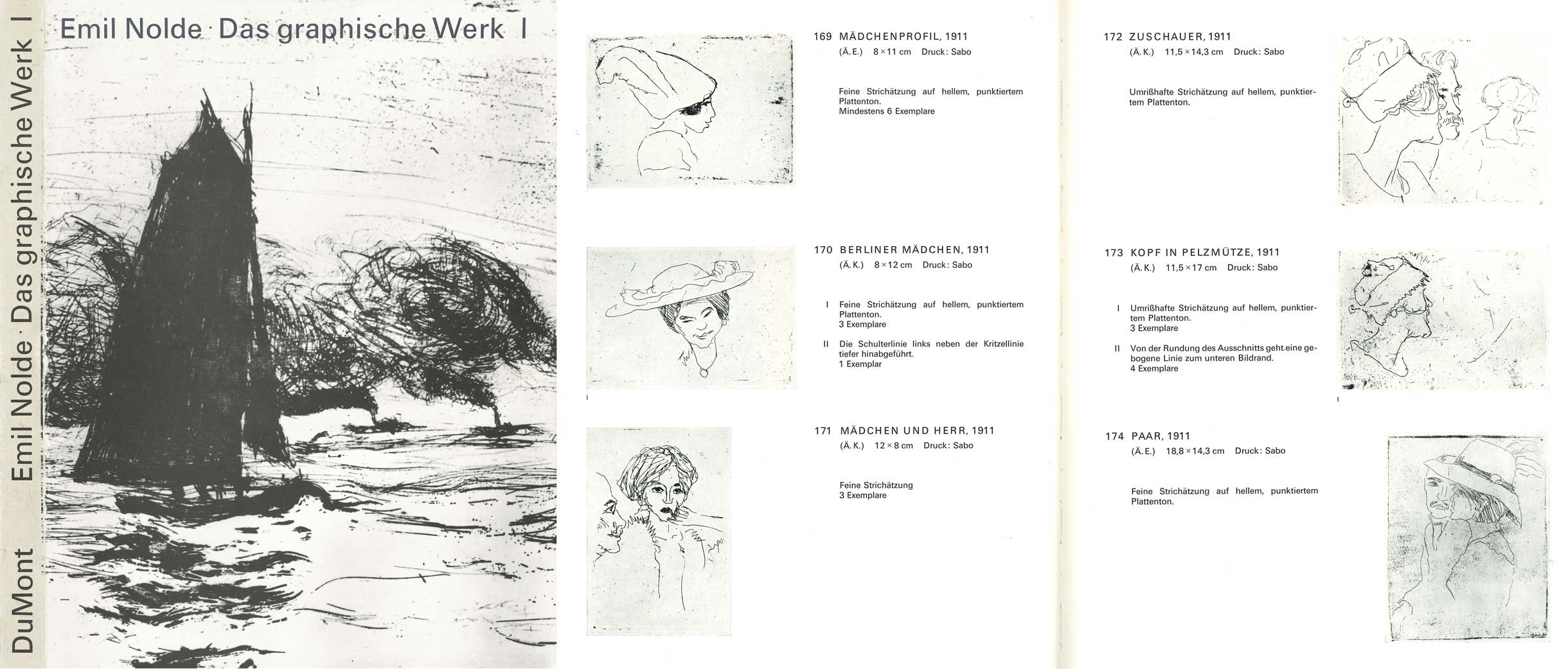
"Emil Nolde. Graphic work ." The catalog raisonné features *Girl with a Hat* along with other Berlin scenes from 1911.
1918*
* – *Death as a Dancer*
Nolde’s striking etching “Death as a Dancer” takes up the late-medieval motif of the Dance of Death and depicts grotesque male figures surrounding a dancing girl whose bones are already visible. With lines that are both energetic and concise, Nolde captures the dancer’s vitality and psychological intensity.
Sophisticated and insidious, the camouflage of Death as a youthfully beautiful nude dancer with long, flowing hair, surrounded by a circle of rather elderly gentlemen who may not even notice the skeleton of Death shining through her beautiful, delicate body. One senses what will happen when the dance comes to an end.
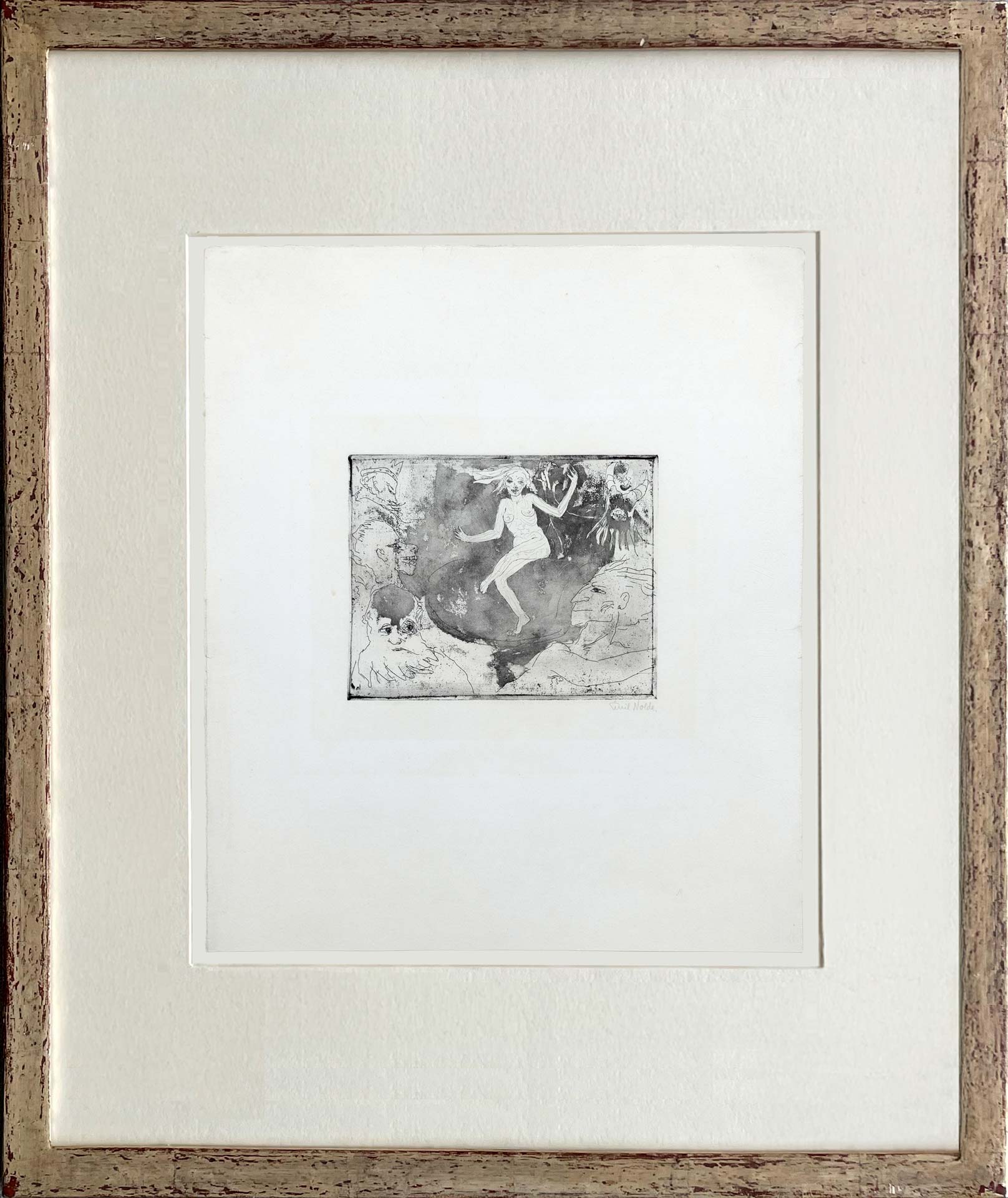
Death as a Dancer
1918
Etching
20.9 x 26.5 cm x 59.9 x 50.7 cm
On vellum. Signed in pencil lower right. Second (final) state. Schiefler lists at least 18 prints of this state.
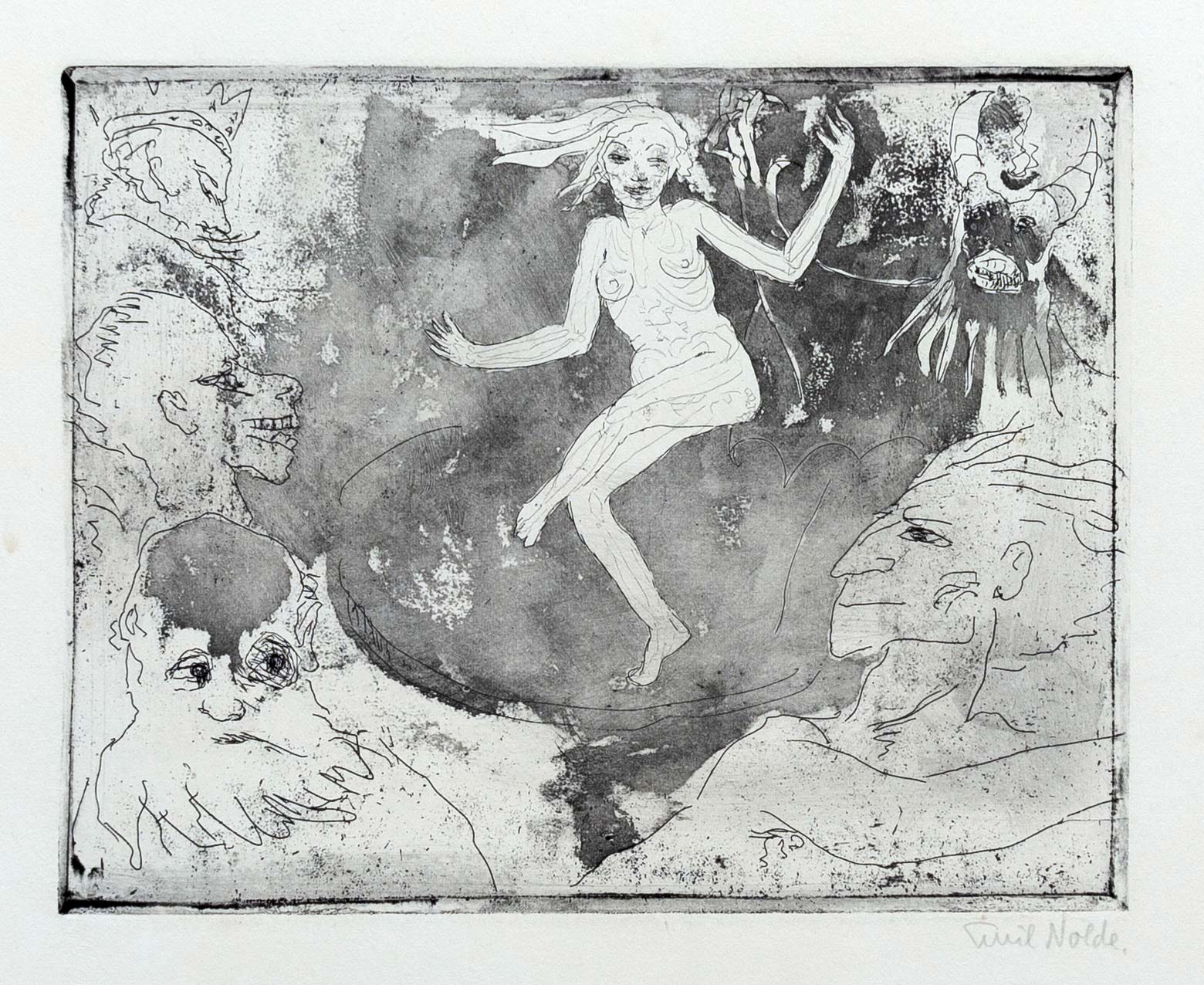
Death as a Dancer, 1911 - The painting, 20.9 x 26.5 cm
1923*
* – Eva
A rare and intimate etching by Nolde from 1923, depicting Eva, the niece of his wife Ada Nolde. The work Nolde’s remarkable ability to capture Eva’s presence through delicate lines.
Unlike his more dramatic religious and floral motifs, *Eva* possesses a quiet immediacy and personal warmth, offering a glimpse into the artist’s private circle. The subtle character of the etching reflects the sensitivity and emotional depth that characterize Nolde’s graphic work.
An impressive and highly sought-after collector’s item by one of the leading figures of German Expressionism.
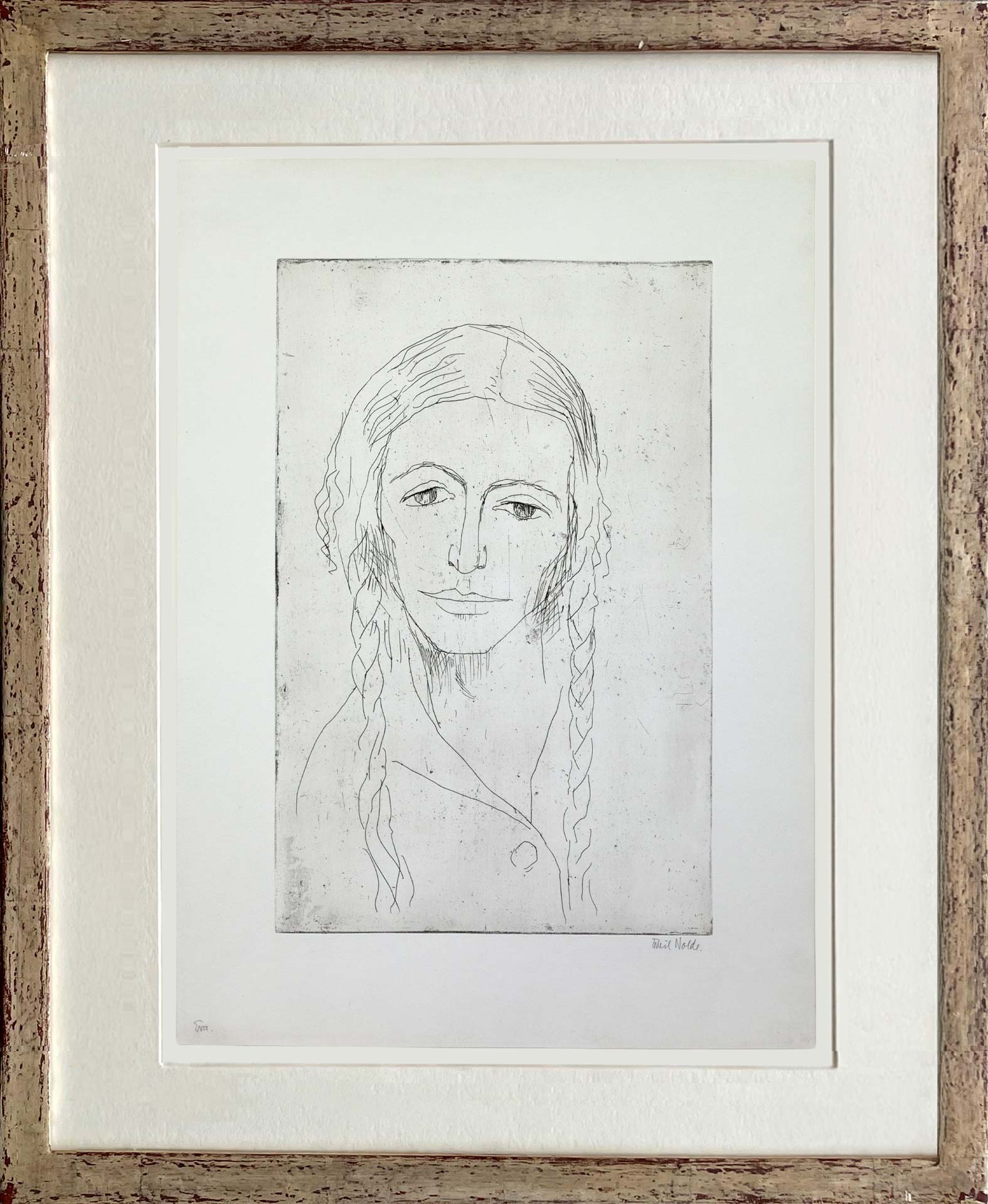
Eva
1922
Etching
47.9 x 31.1 cm on 63 x 45.3 cm
On heavy handmade paper. One of at least nine copies. Signed and titled “Eva” lower left.

Eva, 1922 – The image measures 47.9 x 31.1 cm