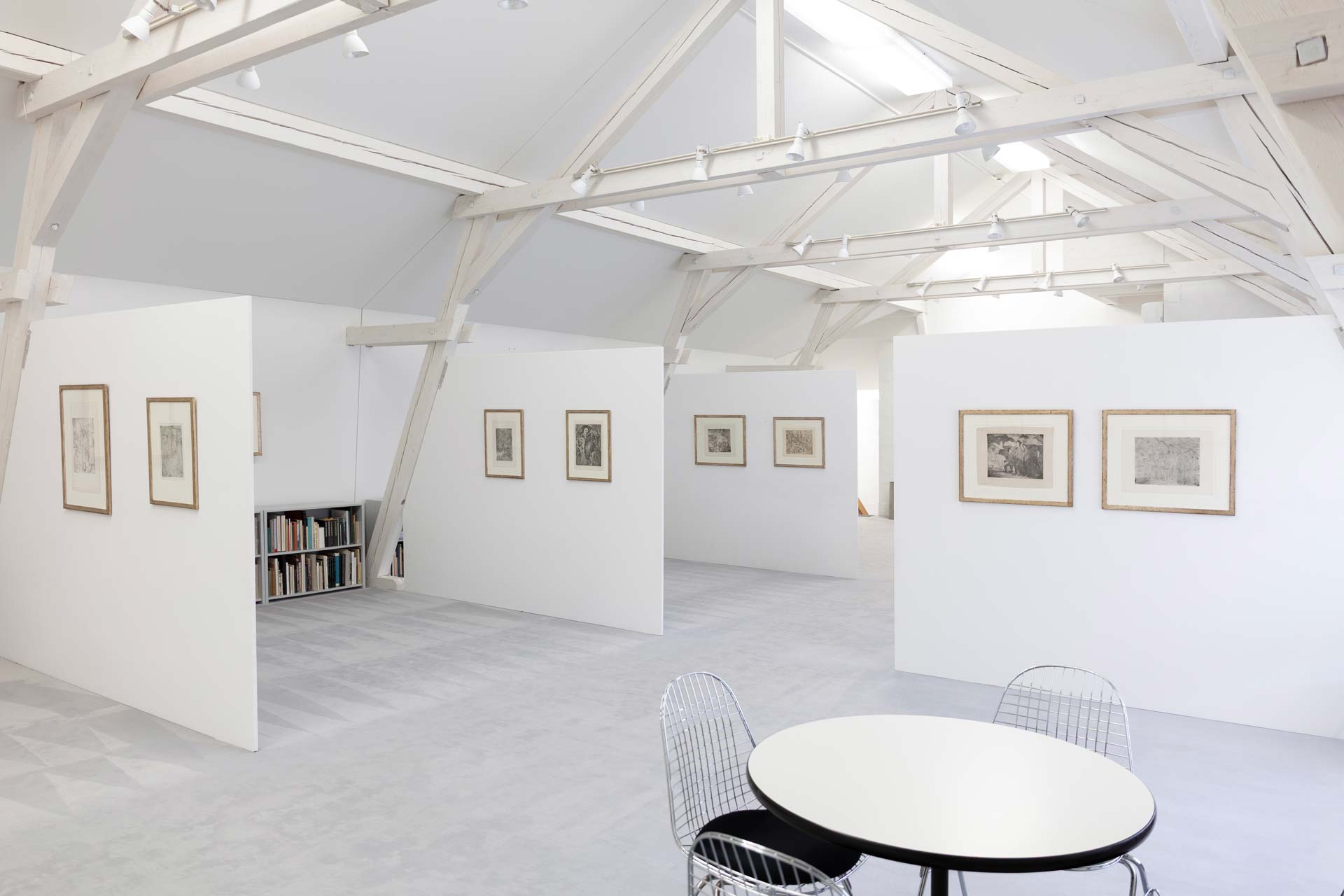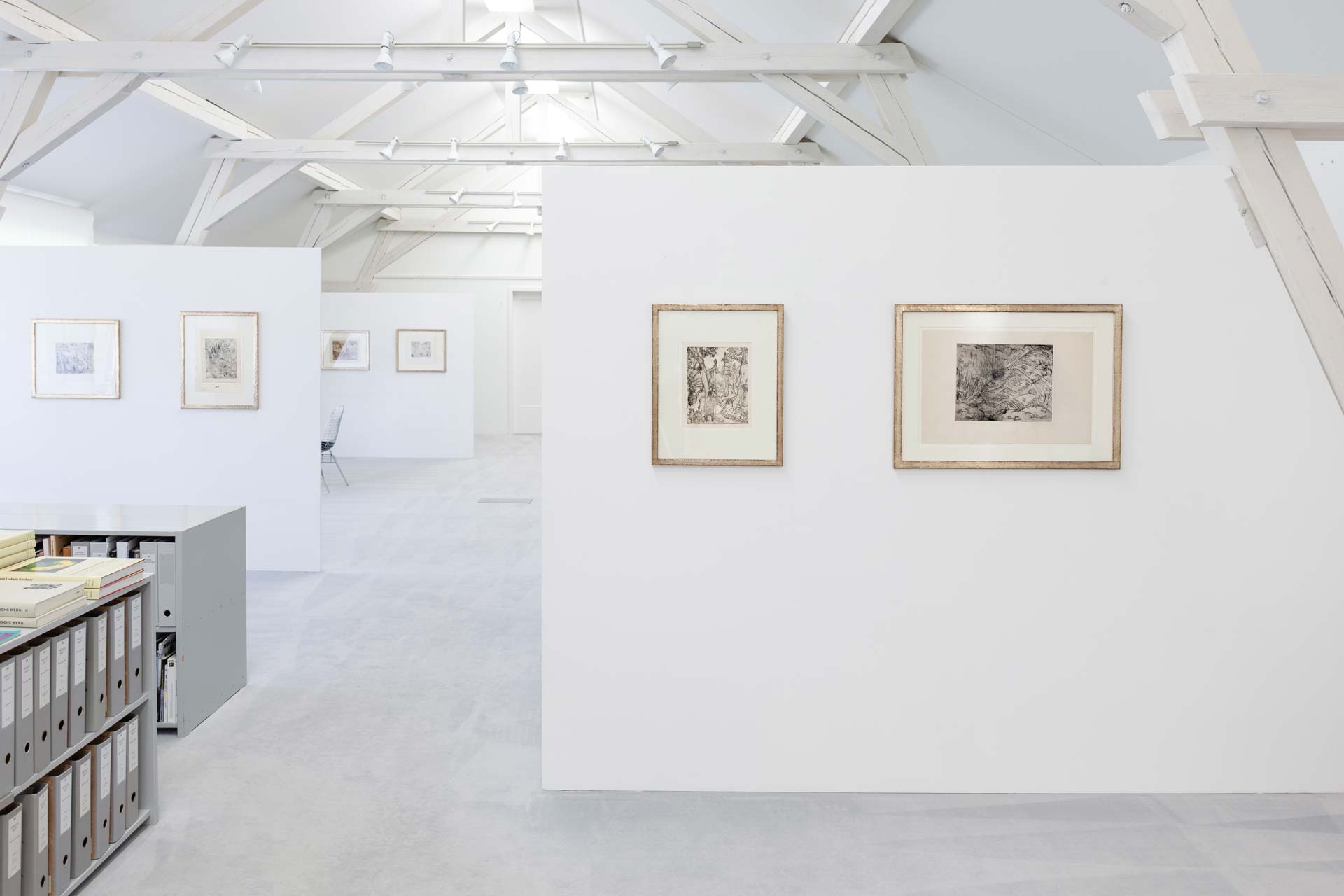


The exhibition focuses on Ernst Ludwig Kirchner’s etchings from his early years in Davos. When Kirchner moved from Berlin to Davos, his immediate surroundings changed fundamentally. The big city, with its street scenes, dance scenes, and social gatherings, gave way to the Alpine landscape—with its mountains, forests, and valleys—as well as rural life, with its people and animals.
This new environment and subject matter had a lasting impact on Kirchner’s artistic work and contributed significantly to the further development of his etchings. With increasing technical mastery and an unmistakable style, Kirchner created etchings between 1919 and 1923 that read like an artistic diary of his new surroundings and, at the same time, bear witness to his high artistic standards and technical skill. The exhibition explores both of these aspects—his new life in Davos and the technical evolution of his etchings—through approximately 35 etchings from the years 1919 to 1923.
This extremely productive period from 1919 to 1923—a time during which nearly half of all the etchings Kirchner created were produced (a total of approximately 640 motifs)—began with the arrival of Kirchner’s printing press in Davos.
I am very much looking forward to taking possession of my belongings soon. The rugs will keep me nice and warm, and that dear old printing press will once again produce prints—just as it did in the past—that delighted collectors. (Letter dated January 19, 1919, to Helene Spengler)
Etching, as a form of intaglio printing, had been part of Kirchner’s artistic repertoire since 1906 and throughout his years with the “ Brücke.” In Davos, he now intensified his work with this technically diverse and demanding medium.
On the one hand, Kirchner appreciated the ability to quickly and directly transfer his immediate visual impressions onto the plate with the needle. Numerous drypoint etchings dating as early as 1917 bear witness to this. On the other hand, etching offered him the opportunity to deepen these initial impressions later through further revisions—and, beginning in 1919, once again through acid etching—and to continue developing a motif on the plate over the course of several days. Numerous diary entries attest to Kirchner’s intensive engagement with etching:
The weather’s terrible because of the rain. Still, I started two etchings. Clouds and mountains, etchings. I almost suffocated while etching. I’m not used to it anymore. How beautiful this delicate technique is. Exhausted by evening and had a terrible night due to the great effort required for printing. (Diary entry from July 28, 1919)
Kirchner was able to use the plate—much like a painting—as a space for immediate artistic development. He could alter lines, condense areas, re-emphasize certain sections, and experiment with the technical possibilities of the medium—unique characteristics of etching that distinguish it from other printmaking techniques. Mastering these required not only a high level of technical skill but also a precise understanding of the effects of line, etching, and printing. The result ranges from the nuanced subtlety of a drawing to the painterly expression of a painting.
There are plates with etched lines two millimeters thick alongside those with hair-thin, wafer-thin aquatint applied with a brush to the polished surface, as well as etched areas deeply recessed like cell enamel. (…) Etching is a sophisticated technique. (Excerpt from “Louis de Marsalle, On Kirchner’s Prints,” in: Genius, Vol. 3, 1921)
Kirchner wrote this in 1921 under his pseudonym Louis de Marsalle in the important essay “On Kirchner’s Prints.” In it, he also emphasizes the importance of printing the works himself in order to “fully exploit all technical possibilities.” According to Kirchner, only in this way does the work ultimately deserve to be called an “original print.” Although—as is customary in Kirchner’s self-referential art criticism—the point is made somewhat pointedly, the quality of the “original” in his etchings deserves special emphasis.
The first catalog raisonné of Kirchner’s prints, compiled by Gustav Schiefler in the early 1920s, offers insight into the uniqueness of Kirchner’s etchings beyond the mere purpose of reproducing a motif. Kirchner hand-printed only a few copies—often just a single copy—of each state of an etching. The different states and the extremely small print runs make many of the prints truly one-of-a-kind. Even in print runs of two to three copies, there are always variations that arise from the manual printing process—entirely in keeping with Kirchner’s intent—and that lend the works an authentic and unique character, just as we have already seen with his woodcuts.
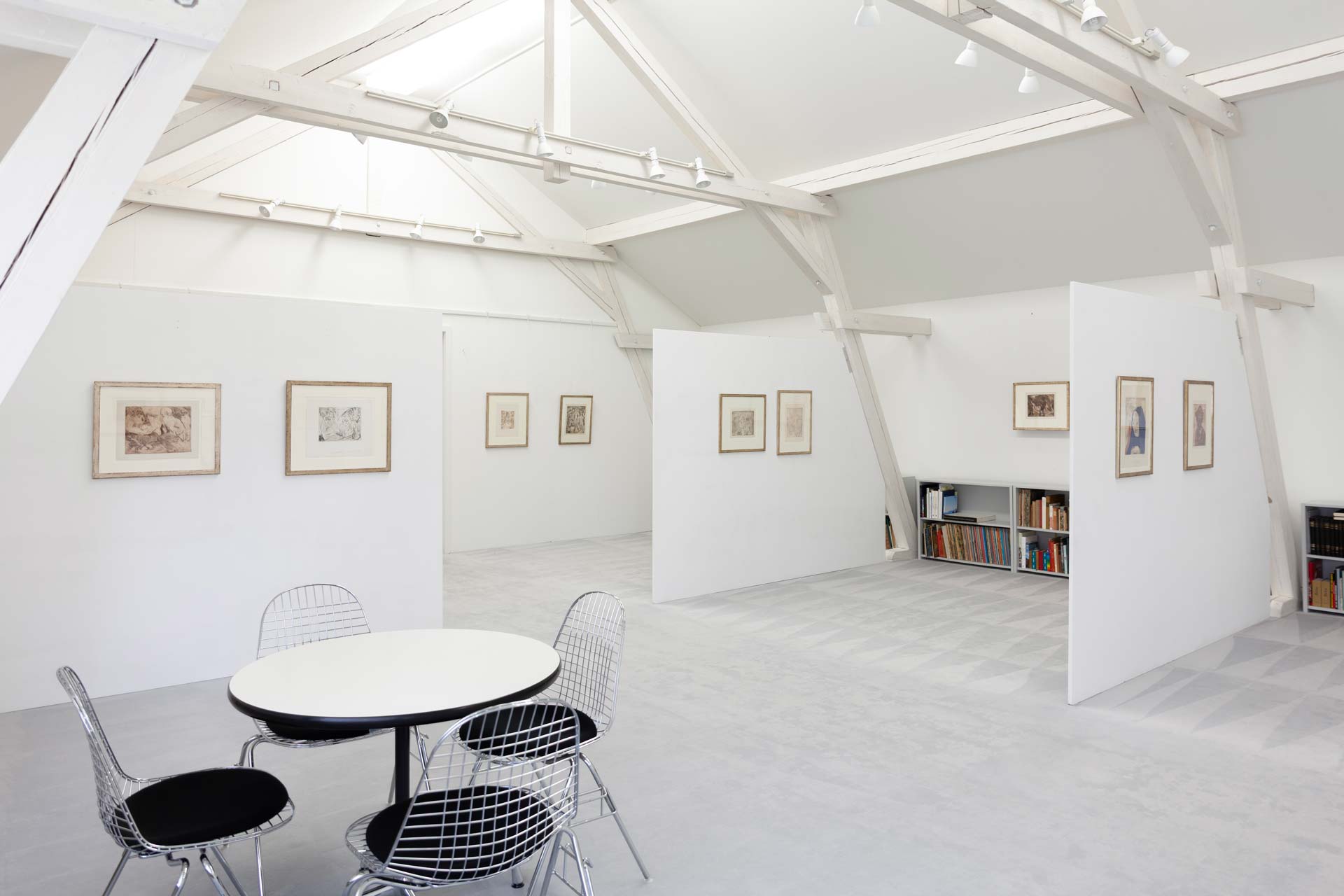
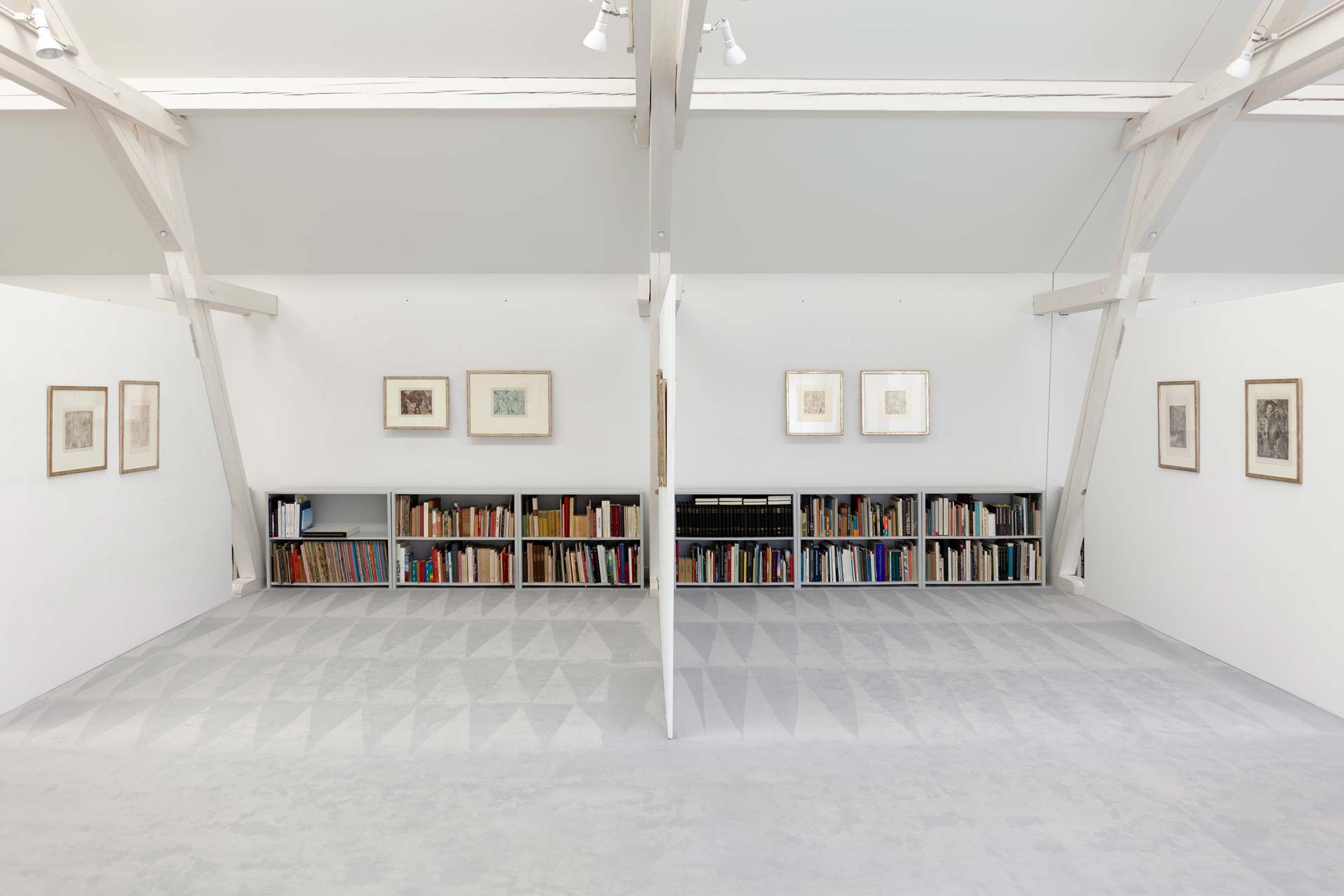
The exhibition on the upper floor of the Galerie Henze & Ketterer is organized around key thematic groups depicting the Davos mountain landscape and also offers a glimpse into the mid-1920s, when Kirchner began to apply the so-called “New Style” to his etchings as well.
A Tour of the Exhibition in Six Chapters
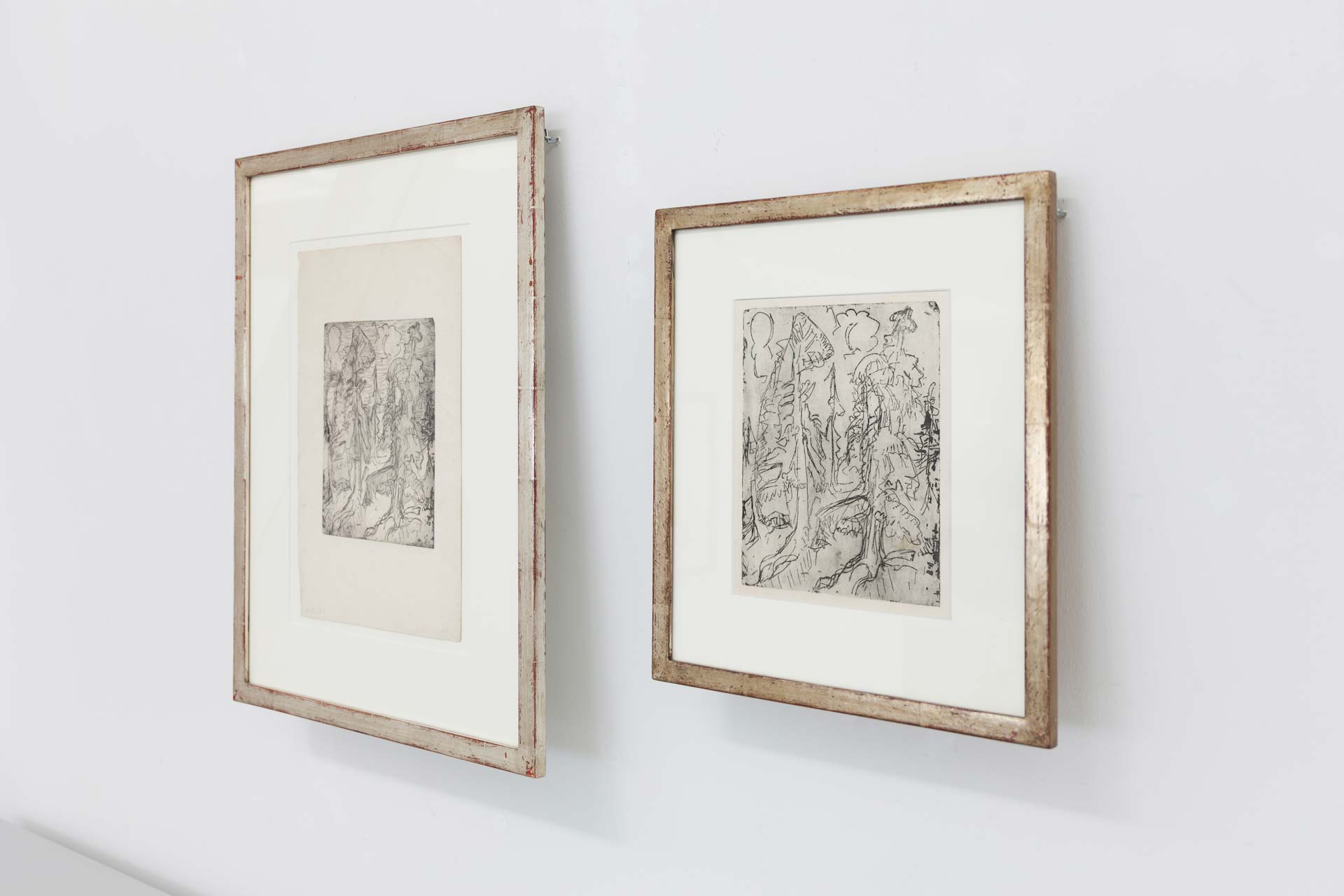
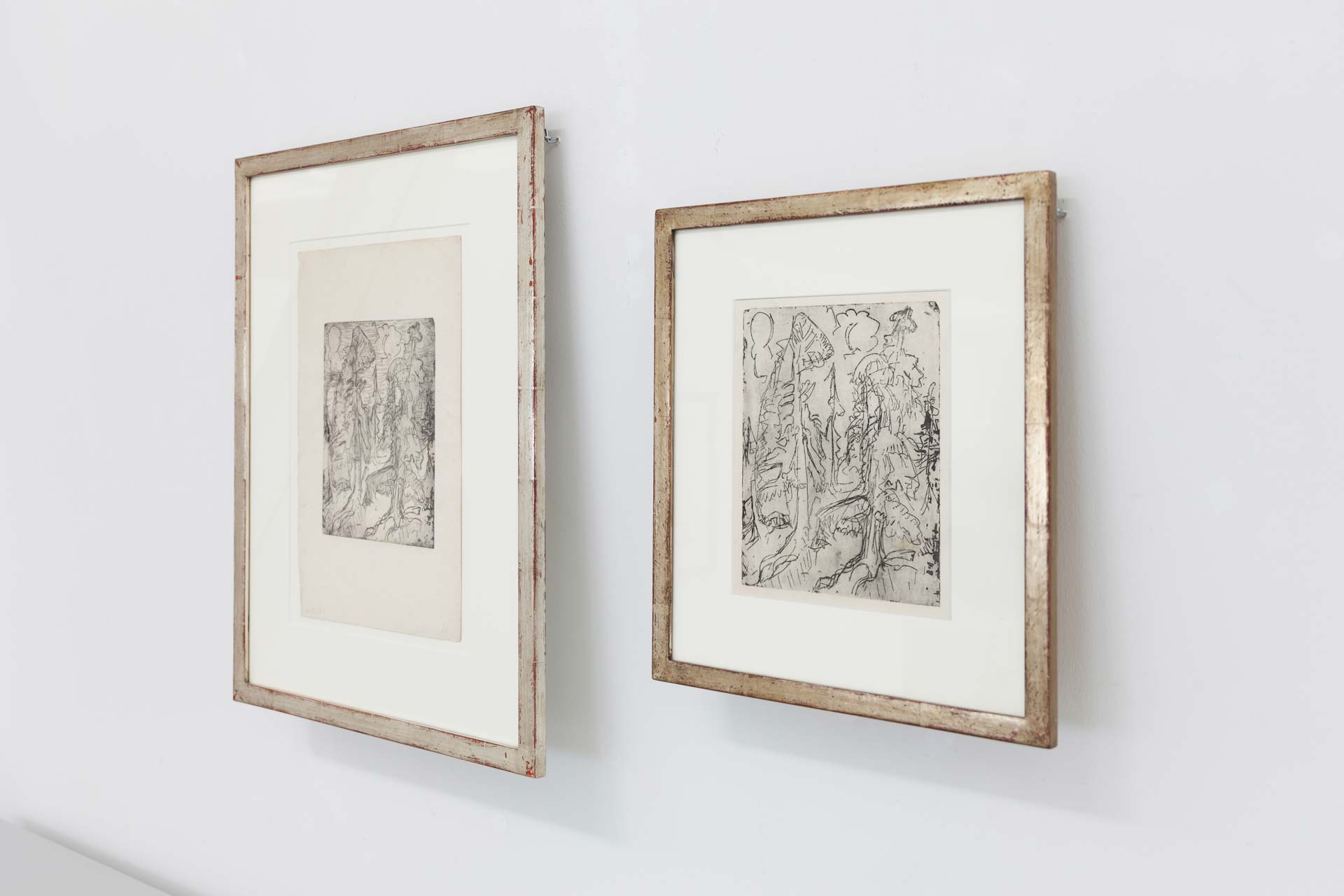
The exhibition begins with a look at “Nature and Landscape” and, with it, two versions of the 1919 etching “Mountain Fir Trees.” When viewed side by side, the two prints vividly illustrate Kirchner’s ongoing work on a motif that he continually refined on the printing plate. Moving along mountain trails and across slopes, we slowly enter the world of farmers and farmwomen.
"Everyday Life of People and Animals" is the theme of the exhibition’s second thematic group. The 1922 work “Alpine Scene with Horse” is a prime example of Kirchner’s masterful use of area etching. Here, he employs this technique to model the animals’ bodies through light and shadow, lending the entire scene a wonderful sense of vitality and depth.
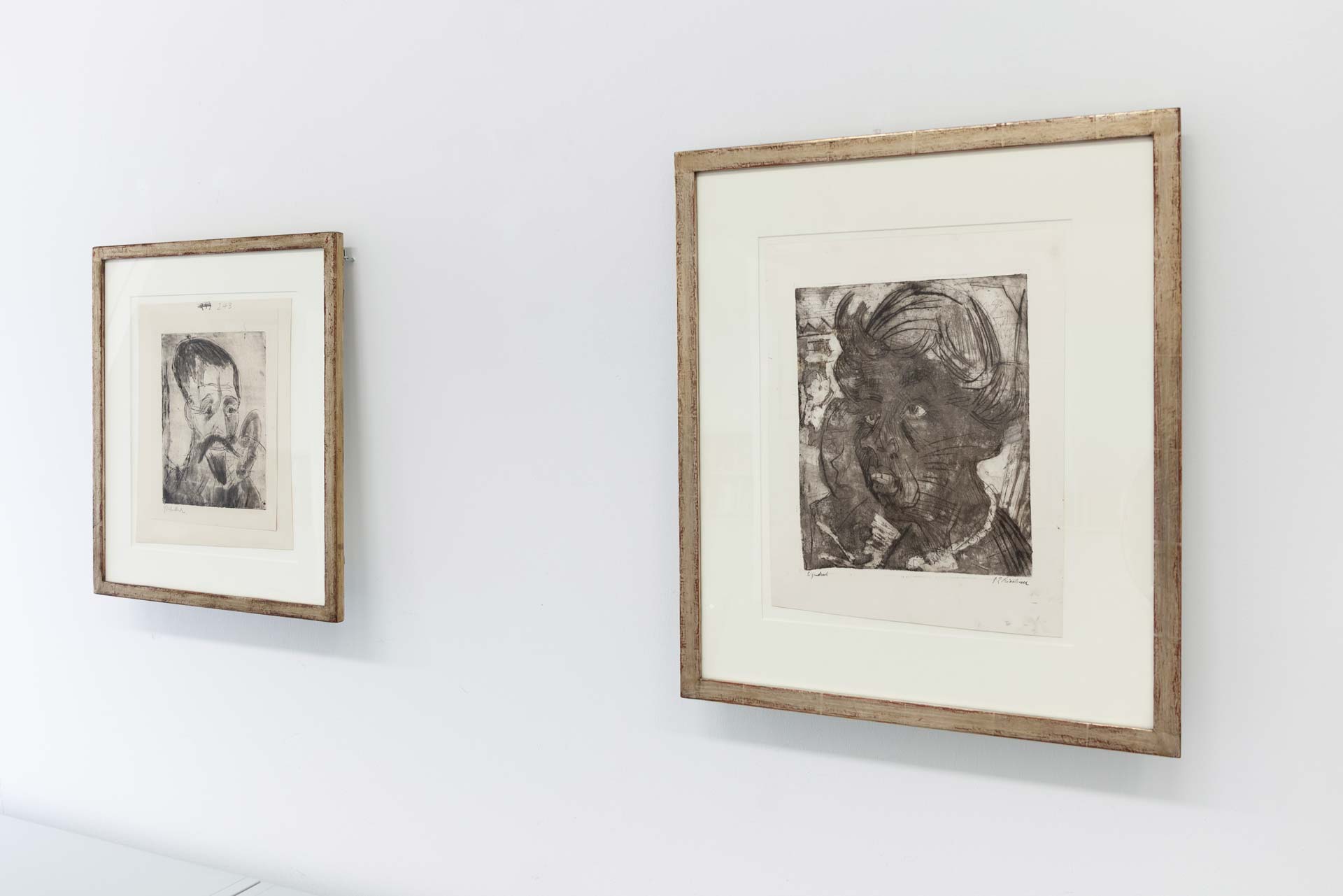
The focus then shifts to “Encounters and Portraits,” which bear witness to the artist’s intense interactions with the local people. In particular, the characteristic depictions “Peasant’s Head (Mr. Schmid)” and “Dark-Haired Peasant Woman with Boy (Mrs. Schmid)” show that we are looking at real people here—vibrant characters that go beyond mere stereotyping. Also worth discovering is the elaborately crafted print “Young Shepherd with Pipe” from 1920, which combines line and area etching, drypoint, and even the file-working technique frequently employed by Kirchner. Only one copy of each of the four states is known to exist. The fourth and final state offered here can therefore be considered a one-of-a-kind piece.
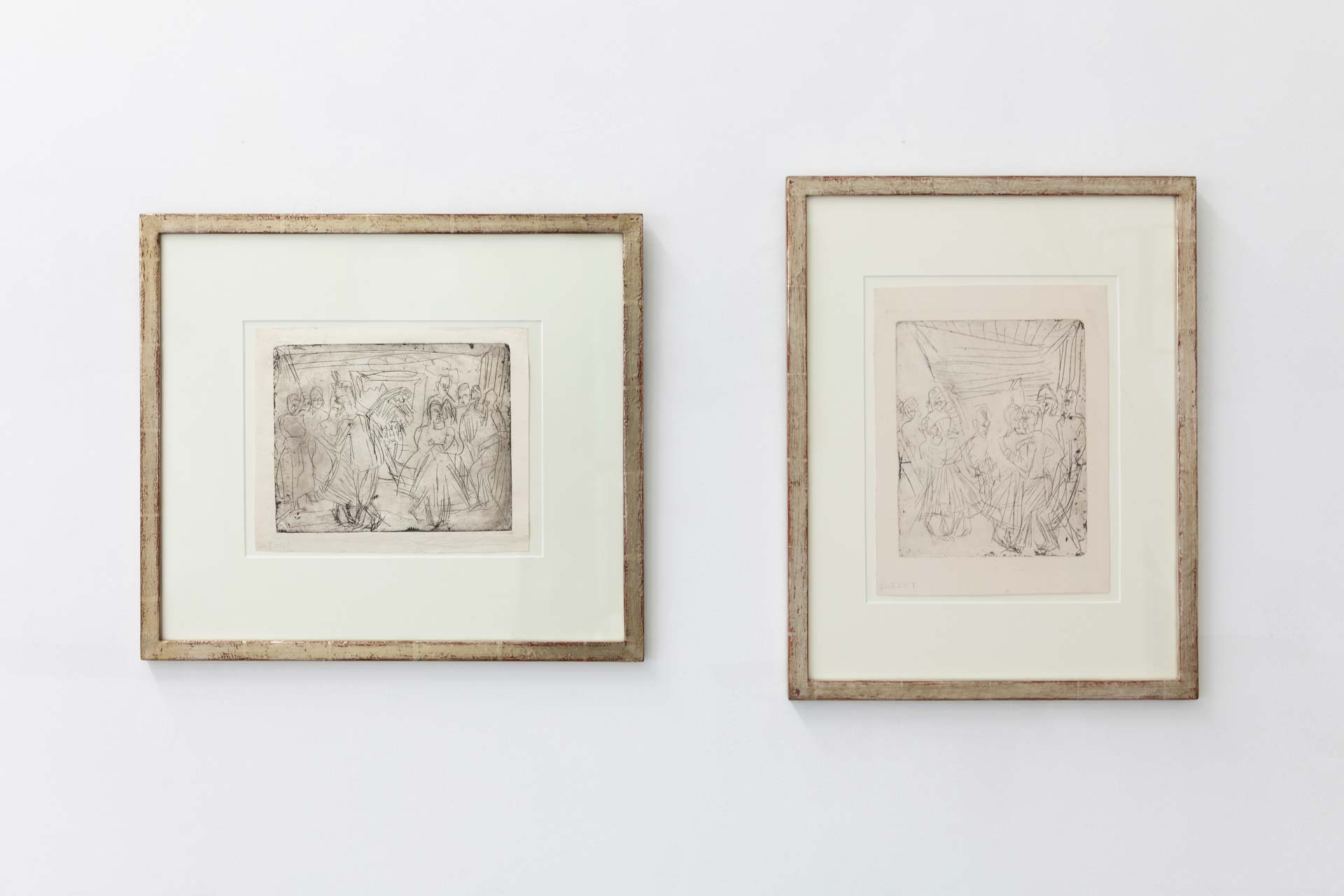
“Community and Conviviality” is the title of the next series of etchings depicting farm life. They show farmers engrossed in conversation with one another, chatting in the barn, or dancing in the evening at the “farmers’ dance in the alpine hut.” The latter scene actually took place in the early 1920s at Kirchner’s home in the Lärchen. The artist owned a gramophone and often invited his neighbors to his home for evening dances.
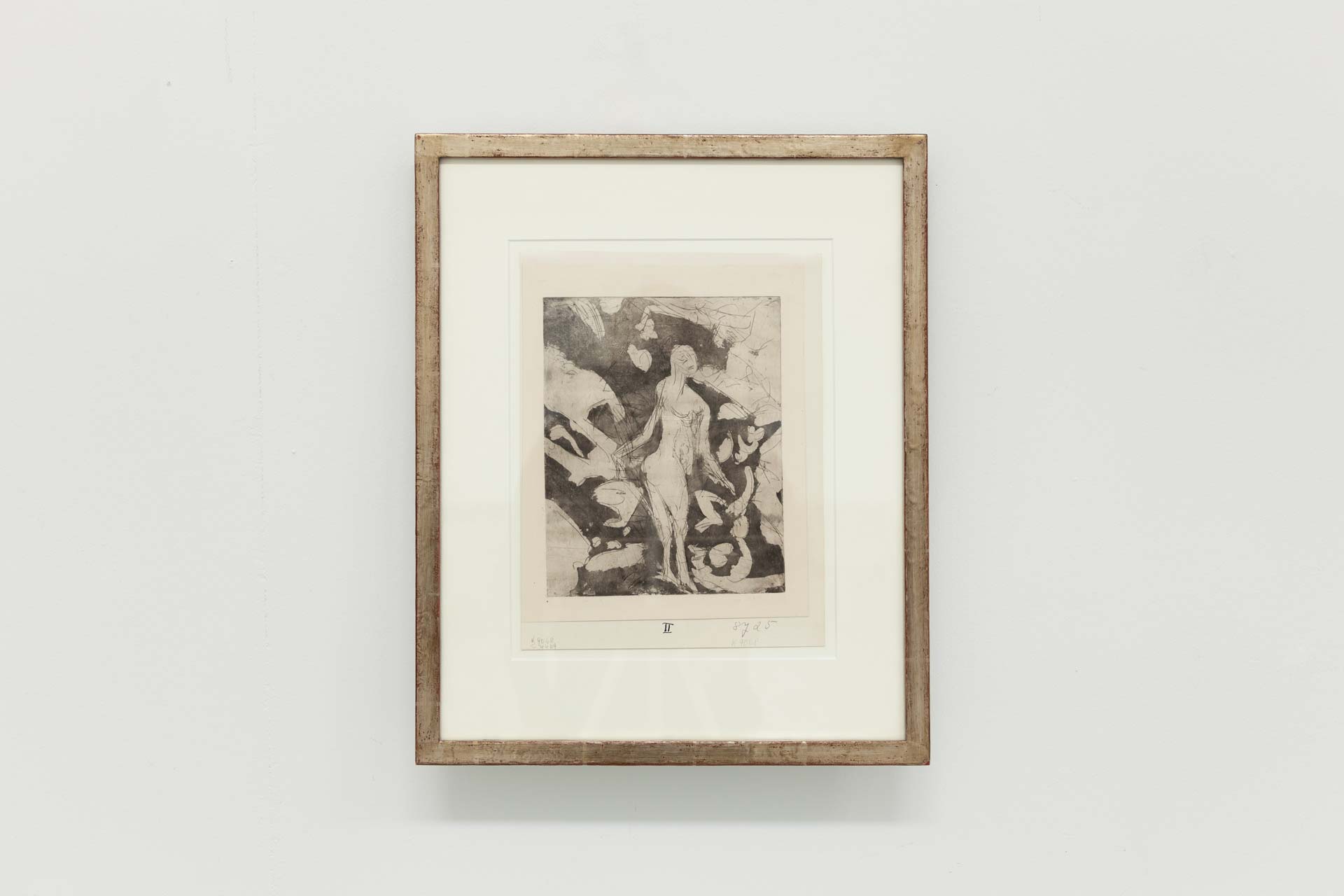
The penultimate group of motifs, “Visits and Nude Depictions,” includes works with titles such as “Naked Woman at the Spring,” “Naked People in the Forest,” “Two Friends,” and “The Ball Runner”—though these motifs only appear to contrast with the depicted mountain landscape. Kirchner also maintained regular contact and exchanged ideas with his friends, acquaintances, and fellow artists beyond the Alps; he attended circus and sporting events in Davos, thereby effortlessly translating the familiar, urban-inspired motifs of his years in Dresden and Berlin into his new rural home.
“The New Style,” offering a glimpse into the years following 1923, concludes the exhibition. The works in this final group reveal an artist in motion—one who was not content to rest on his laurels, but who constantly transformed and refined his visual language. Ernst Ludwig Kirchner’s drive to continually question what he had already discovered—and thereby to blaze new trails with his art—is particularly evident in the etchings from his early years in Davos.
The exhibition is curated by Patrick Urwyler.