

Alfonso Hüppi
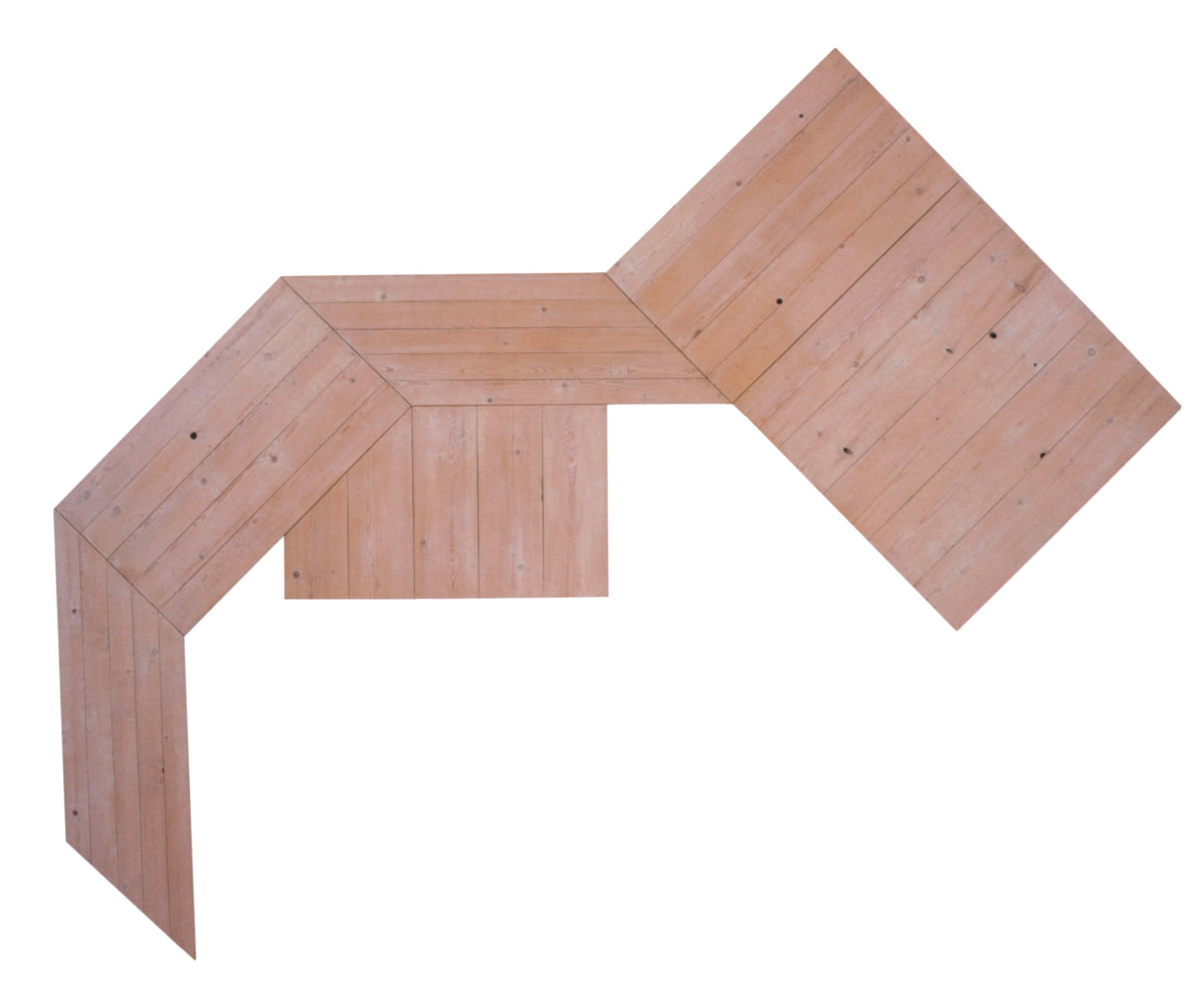
Entwürfelung
Spruce
265 x 325 cm.
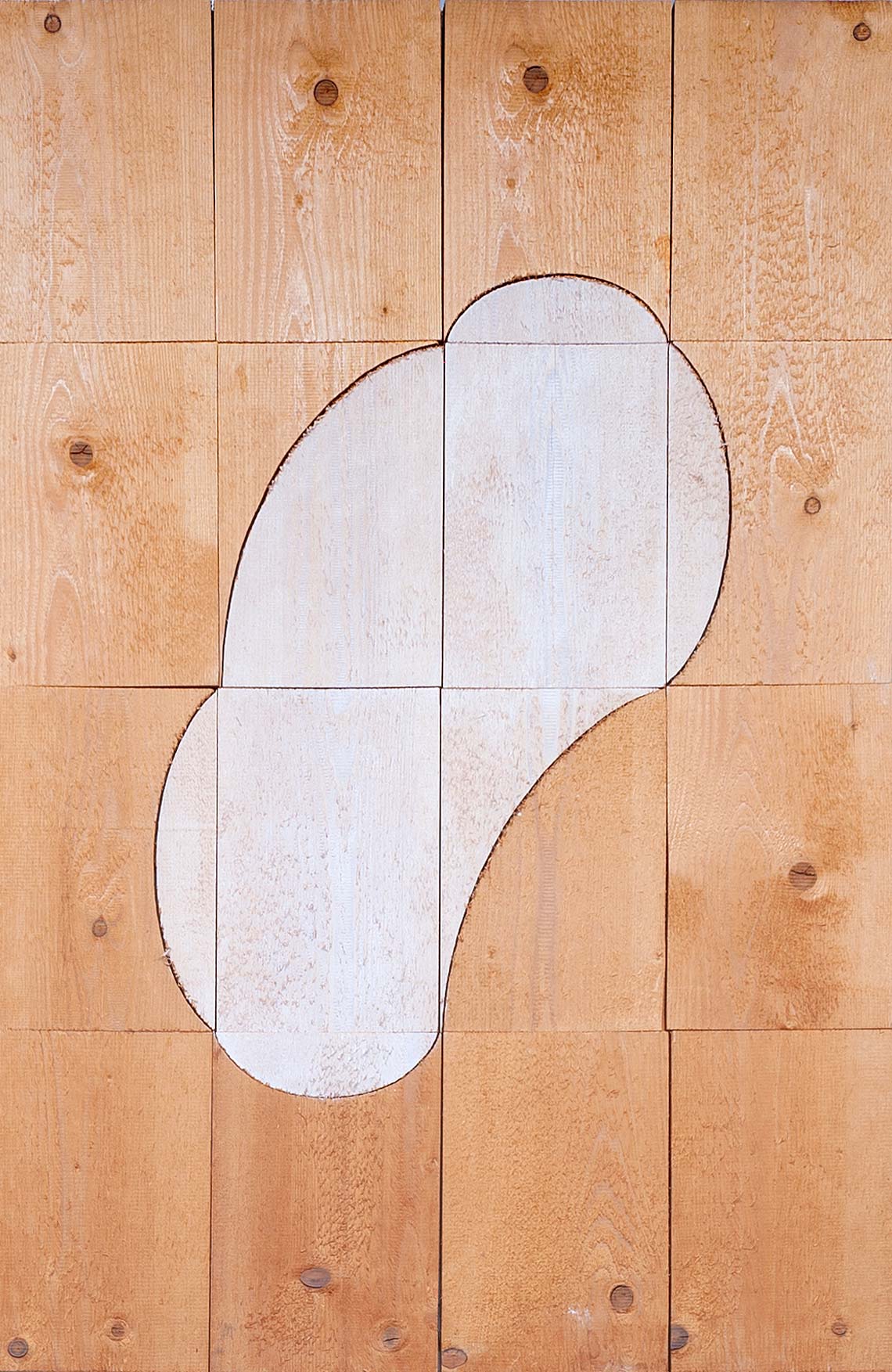
Alongside the emerging movements of Concept Art and Minimal Art in the 1970s, Alfonso Hüppi focused on the cube and other geometric forms. Using the principles of “decubing,” “stagering,” and “mirroring,” he created large-scale monochromatic works in wood. Here, the creative process is distilled to its essence and emerges as a unified form.
Alfonso Hüppi, born in Freiburg im Breisgau in 1935, is a Swiss painter, graphic artist and sculptor and is one of the most important representatives of the post-war avant-garde and postmodernism.
Hüppi's parents come from central Switzerland. Alfonso Hüppi trained as a silversmith in Lucerne from 1950 to 1954. In 1958, he spent two years traveling through the Middle East. He then studied sculpture at the Kunst- und Werkschule Pforzheim in 1960 and calligraphy at the Hochschule für Bildende Künste in Hamburg. From 1961 to 1964, he was a lecturer in calligraphy and visual design at the same university.
In 1962, Hüppi married the artist Brigitta Hüppi-Weber. Until the end of the 1960s, he worked at the Staatliche Kunsthalle in Baden-Baden. From 1974 to 1999, he held a professorship for painting at the Düsseldorf Art Academy. In 1998, together with Erwin Gebert, he founded the Etaneno Museum in the bush in Namibia, where he is still director of the museum and the artists' program.
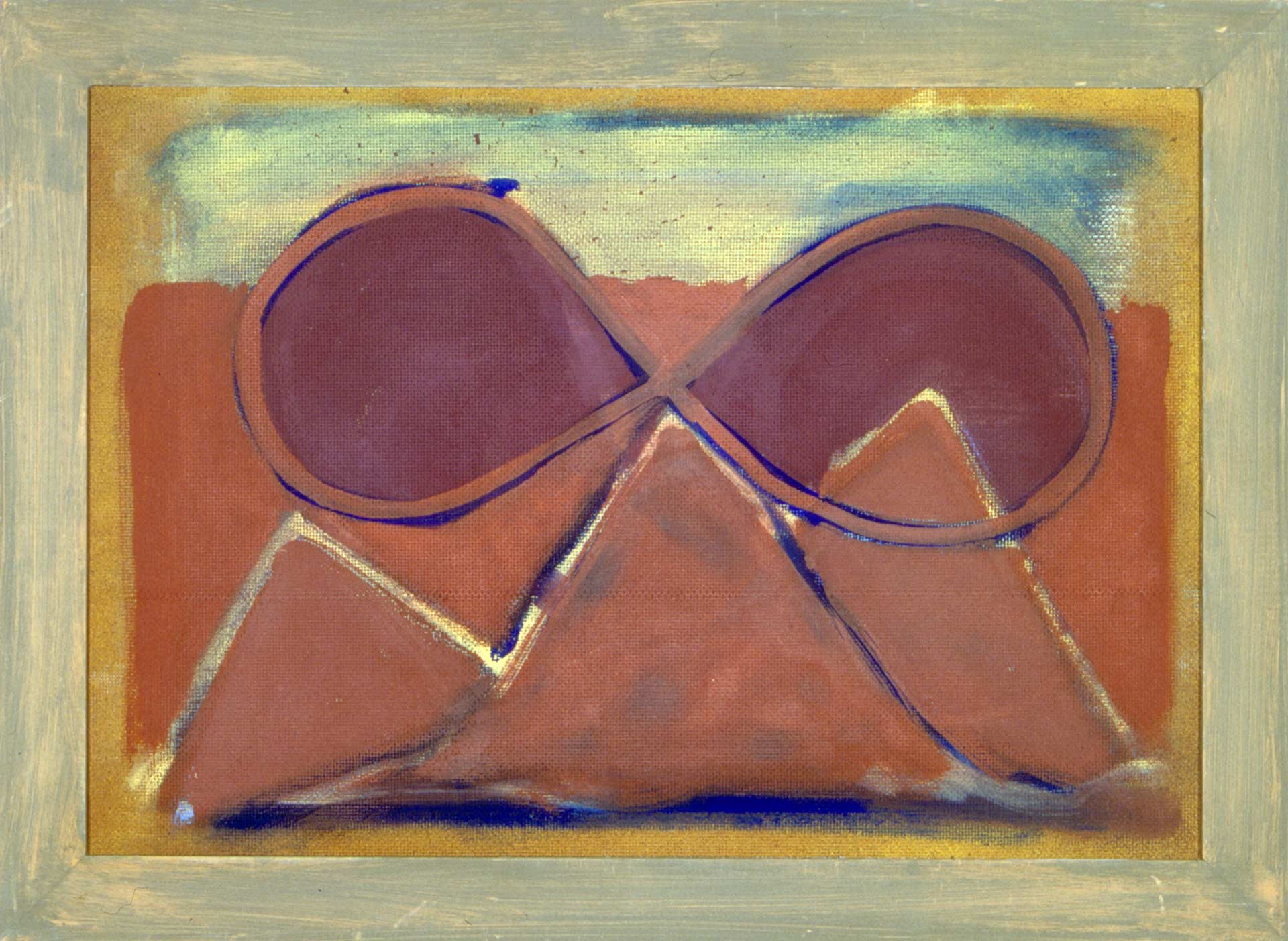
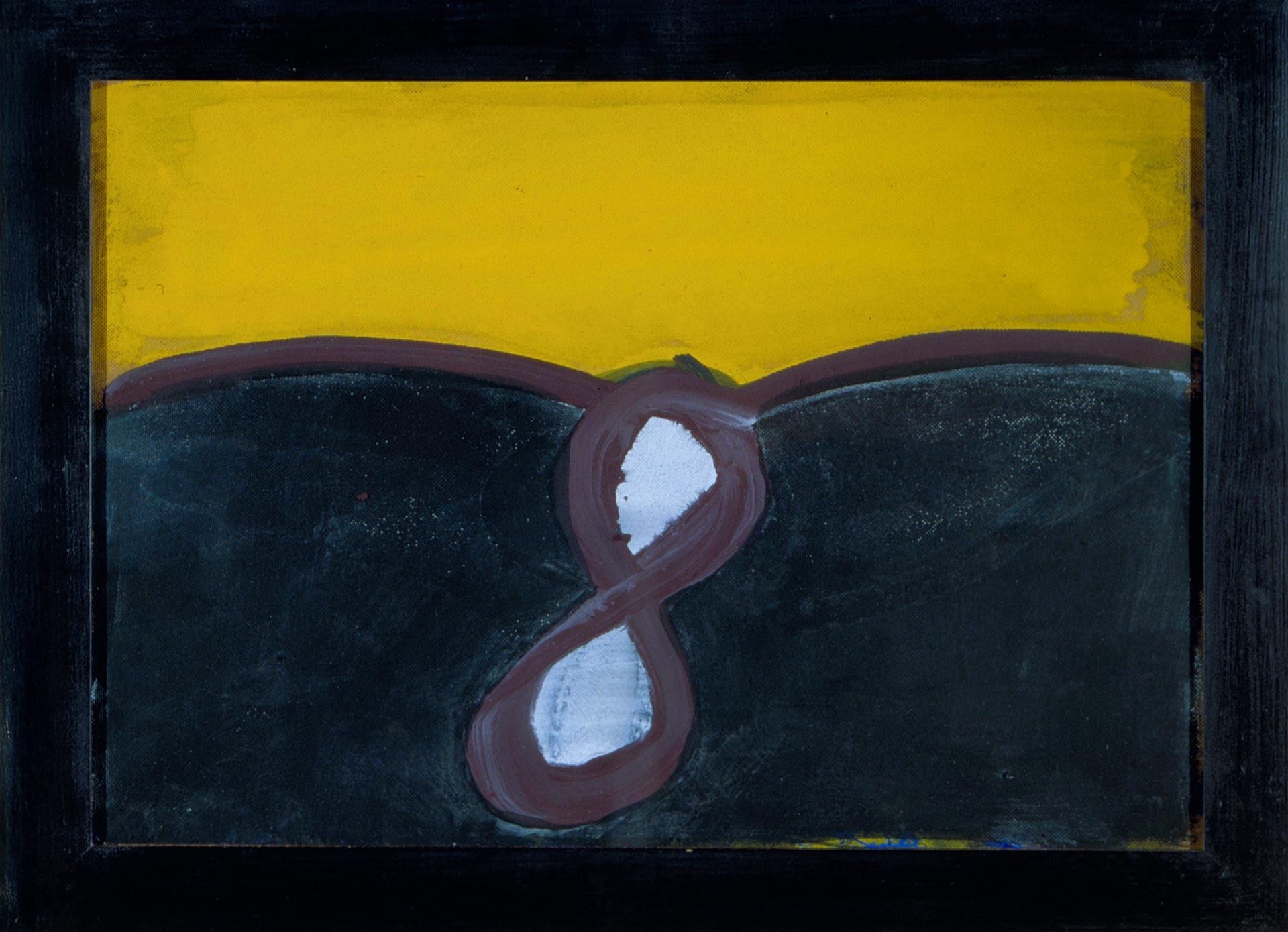
Alfonso Hüppi’s work from spontaneous hand drawings to sculptural murals and wooden objects, shifting between the genres of painting, relief, object, and installation. Stylistically, his works can be classified as falling somewhere between the humor of Surrealism and the aesthetics of Concrete-Constructivism.
Alfonso Hüppi lives and works in Baden-Baden, Berlin and Namibia.