

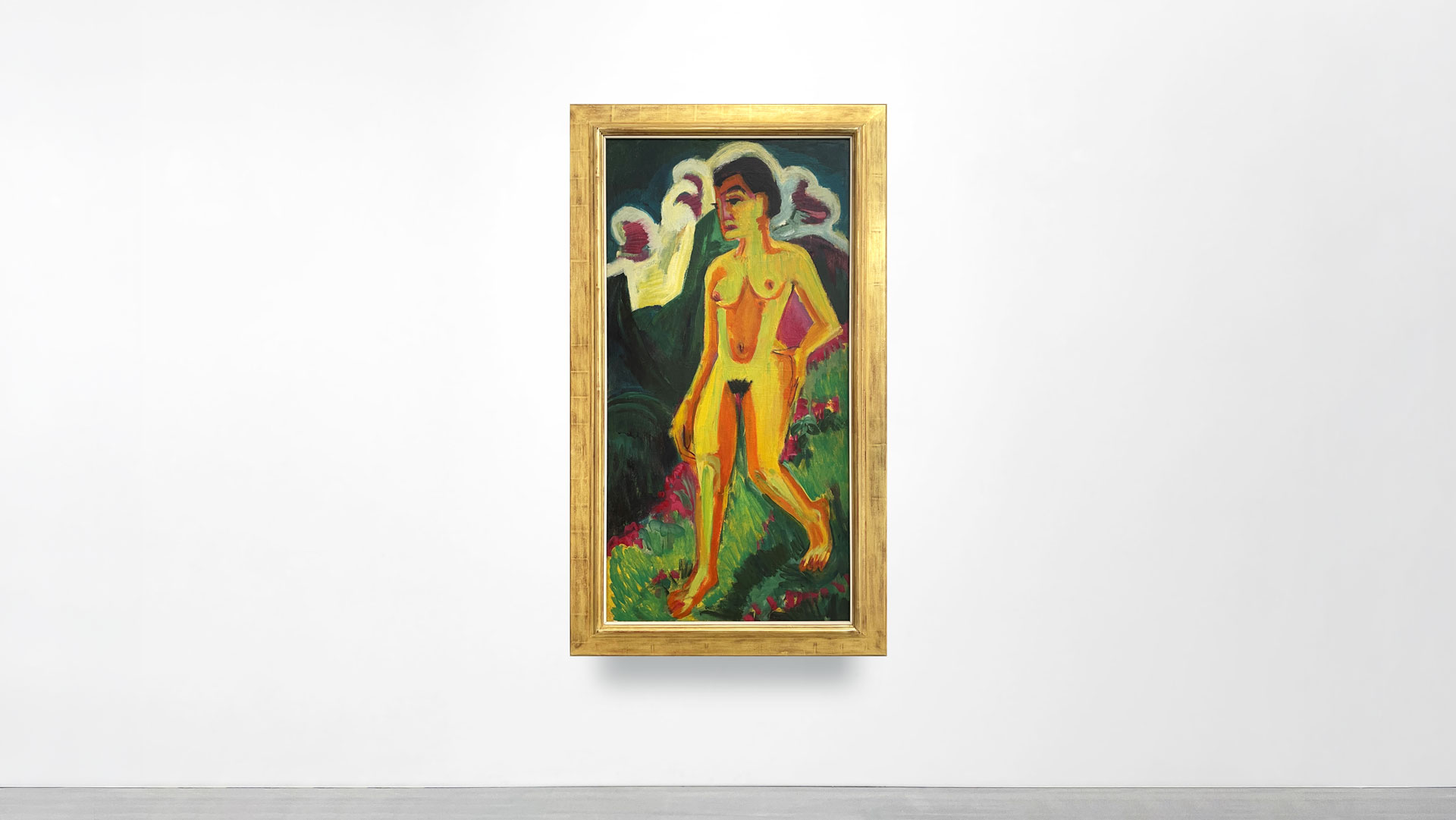

German Expressionism is considered one of the most influential artistic renewal movements of the early 20th century. In a deliberate departure from academic conventions, its proponents developed a radically subjective visual language in which color, form, and line became independent means of expression. The focus was no longer on the most faithful representation of the subject, but rather on its artistic reinterpretation and emotional intensification. The world was no longer to be merely depicted, but rather made tangible in its inner reality.
The exhibition “EXPRESSIV! People, Nature, and Still Lifes: From Kirchner to ‘ Modern art’” explores this development through selected works by Ernst Ludwig Kirchner, Erich Heckel, Emil Nolde, Hermann Max Pechstein, George Grosz, Karl Hofer, Christian Rohlfs, Max Peiffer Watenphul, and Eduard Bargheer. It traces a path from the revolutionary beginnings of the artists’ group “Brücke” through the experiences of World War I and the artistic reorientations of the interwar period to the decades following 1945. In doing so, it views Expressionism less as a self-contained art-historical epoch and more as a multifaceted process whose aesthetic achievements have had an impact far beyond the original movement.
The six thematic groups of works offer different perspectives on this transformation. Landscapes, still lifes, and female nudes s form the central thematic areas through which changes in artistic perspectives can be traced particularly clearly.
The exhibition was curated by Dr. Alexandra Henze.


