


Karl Hartung
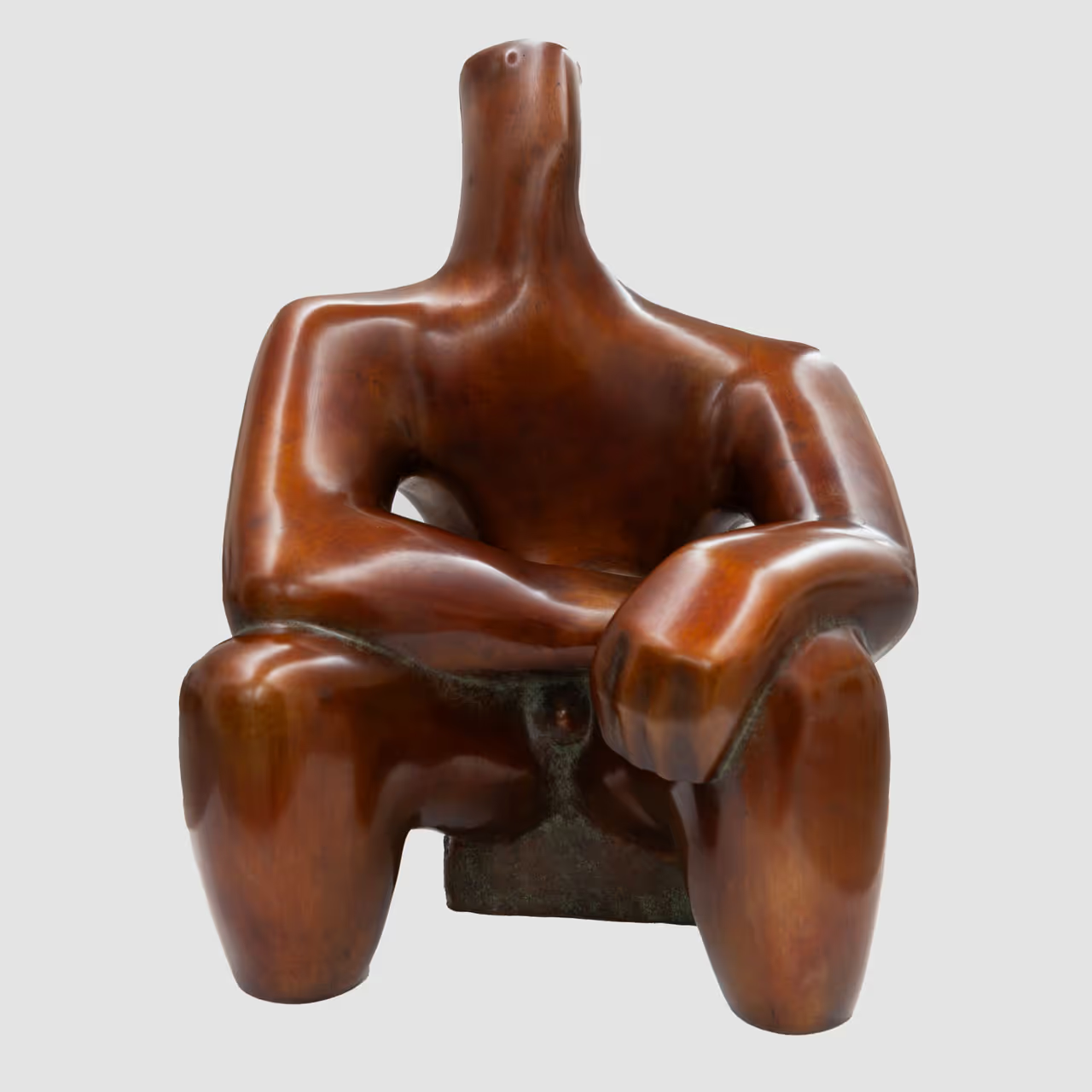
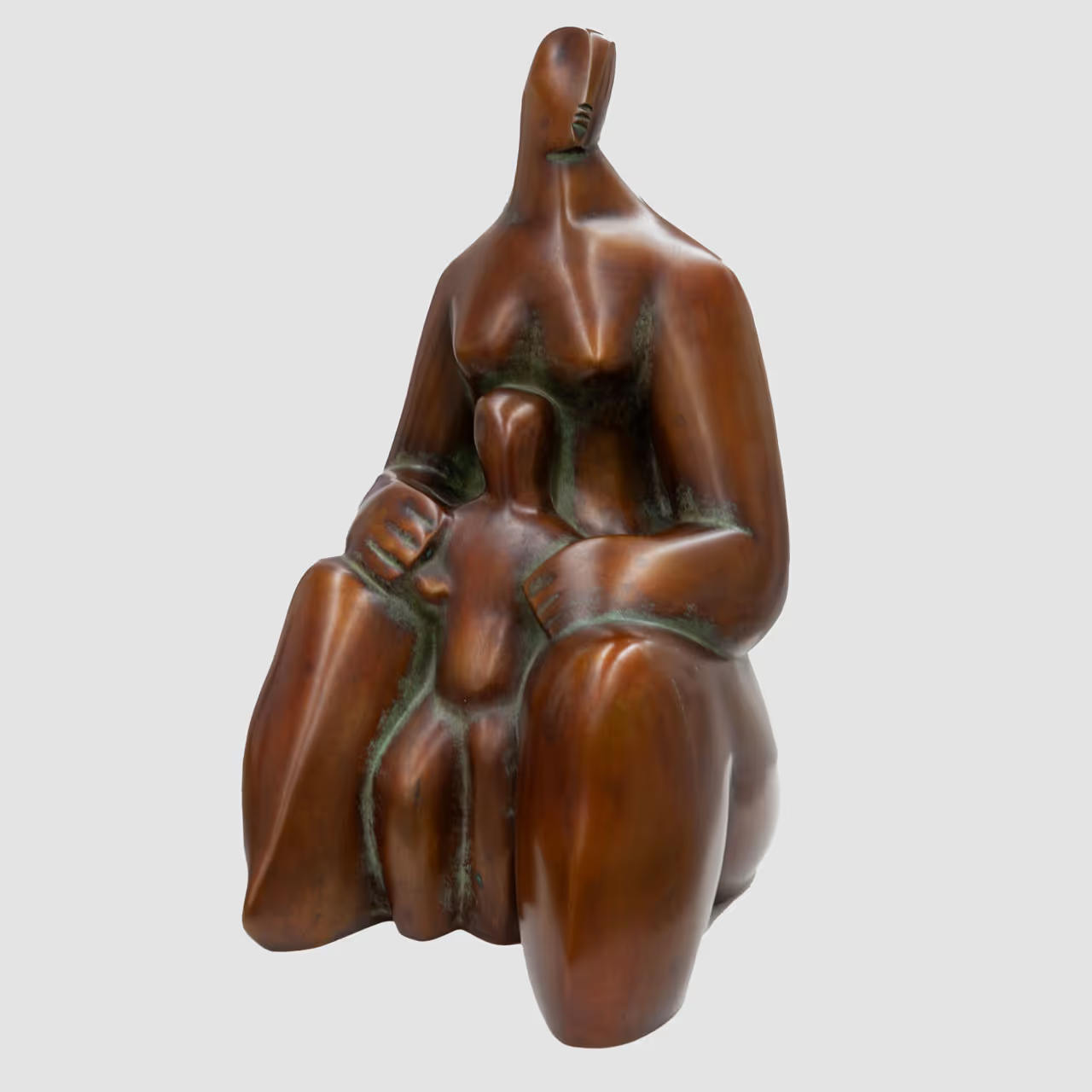
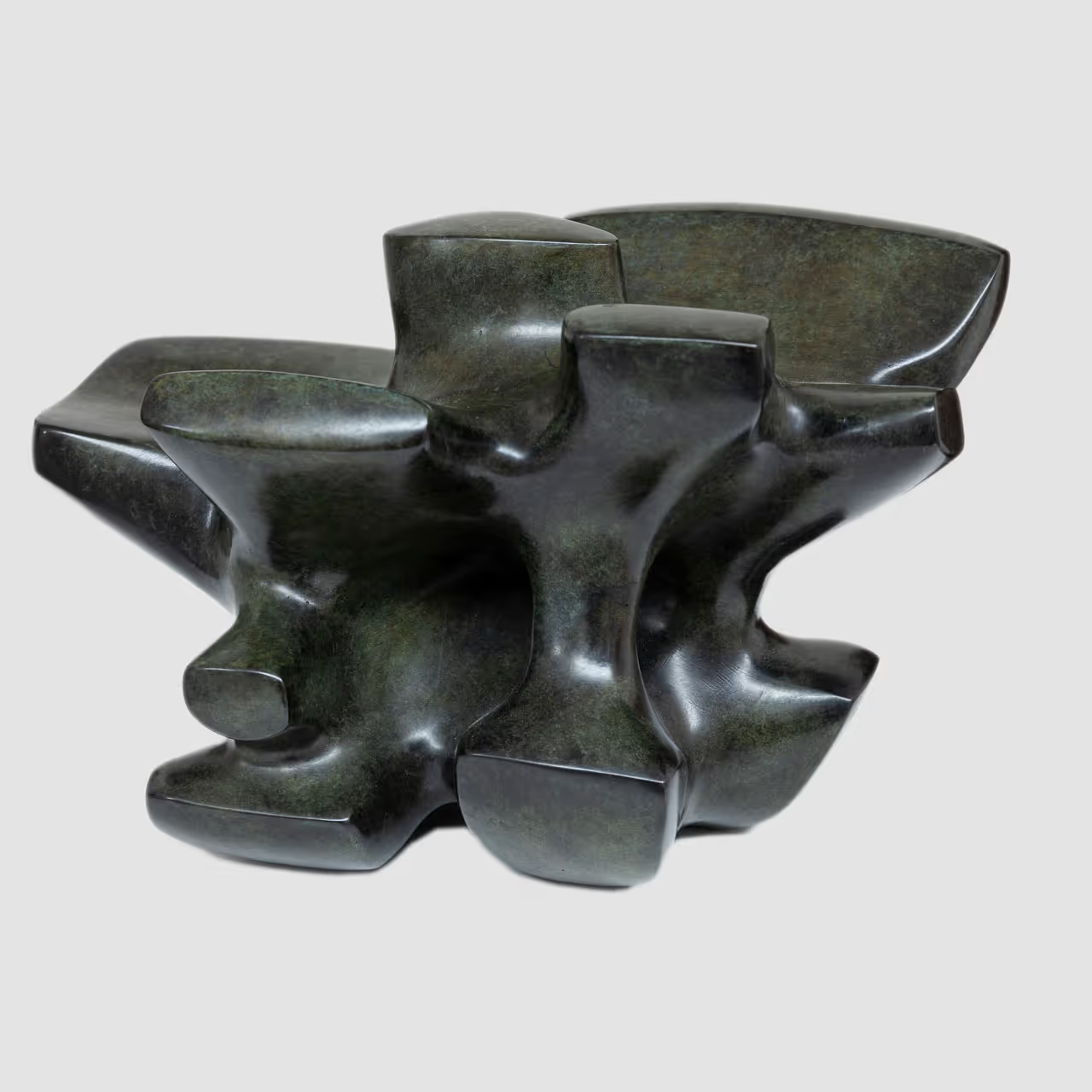
Organische Form
Sculpture
Bronze
Cast during his lifetime ca. 1960 (total edition 6 + 1 copies).
Height: 16 cm, width: 24 cm, depth: 14 cm.
On the bottom with the stamps: "HARTUNG", "ӿ" and "N".
Frizz 375
One of the seven castings that Karl Hartung had planned for his bronze sculptures, executed and supervised by his daughter and estate administrator, Hanne Hartung, bearing the intended hallmarks and accompanied by a certificate of authenticity.
Karl Hartung (1908, Hamburg – Berlin, 1967) was one of the figures navigating the precarious middle ground of the 20th century and, during that time, the particularly precarious heart of Europe. Drawing inspiration from Rodin and Maillol, as well as Etruscan funerary sculpture, he, too, was predestined after 1933 to receive major commissions from the new rulers in Berlin. Instead, he created his first abstract sculpture in 1935, then worked in secret, chose artistic truth, was fortunate enough to survive, and went on to create a significant work time—one that explored the interplay of figure and form—amid the major upheavals of 1945–48 and 1968. After 1945, he was among the most important and successful sculptors in Germany; from 1951 onward, he served as a professor of sculpture at the Berlin University of the Arts.
Following in the footsteps of the preceding generation—such as Rudolf Belling and Otto Freundlich—Karl Hartung is considered the earliest German sculptor of abstraction. However, even as he pursued this path toward an absolute formal language detached from the object, he repeatedly returned to the figure—especially the human form—and more generally to the “vegetative,” as he refers to it in his titles; ultimately, then, to life and nature. He created numerous female nudes a high degree of abstraction, with wonderfully flowing surfaces yet unambiguous legibility. In addition, he produced heads, figures, animals, and—time and again—abstract, yet mostly “organic” or “vegetative” forms.
Karl Hartung, born in Hamburg in 1908, was one of the most important and successful sculptors in Germany after 1945. He is considered a pioneer of abstraction in sculpture.
After completing his apprenticeship as a wood sculptor, Hartung began his artistic training at the State Academy of Fine and Applied Arts in Hamburg, followed by a study visit to Paris in 1929. In the same year, his works were exhibited for the first time in his home town. In 1935, he settled in Berlin with his wife, the painter Ilse Quast, where his works were created in secret as he was ostracized as a "degenerate artist" due to his abstract formal language. In the 1940s and 50s, he exhibited in Germany and abroad, whereby the works of this period were strongly influenced by Art Informel. In 1950, Hartung was appointed by Karl Hofer to the Berlin Academy of Fine Arts, where he became a professor of sculpture. After Karl Hofer's death, he became chairman of the German Artists' Association in 1955.
Following in the footsteps of the preceding generation—such as Rudolf Belling and Otto Freundlich—Karl Hartung is the earliest German sculptor of abstraction. However, as he pursues this path toward an absolute formal language detached from the object, he repeatedly returns to the figure—especially the human form—and, more generally, to the “vegetative,” as he terms it in his titles; ultimately, then, to life and nature. He created numerous female nudes a high degree of abstraction, featuring flowing surfaces that remain clearly recognizable. In addition, he produced heads, figures, animals, and—time and again—abstract yet mostly “organic” or “vegetative” forms. Parallel to his sculptures, he produced an extensive work of drawings.
Karl Hartung dies in Berlin in 1967.