

Fritz Winter
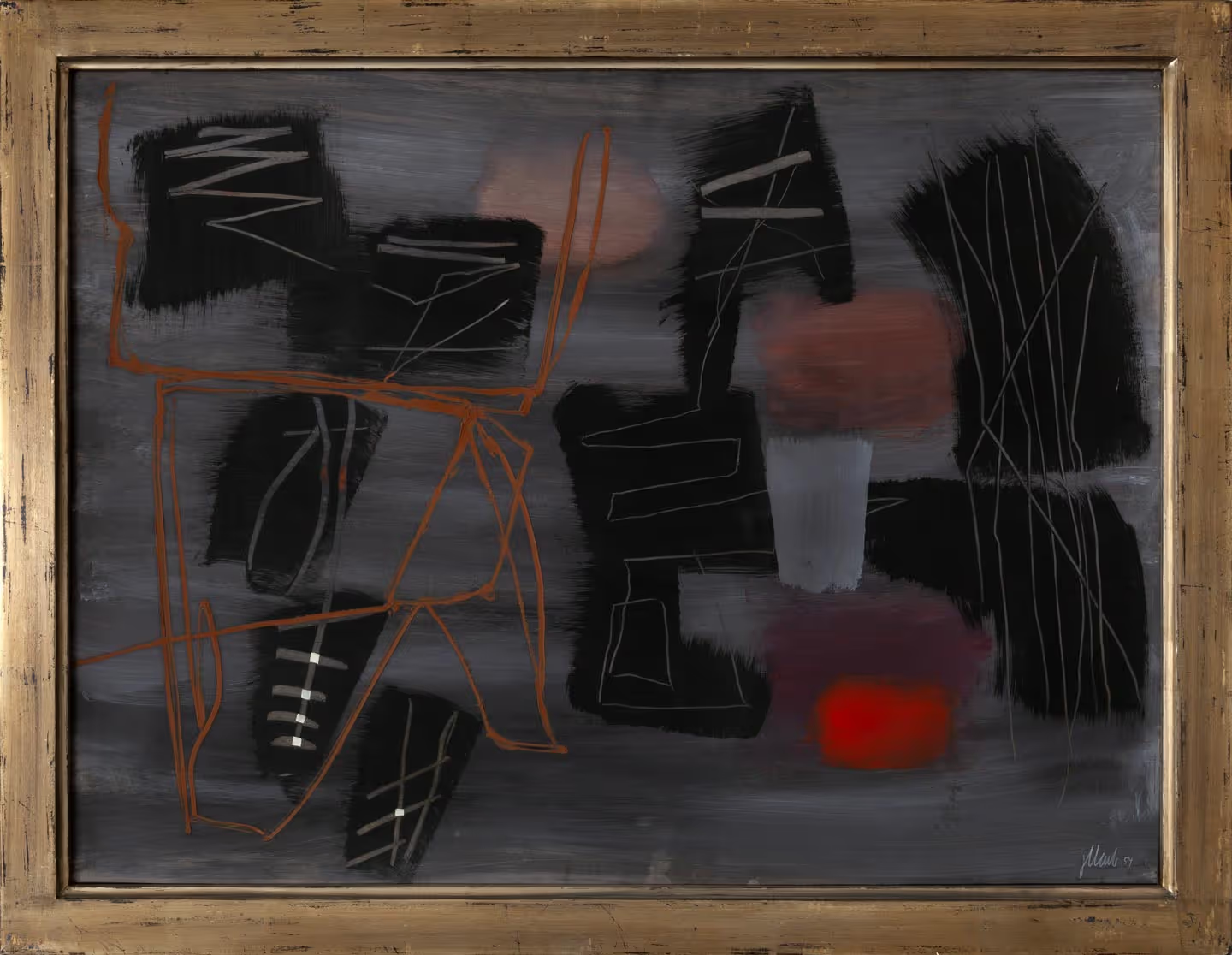
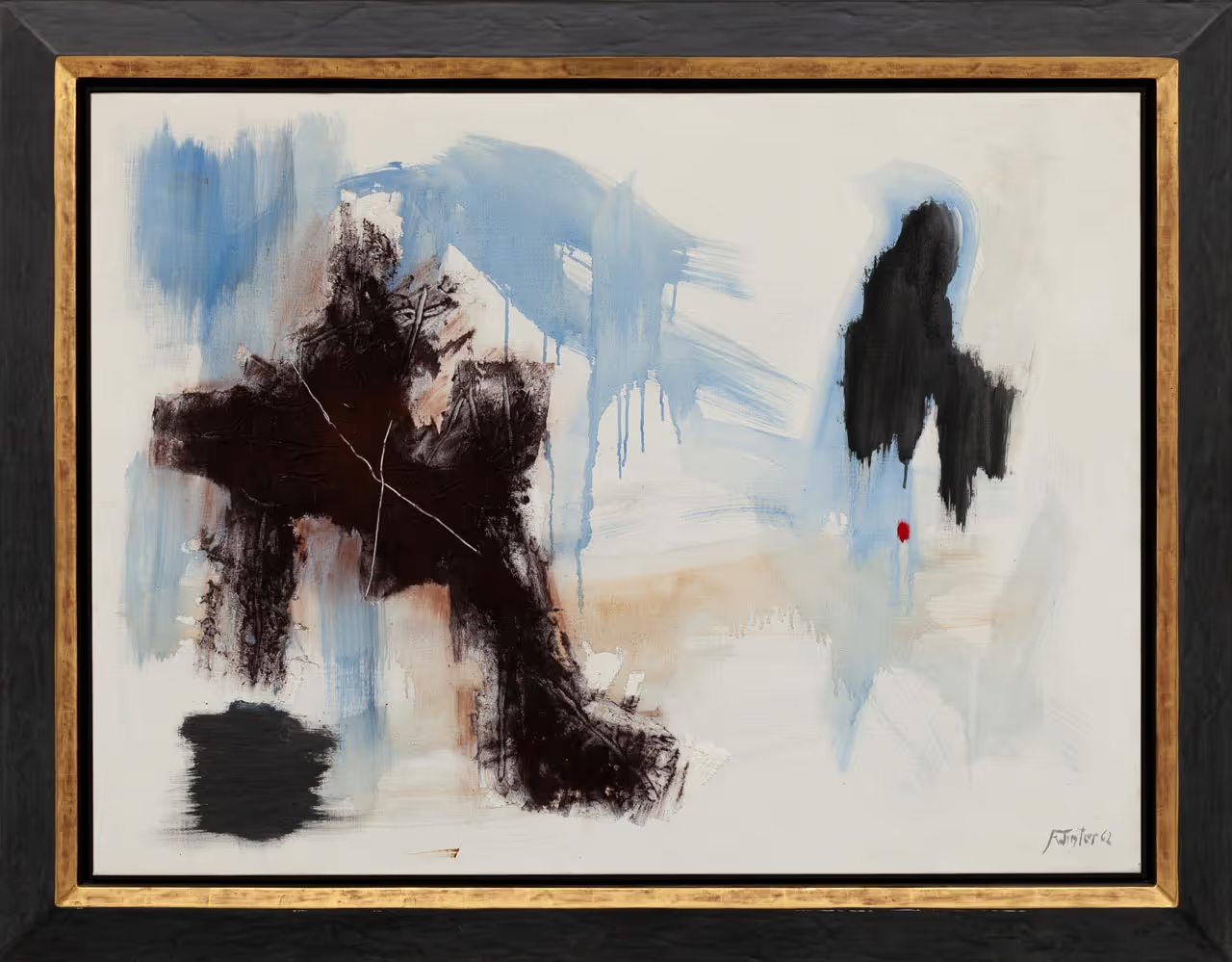
Zwischen Grau und Schwarz
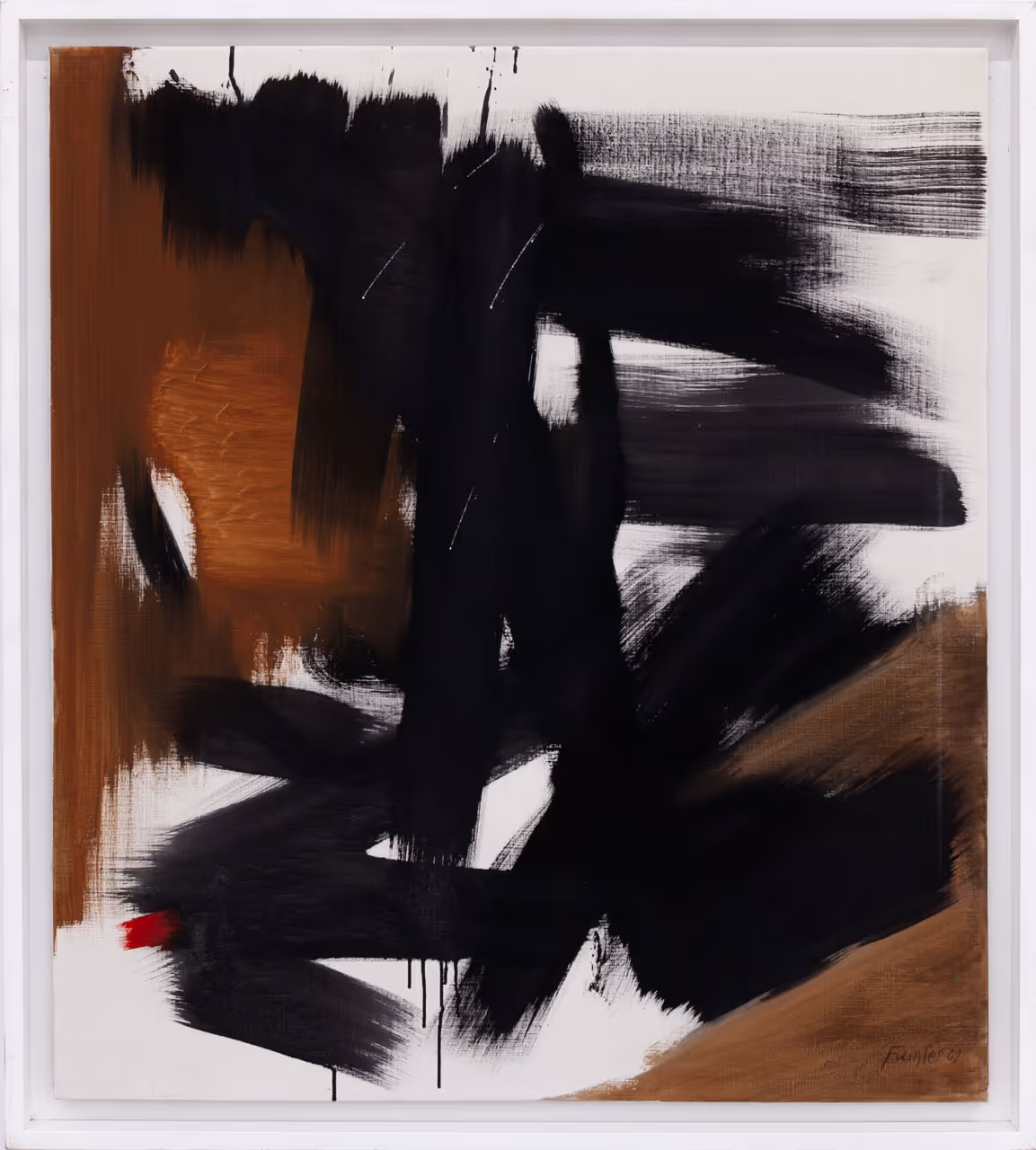
Oil on paper on wood
94 x 146 cm
Monogrammed and dated in the lower right corner
Lohberg 0495
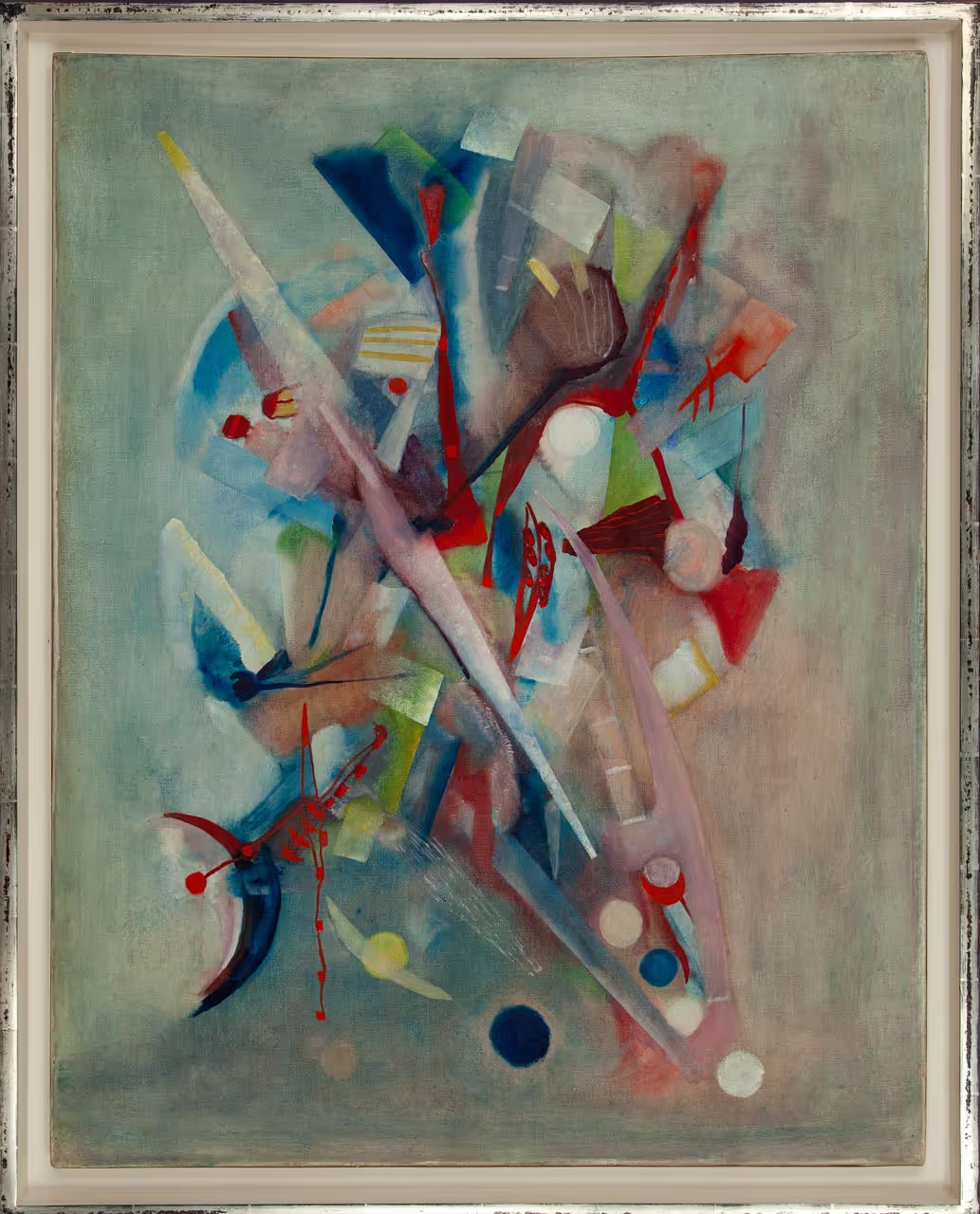
This painting by Fritz Winter, created in 1933, has had an eventful history and was included in the “Marbach Catalog.” The Marbach catalogs compiled the works that Hedwig Marbach, as a gallery owner, had acquired from Fritz Winter between 1950 and 1955, thus forming what was then the largest collection of Fritz Winter’s works. The Marbach Gallery had locations in Bern and Paris and played an important role in Fritz Winter’s career after World War II.
Fritz Winter was born in 1905 in Altenbögge near Unna, Germany. He is one of the most important abstract artists of the post-war period.
Like his father, Fritz Winter began working as an electrician in coal mining at a young age. But in 1925, his trips to Belgium and the Netherlands awakened his interest in drawing and painting, and he was particularly fascinated by the works of Vincent van Gogh. Within two years, this affinity led to his admission to the Bauhaus, the state-sponsored Weimar School of Art and Applied Design, which was founded in 1919 by the architect Walter Gropius. Winter soon became one of the so-called "degenerate artists" whose works were banned from German museums by the Nazi government in 1937.
With the outbreak of World War II in 1939, the artist was drafted into the Wehrmacht and sent to the Eastern Front, where he fought in Poland and Russia. Nevertheless, he work work tirelessly on his work . In May 1945, shortly before the armistice, the Russian army took Winter prisoner of war and held him in Siberia until 1949.
After his return from captivity as a prisoner of war, Fritz Winter quickly became involved in the German and European art scene. In Munich, he became a founding member of the "Gruppe der Gegenstandslosen", later known as "ZEN 49", whose non-objective painting served as an expression of freedom and diversity in post-war Germany. In 1950, he exhibited at the Venice Biennale and 5 years later at the first documenta in Kassel. His works from the post-war period testify to how quickly he opened himself up to the latest trends in art and developed technically and as a painter.
Fritz Winter dies in Herrsching am Ammersee in 1976.