

The current exhibition in the Kunst-Depot showroom is dedicated to contemporary paintings by Italian artist Piero Pizzi Cannella (born 1955).
The Roman painter Pizzi Cannella, co-founder of the Nuova Scuola Romana, soon moved away from early naturalistic representation, but never transitioned to complete abstraction. While spatial references still appeared in the form of cabinets, chests of drawers, or jewelry boxes in the early 1980s, he later dispensed with these and allowed his preferred motifs to appear in a kind of limbo. Pizzi Cannella increasingly discarded the superfluous and devoted himself to the essential. But what is this essential in Pizzi Cannella's works?
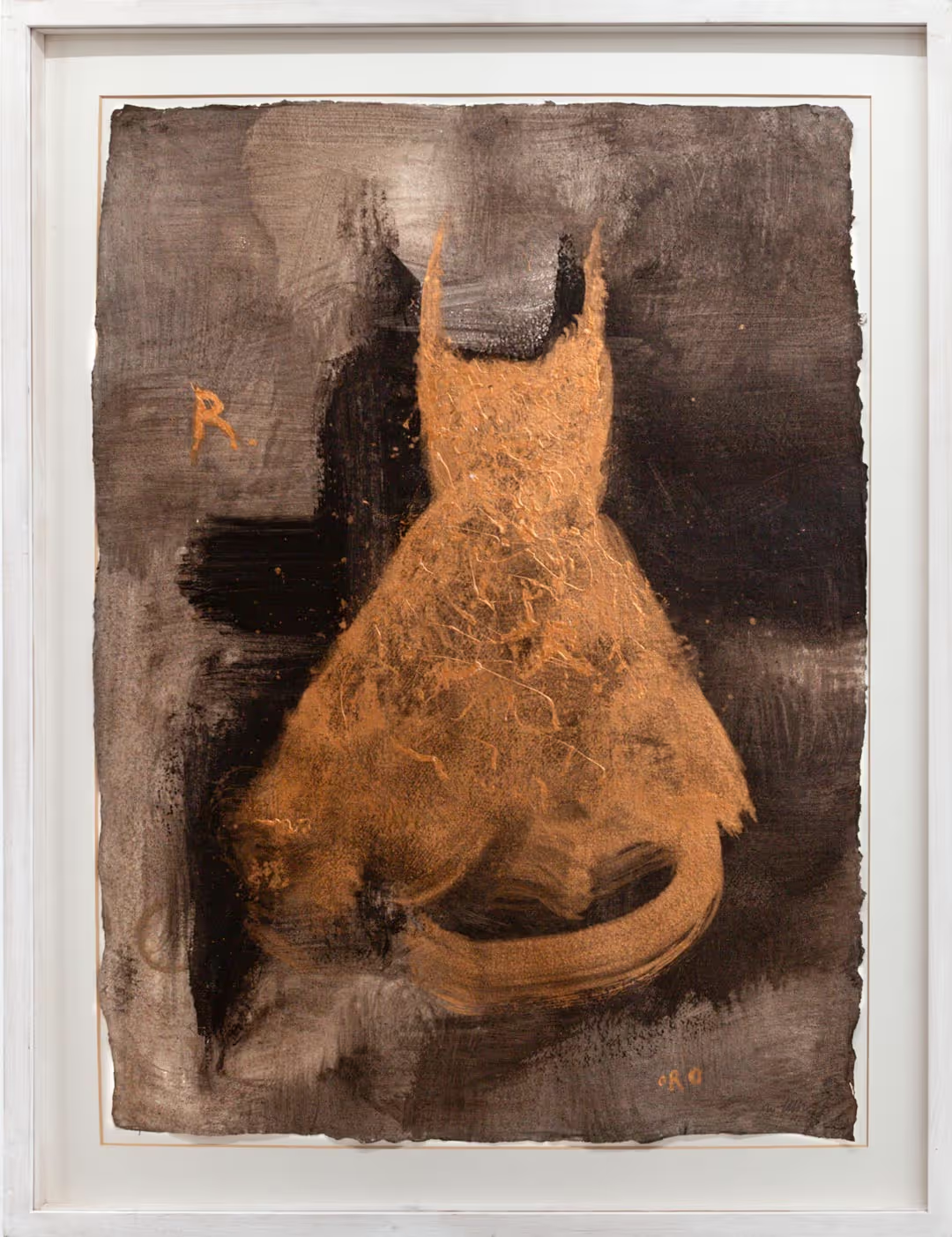
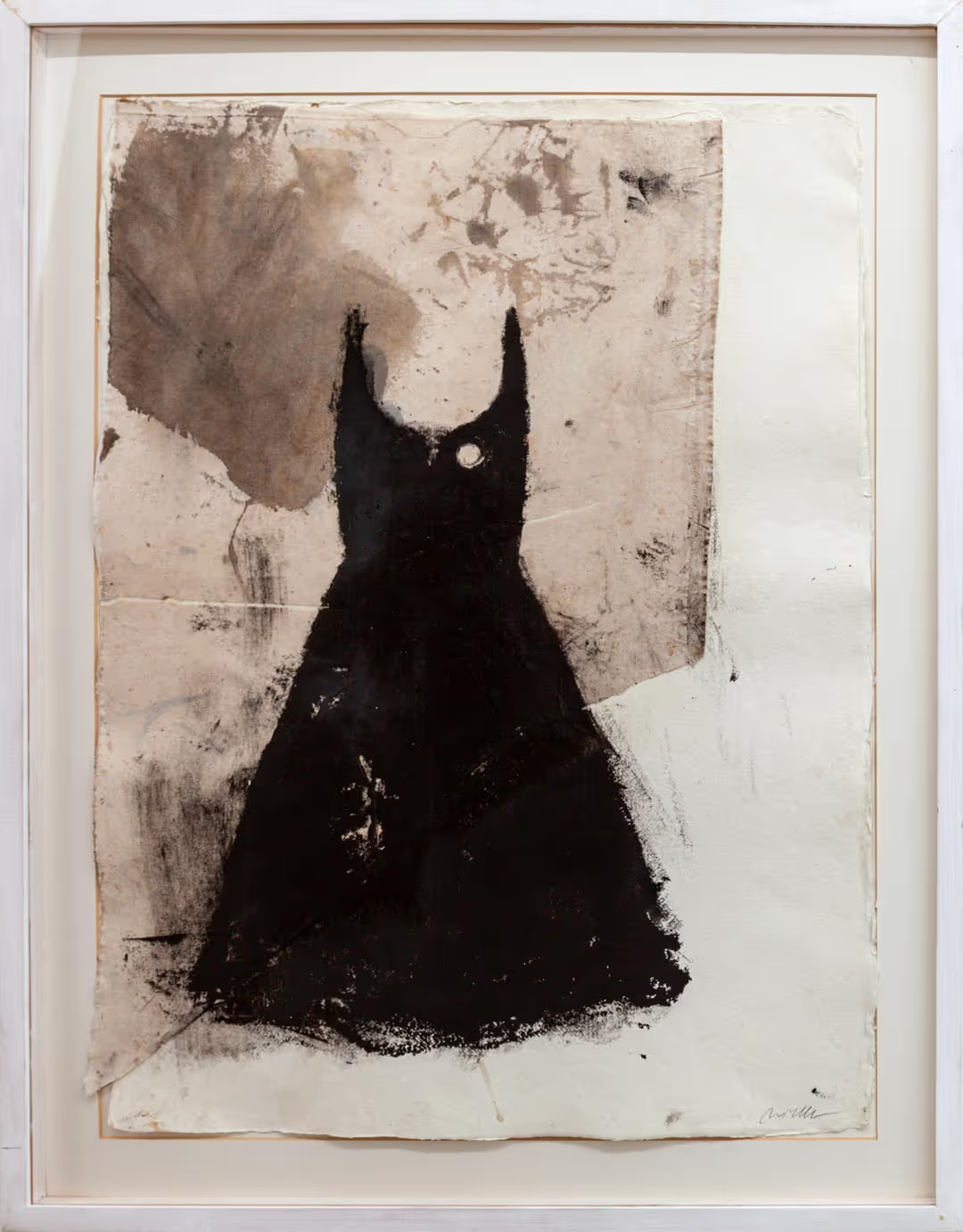
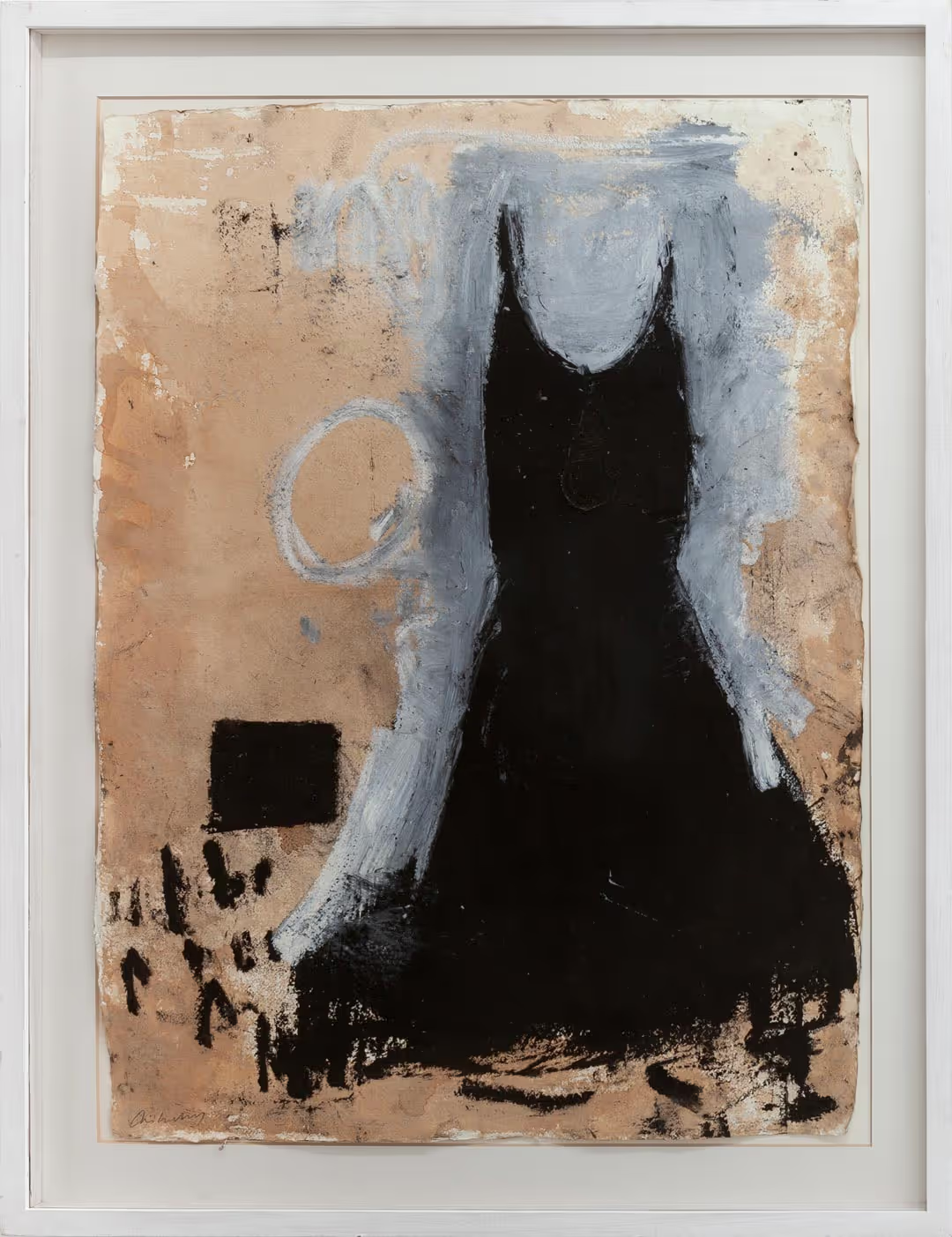
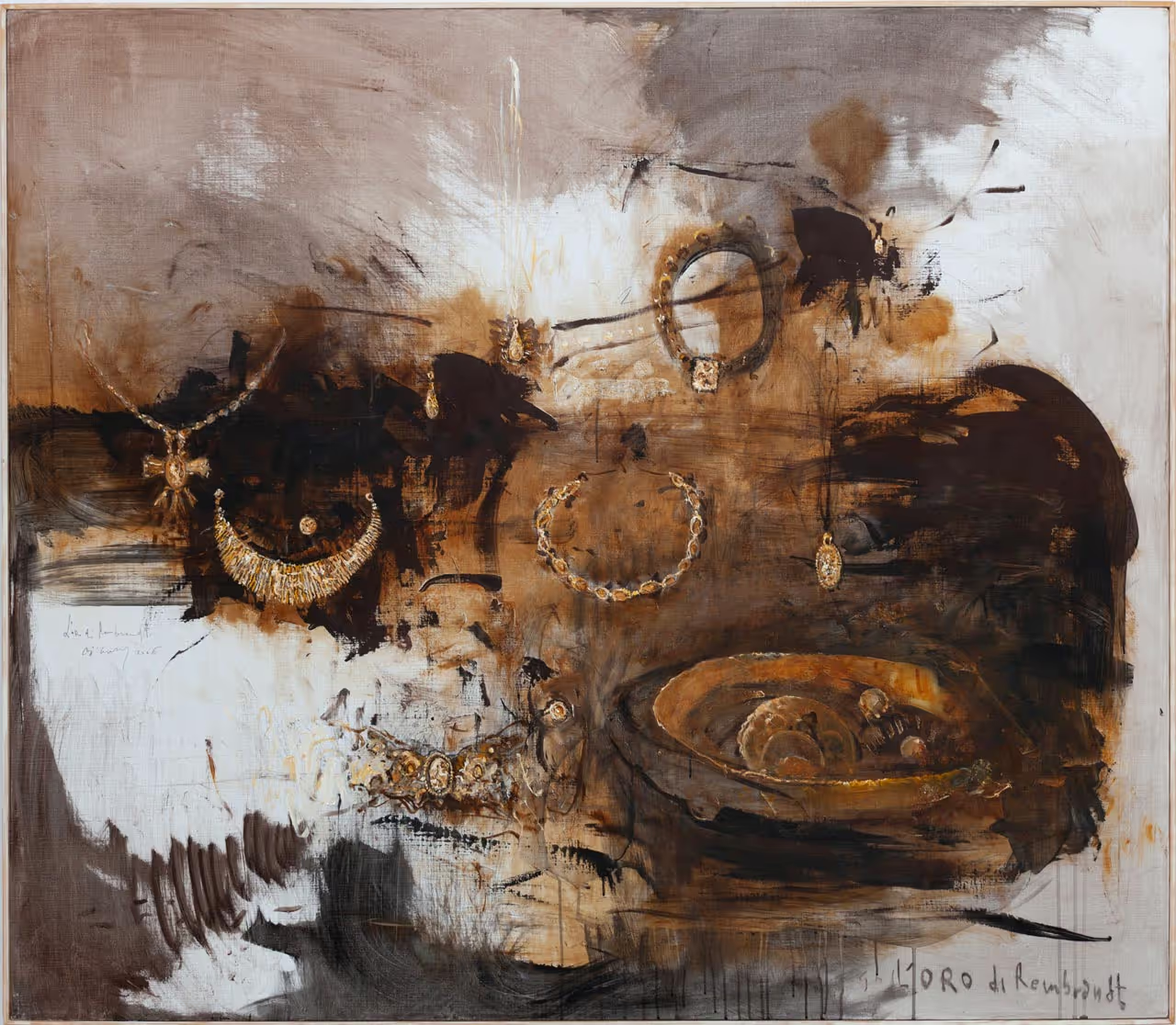
The “Regine” series is a prime example of this. It consists of 34 works on paper that form a self-contained group of works—a variation on a single theme. Once again, we see the details—which work also work in work —taking on a life of their own to the point of dominating the image; here, these include the dress, the necklace, the chain with a pendant, or the pearl necklace. Equally characteristic are her handling of the material, her willingness to experiment, and the creation of depth through layering.
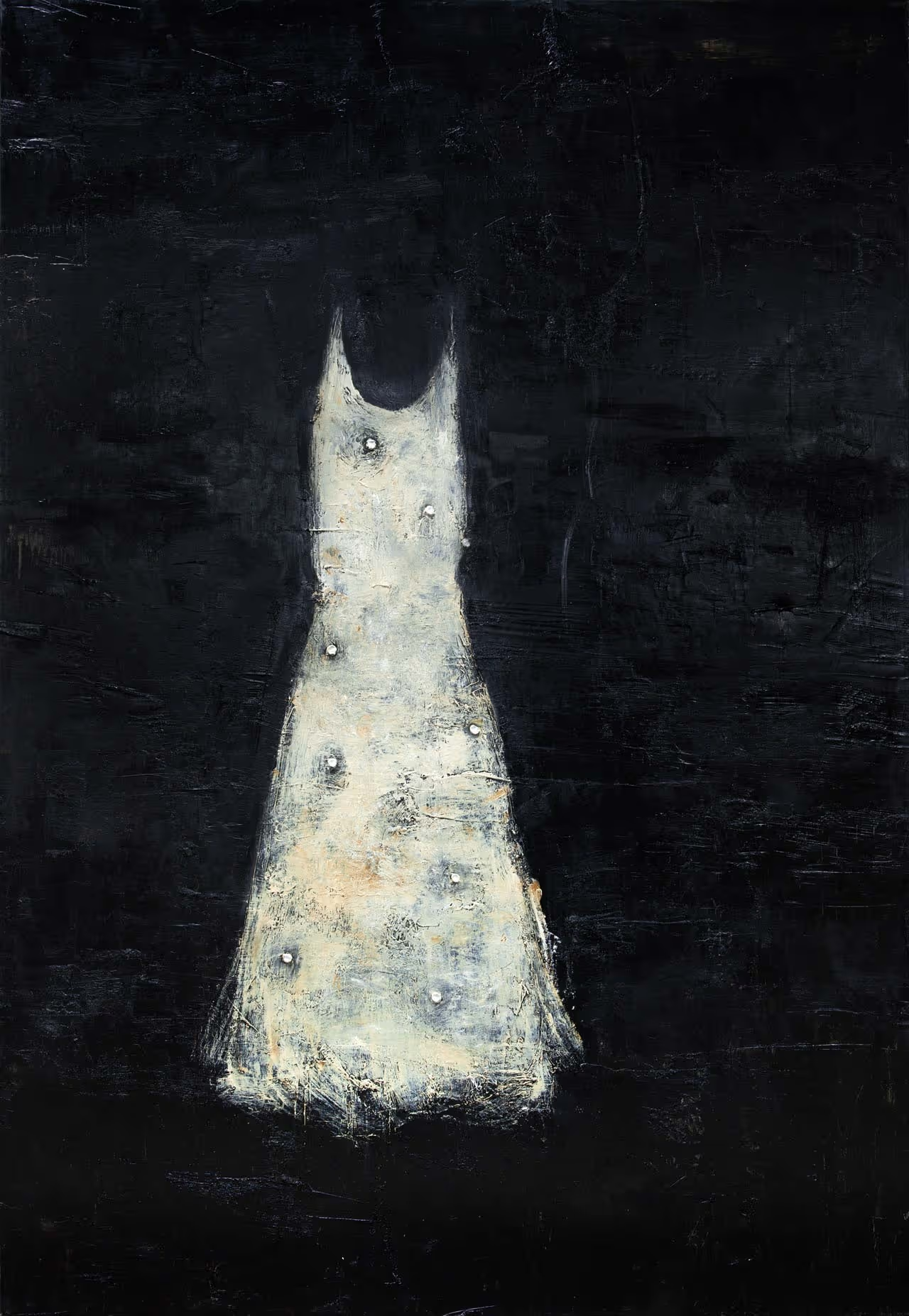
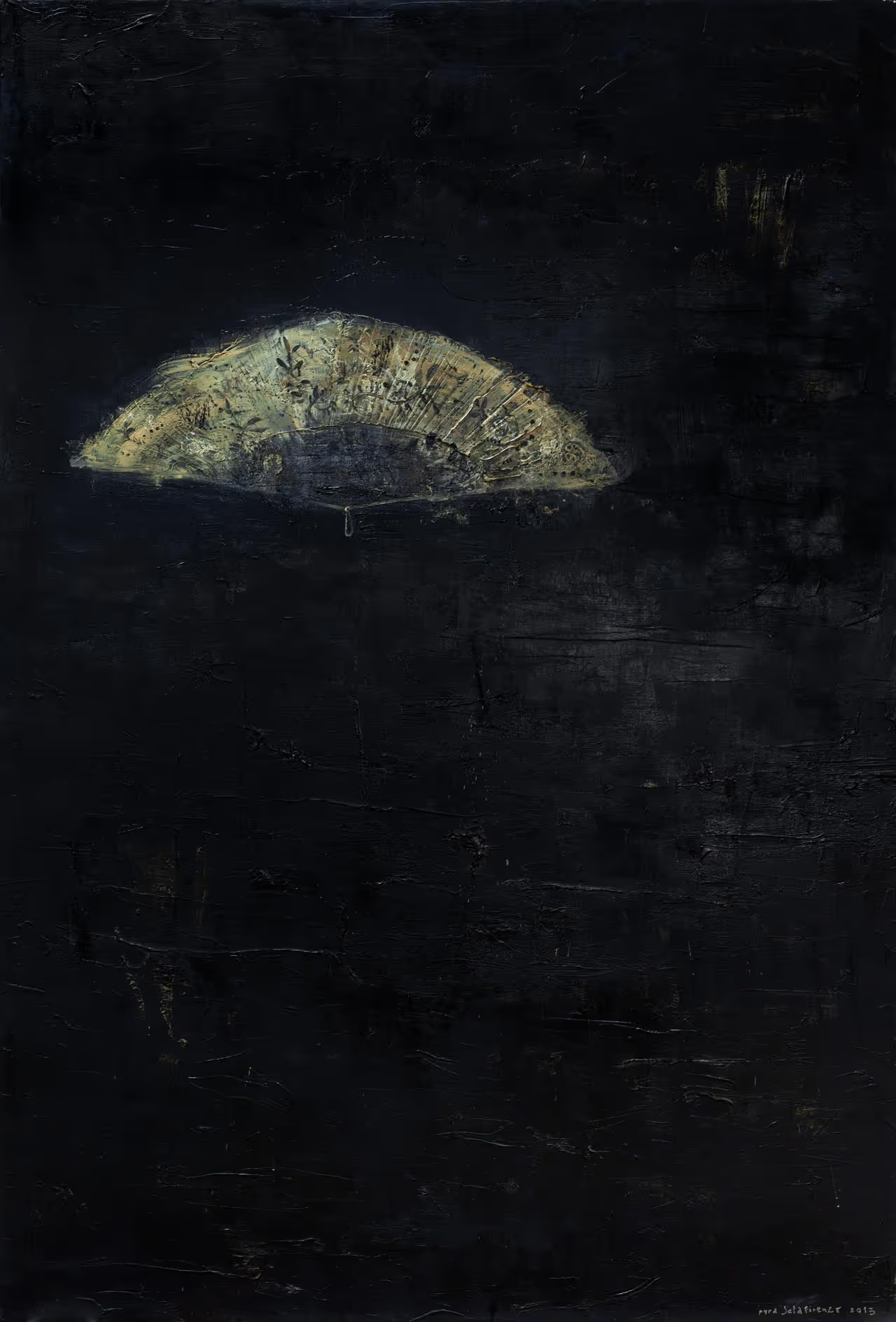
In addition to vases, lizards, fans, dried flowers, and tiles, dresses and jewelry are among the most popular subjects that have enlivened Pizzi Cannella's works for decades. While a long black dress with a V-neckline was still worn by a dreamy-eyed young lady in Bella Coppia in 1983, the following year it appeared hanging on a hanger, first in a closet, then floating. Since then, the dress has appeared repeatedly, either alone or combined with other motifs, always floating freely. Any form of support, such as the coat hanger, was dispensed with. This also resulted in a change in the design: the dresses lost their back section, so that only the front with the neckline was visible.
Pizzi Cannella refrains from depicting the female body and concentrates on clothing and jewelry, on what is essential to him. In stark contrast to "The Emperor's New Clothes," these garments, worthy of a queen, are clearly visible, so dominant in their presence that the wearer no longer appears.
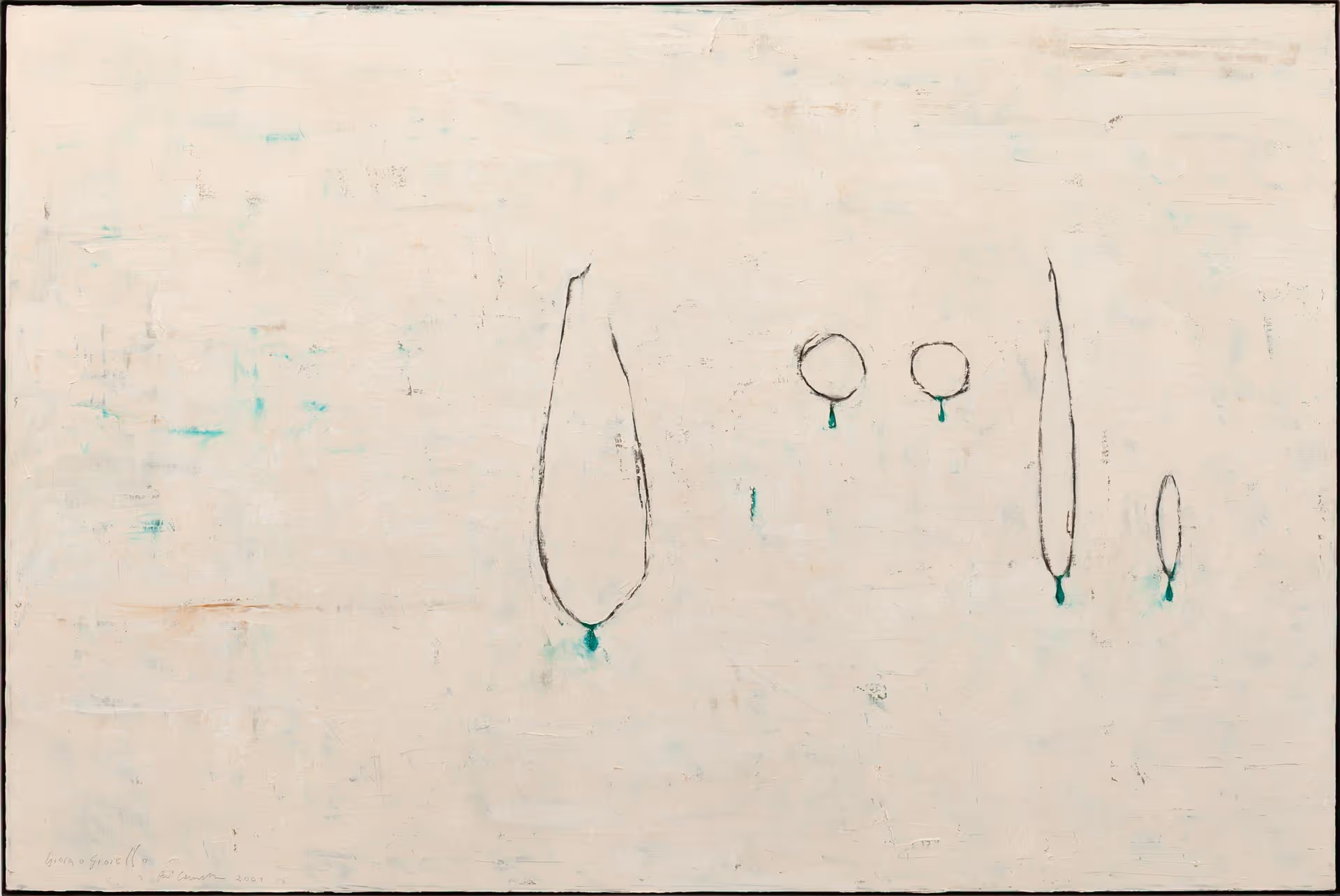
The dresses in “Regine” are made of black, white, beige, and gold fabrics; they are sleeveless with a deep, round neckline. Mostly form-fitting at the top and flared at the bottom, they are reminiscent of garments from bygone eras. These dresses are complemented or accompanied by jewelry ranging from simple to highly elaborate pieces. In 1985, “Le perle” are still depicted as being stored in jewelry boxes; thereafter, they break free and repeatedly appear as independent elements in work Cannella’s work . Defying the laws of gravity, these necklaces serve as accessories to the dresses but can also function as autonomous subjects.
These "Regine" works by Pizzi Cannella are on paper and demonstrate his particular fondness for experimenting with materials and techniques. As in his paintings, his work can be observed in layers. The texture of the image carrier, a particularly heavy paper with a strong structure, has a decisive effect on the application of paint, causing the contours to fray. Even when paint is applied over a large area, gaps remain. The background of the picture is often almost completely painted over, in some cases heavily shaded. Forms can be recognized in this, forms that emerge from the hidden. Collaged fabric fragments that extend beyond the edge of the picture can be added as a further layer. On top of this are the "Regine" – queens – who stand out from the background thanks to strong color contrasts. The shapes of these dresses, which fade away towards the bottom, give the impression that they are apparitions.
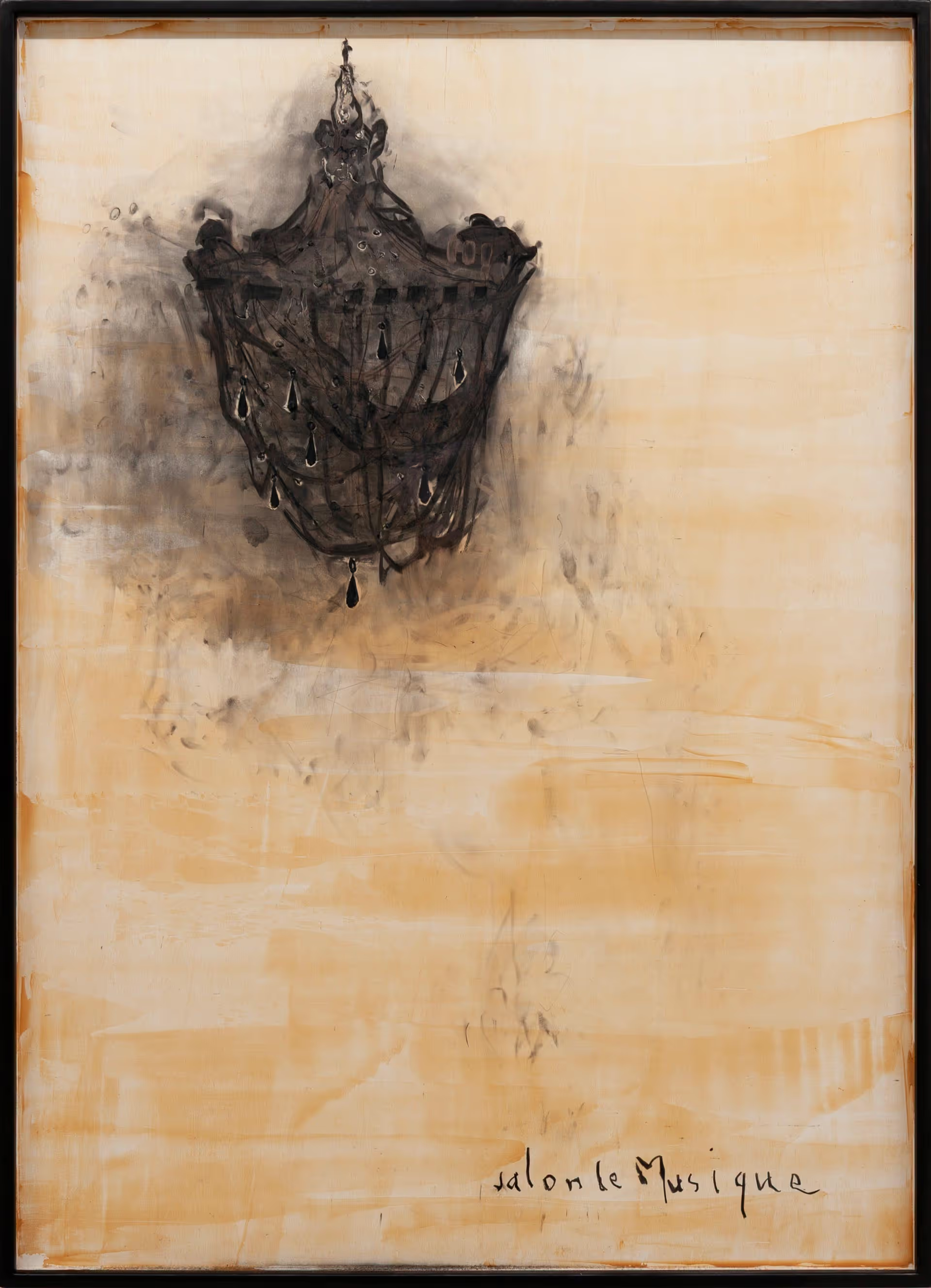
Pizzi Cannella uses the same technique on paper as in his paintings, which are reminiscent of ancient wall paintings, not only because of their size, but also because of their technique of superimposed layers of paint, like frescoes that have been repeatedly painted over in changing styles and now reveal their presence through the layers of paint, as if through a veil. It is precisely this layering technique that creates spatiality in these works, a spatial presence that Pizzi Cannella had previously taken away from his motifs. The symbolic objects, reduced to a flat surface, emerge shadowy from the background, emerging like visions from the background of the picture and disappearing into it again.
Dr. Alexandra Henze